


Holiday Season Bestsellers: The Home Decor & Lighting People Buy From October to December
What home decor sells from October to December? Cordless lamps, string lights, cozy textiles, glass candle holders and giftable decor. See the picks in our Holiday Season Bestsellers collection.

Gifts to Yourself This Holiday Season: 16 Cozy Home Upgrades Worth Buying for You
Treat yourself this holiday season: 16 cozy home upgrades, from cordless lamps to sheepskin throws, with starting prices from $22 to $89.

Holiday Gifts Under $100 and Up to $250: Statement Lighting & Decor Presents
A holiday gift guide for bigger presents: cordless lamps, wall sconces, vases and pendant lights from $57 to $243, sorted by budget.

Holiday Gifts Under $50: 18 Home Decor & Lighting Ideas
18 holiday gift ideas under $50 from Letifly: string lights, glassware, cushion covers, candle holders and more from $13, sorted by budget.

How to Choose Wall Lights for a Small Room
Wall lights work well in small rooms because they add light without using floor or table space. The right choice depends on three practical factors: what the light needs to do, how far it projects from the wall, and how bright it feels once installed.If you are deciding between decorative and functional options, start with function first. In a small room, a wall light should either replace a lamp, support a task such as reading, or add soft ambient light without making the room feel crowded.Start With the Light's JobBefore comparing styles, decide whether the wall light is meant for ambient, task, or accent lighting. This single step helps narrow down size, brightness, beam direction, and placement. Ambient lighting: fills the room with general light. Task lighting: supports reading, dressing, or bedside use. Accent lighting: highlights art, texture, or architectural details. In a small bedroom, task lighting near the bed often matters more than a large decorative fixture. In a narrow entry or hallway corner, soft ambient lighting usually works better than a focused beam.Choose a Fixture Shape That Saves Space Small rooms benefit from wall lights with a shallow profile. A fixture that stays close to the wall reduces visual clutter and lowers the chance of bumping into it in tight walkways.Look for forms such as slim sconces, flush wall lamps, or compact directional lights. If you need flexible placement without hardwiring, a rechargeable option such as the Ultra USB Motion Sensor Rechargeable Wall light can help in closets, bedside areas, and narrow circulation zones where simple installation matters.Good shape choices for small rooms Upward-facing sconces when you want softer bounce light Adjustable bedside sconces for reading Low-profile wall lights for tight passages Rechargeable wall lights where wiring is impractical Match Brightness to Room SizeA small room does not need a large fixture, but it still needs enough usable light. Brightness should match the function of the light and the amount of other lighting already in the room.For ambient lighting, aim for a soft, even effect rather than a harsh point source. For reading or bedside use, choose a wall light that directs illumination where needed and avoids spill directly into the eyes. Use Best Light Effect What to Avoid Bedside reading Focused, directional light Wide glare at eye level General ambient light Diffused or bounced light Overly bright exposed bulbs Hallway or corner Soft spread with low projection Large shades that stick out Closet or storage area Compact practical light Fixtures that require complex wiring If the room already has ceiling lighting, wall lights can be less powerful and more targeted. If the wall light is doing most of the work, choose a design that spreads light broadly enough to prevent dark corners.Use Placement to Make the Room Feel Larger Placement affects how spacious a room feels. In small rooms, wall lights usually work best when they define a useful zone, such as each side of a bed, a mirror edge, or a seating corner.Symmetrical placement can make a compact room feel more ordered. Installing matching lights on both sides of a focal point often creates balance and frees up surfaces that table lamps would otherwise occupy.For a broader lighting reference point, browsing modern design lighting examples can help compare projection, shade shape, and overall scale before choosing a final type.Basic placement guidelines Keep the fixture proportional to the wall section, not just the room Use pairs where symmetry improves balance Center bedside fixtures to the sleeping position, not only the furniture Check sightlines from the doorway to avoid visual crowding Pay Attention to Shade, Glare, and Light DirectionIn a small room, glare is more noticeable because you are closer to the light source. Shades, diffusers, and indirect beam angles often feel more comfortable than bare bulbs.Choose upward, shaded, or diffused light when you want the room to feel calm and open. Choose adjustable directional light when the goal is reading or task use. If you need flexible secondary lighting on nearby furniture, a cordless option like the Moon Cordless LED Dimmable Table Lamp can supplement a wall light without taking a permanent installation approach; it is rechargeable and designed for adjustable ambient light with 8 to 10 hours of continuous use.Pick a Finish and Style That Keep the Room Visually LightBecause small rooms show every object more prominently, the finish of a wall light matters. Clean lines, restrained detailing, and a finish that relates to other hardware in the room usually look more cohesive than an oversized statement piece.If the room is already busy with patterns, storage, or artwork, a simpler wall light often works better. If the room is minimal, a sculptural fixture can add character as long as its scale stays controlled.Common Mistakes to Avoid Choosing a fixture that projects too far into the room Using exposed bulbs that create direct glare Installing lights too high or too low for the intended task Relying on one wall light for all lighting needs in a multi-use room Picking a decorative shape first and checking function later The best wall light for a small room is usually compact, purposeful, and visually quiet. It should improve how the room works while helping it feel more open, not more crowded.FAQWhat type of wall light is best for a small room?Low-profile sconces, shaded wall lamps, and adjustable reading lights are usually the most practical choices. The best type depends on whether you need ambient, task, or accent lighting.Where should wall lights be placed in a small bedroom?They are commonly placed at each side of the bed for reading and surface-space savings. Placement should align with how the bed is used and should avoid direct glare into the eyes.Are wall lights better than table lamps in a small room?They can be, especially when surface space is limited. Wall lights free up bedside tables, desks, and narrow walkways.How bright should wall lights be in a small room?Bright enough to support the intended use, but not so strong that the room feels harsh. Diffused light works well for ambient use, while focused light is better for reading or task areas.

Warm Lighting for Bedroom: Best Fixtures and Bulbs
Warm bedroom lighting works best when it combines a soft color temperature, low glare, and multiple light sources. For most bedrooms, the most useful range is 2700K to 3000K because it feels comfortable at night while still giving enough visibility for reading, dressing, and general use.The right setup usually includes one ambient fixture, one or two task lights, and an optional accent light. This layered approach makes the room feel calm without relying on a single bright ceiling light.What warm light means in a bedroomWarm light refers to bulbs with a lower color temperature, usually measured in Kelvin. In bedrooms, warm white light generally falls between 2700K and 3000K, while very amber light can be even lower.This range helps reduce the sharp, bluish feel that often makes bedrooms look flat or overly bright. If you want a restful atmosphere, start with warm white and add dimming before choosing decorative fixtures.Best bulb color temperature for bedroom lightingFor most bedrooms, 2700K is the safest all-purpose choice. It gives a soft, residential look that works well for overhead fixtures, bedside lamps, and wall lights.3000K is slightly cleaner and brighter in appearance. It can work well in bedrooms that need clearer task lighting, but it still feels warmer than neutral white light. Bulb temperature How it looks Best use in a bedroom 2200K-2400K Amber, very soft Accent lighting, evening mood lighting 2700K Warm white Main bedroom lighting, bedside lamps, sconces 3000K Soft white Reading lights, dressing areas, layered ambient light If you use LEDs, choose dimmable bulbs when possible. Dimming matters as much as color temperature because even a warm bulb can feel harsh at full brightness.Best fixtures for warm bedroom lighting The best fixture depends on what the light needs to do. A bedroom usually feels most balanced when each fixture has a clear role instead of trying to make one ceiling light do everything.Bedside table lampsTable lamps are one of the easiest ways to add warm light at eye level. They create a softer glow than overhead fixtures and make the bed area feel more settled in the evening.A portable lamp can also help in rooms where outlets are limited. A cordless dimmable table lamp is especially useful when you want flexible placement on a nightstand, shelf, or dresser. The Moon Cordless LED Table Lamp is designed for adjustable ambient light and rechargeable use, which makes it suitable for this kind of layered bedroom setup.Wall lights and sconcesWall lights work well when you want to free up nightstand space or place light closer to the bed for reading. They also help distribute light more evenly across the room than table lamps alone.For subtle nighttime illumination, a low-output wall light can reduce glare and improve visibility near closets, hallways, or the bed. A rechargeable wall light can be practical for bedrooms because it is wireless and intended for spaces including bedrooms and closets.Pendant lightsPendant lights can work in bedrooms when they are used as a decorative ambient source or as a bedside alternative to table lamps. The key is to avoid exposed glare and choose shades that soften or direct the light downward.If you want a statement fixture with a gentler look, materials and shade shape matter as much as the bulb. A pleated pendant light can help diffuse light visually, and the Pleated Ceramic & Brass Cocoon Pendant Light is described as a design that blends form and function.Ceiling fixtures for general lightEvery bedroom needs one dependable ambient source, whether that is a flush mount, semi-flush mount, or pendant. This fixture should provide broad coverage without becoming the only layer of light in the room.If you are starting from scratch, browsing a broader lighting collection can help you compare shapes and fixture types that support layered lighting rather than a single harsh overhead source.How to layer warm lighting in a bedroom A simple three-layer plan works in most bedrooms: Ambient light: ceiling fixture or pendant for overall visibility Task light: bedside lamp or wall light for reading and focused use Accent light: soft decorative lamp or low-level night lighting for atmosphere This arrangement lets you change the room based on time of day. In the morning, you can use ambient and task lighting together. At night, you can rely mostly on lamps and accent light to keep the room softer.How to choose bulbs that feel warm, not dimWarm lighting should still be functional. A common mistake is choosing a very low Kelvin bulb but not enough brightness, which makes the room look dull rather than comfortable.Look at brightness separately from color temperature. In practical terms, choose warm LEDs with enough output for the fixture's job, then use dimmers or multiple lamps to control intensity. Use lower brightness for accent lighting Use moderate brightness for bedside reading Use the highest brightness in the main ambient fixture, but keep it dimmable Also pay attention to shade material, bulb visibility, and fixture height. Frosted bulbs, fabric or ceramic shades, and indirect light all help reduce glare.Common bedroom lighting mistakes Using only one overhead light Choosing bulbs above 3500K for evening use Using exposed bulbs near eye level Skipping dimmers or adjustable light levels Adding decorative fixtures without enough task lighting Most of these problems are easy to fix with layering and bulb replacement. You do not always need a full redesign to make a bedroom feel warmer.How to build a warm bedroom lighting setupIf you want the simplest approach, start with one warm overhead fixture at 2700K or 3000K, then add bedside lighting on both sides of the bed if space allows. After that, add one accent source such as a small lamp or low-level wall light.This creates a room that can shift between practical and restful use without looking overly bright. The goal is not just warmer bulbs, but a lighting plan that puts soft light where you actually need it.FAQWhat is the best warm light bulb for a bedroom?For most bedrooms, a 2700K LED bulb is the best general choice. It looks warm without becoming too amber and works well for ceiling lights, lamps, and sconces.Is 3000K too bright for a bedroom?3000K is usually not too bright by itself. It is a slightly cleaner white than 2700K, and whether it feels too bright depends more on bulb output, glare, and dimming than the Kelvin rating alone.Are warm LEDs good for bedroom lighting?Yes. Warm LEDs are energy efficient, long lasting, and widely available in dimmable versions, which makes them practical for layered bedroom lighting.What fixtures work best for a warm bedroom?The most effective combination is usually a ceiling fixture for ambient light, bedside lamps or wall lights for task lighting, and one low-level accent light for evening use.
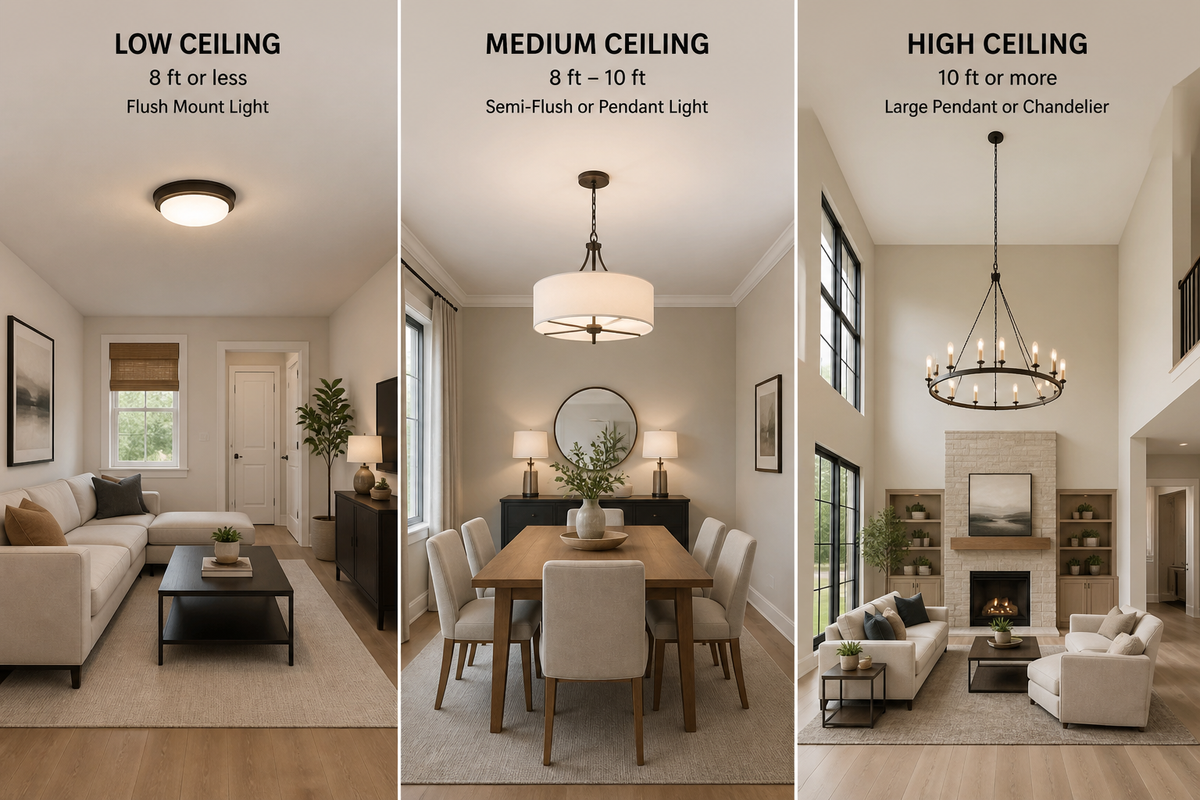
Room Ceiling Light Ideas for Low, Medium, and High Ceilings
Choosing a ceiling light starts with one practical question: how much vertical space does the room have? Ceiling height affects safety, visual balance, brightness, and how widely light spreads. A fixture that works well in an 8-foot room can feel undersized in a room with a vaulted or double-height ceiling.The simplest way to decide is to match the fixture profile to the ceiling height. Low ceilings usually need close-to-ceiling fixtures, medium ceilings can handle more shape and drop, and high ceilings benefit from larger fixtures or multiple light sources that bring light down into the room.How ceiling height changes your lighting optionsCeiling lights do two jobs at once: they provide ambient light and they take up visual space. In lower rooms, a fixture that hangs too far down can interrupt sightlines and circulation. In taller rooms, a fixture that sits too close to the ceiling may leave the room feeling dim at eye level and visually empty overhead.Before choosing a style, measure the floor-to-ceiling height and note where people walk under the fixture. Also consider room size, furniture layout, and whether the light needs to cover the whole room or mainly support task and accent lighting. Ceiling height Best fixture direction Common choices Low Keep the fixture tight to the ceiling Flush mount, semi-flush mount, recessed lighting Medium Add modest depth and spread Semi-flush mount, small chandelier, pendant High Bring light downward and fill vertical space Large pendant, chandelier, multi-pendant grouping Best ceiling light ideas for low ceilings Low ceilings generally benefit from fixtures with minimal drop. The goal is to keep head clearance comfortable while still providing even ambient light across the room. This is why flush mounts, slim semi-flush fixtures, and recessed lighting are the usual starting points.If the room feels flat, use the ceiling light as the ambient layer and add light elsewhere in the room. A rechargeable wall light can help brighten darker edges without requiring a hanging fixture in the center of the room, such as the Ultra USB Motion Sensor Rechargeable Wall light listed in the store file.What works best in low rooms Flush mount lights: Best for bedrooms, hallways, entryways, and smaller living areas where every inch matters. Semi-flush mounts: Useful when you want more shape than a flush mount but still need a compact profile. Recessed lighting: Good for clean, even coverage, especially in kitchens and multipurpose rooms. Layered wall and table lighting: Helps reduce shadows when the ceiling fixture is necessarily compact. For low ceilings, choose wider fixtures rather than taller ones when you need more presence. A broader fixture can distribute light across the room without hanging low.Best ceiling light ideas for medium-height ceilingsMedium-height ceilings are the most flexible. They usually allow enough clearance for a semi-flush fixture, a modest chandelier, or a pendant with a controlled drop. The right choice depends on whether you want the light to disappear into the room or become a visible design feature.In dining rooms, kitchens, and bedrooms, a pendant can define a zone and direct light more precisely. The store file lists a Soft Pastel Pendant Light with multiple sizes and a dimmable option, described as suitable for dining rooms and kitchens. That kind of fixture works best when there is enough ceiling height to let the form show without obstructing movement below.Good uses for medium-height rooms Semi-flush fixtures: A practical choice for living rooms, bedrooms, and home offices. Single pendants: Effective over dining tables, kitchen islands, and reading corners. Small chandeliers: Suitable where you want a decorative focal point without the scale required for a high ceiling. If you are unsure between flush and pendant styles, consider where people stand and walk. Over a table or island, a hanging light can work well because the surface below naturally preserves clearance.Best ceiling light ideas for high ceilings High ceilings need fixtures with enough scale to visually connect the ceiling plane to the occupied part of the room. A small flush mount often leaves the light source too distant, which can make the room feel underlit even if the bulb output is strong. Larger pendants, chandeliers, and grouped lights are better at bringing light down and filling vertical space.Shape matters as much as size. A pendant with visual weight, texture, or a layered shade can help a tall room feel more proportionate. The store file lists the Pleated Ceramic & Brass Cocoon Pendant Light, and notes that pendant cords can be lengthened or shortened for customization. Adjustable drop is especially useful in high-ceiling rooms where fixture height needs to be tuned to the room and furniture below.What works best in tall spaces Large pendants: Good for bedrooms, stair landings, breakfast areas, and sitting rooms with strong vertical volume. Chandeliers: Best when the room needs a central focal point and broad ambient spread. Multi-pendant groupings: Useful in stairwells, double-height entries, and open-plan spaces. Layered lighting: Pair the ceiling light with sconces, floor lamps, or table lamps so the room is bright at multiple levels. For very tall ceilings, think beyond a single overhead source. Layered lighting improves comfort, reduces contrast, and makes large rooms feel more usable at eye level.How to match ceiling lights to each roomCeiling height is the first filter, but room function should make the final decision. Different rooms need different light distribution, glare control, and fixture placement. Living room: Use a central ambient light, then add task and accent lighting around seating. Bedroom: Keep the ceiling fixture soft and diffuse, especially in low or medium-height rooms. Dining room: Pendants and chandeliers work best when centered over the table. Kitchen: Combine ceiling lighting with direct task lighting over work surfaces. Hallway or entry: Prioritize clearance and even brightness over decorative drop. When you need flexible, non-hardwired support lighting, a cordless lamp can help fill darker corners or balance a room where the ceiling fixture is intentionally subtle. The Moon Cordless LED Dimmable Table Lamp is described in the store file as a rechargeable ambient lamp for indoor and outdoor spaces with adjustable light and 8 to 10 hours of runtime.Common ceiling light mistakes to avoid Choosing a hanging fixture that is too low for the room's circulation path. Using a small fixture in a large or tall room, which can make the light feel visually lost. Relying on one ceiling light alone in rooms that need layered lighting. Picking an opaque shade when the room already struggles with brightness. Ignoring dimming, which is often the simplest way to make one fixture more versatile. Most lighting problems come from mismatch rather than style. When the fixture scale, drop, and light spread fit the room height, the result usually feels more balanced and functional.How to choose the right ceiling light quickly Measure the ceiling height. Identify whether the fixture will hang in a walkway or over furniture. Decide if the room needs broad ambient light, focused task light, or both. Choose a fixture profile: flush for low ceilings, semi-flush or pendant for medium ceilings, and larger hanging fixtures for high ceilings. Add wall, table, or floor lighting if the room needs more depth or softer evening light. If you want to compare decorative options by type, the store file identifies Design Lighting as the main lighting collection for modern fixtures. Use ceiling height first, then room function, and only then narrow the style.FAQWhat type of ceiling light is best for a low ceiling?Flush mount and compact semi-flush fixtures are usually best because they keep the light close to the ceiling and preserve head clearance.What type of ceiling light is best for a high ceiling?Large pendants, chandeliers, and multi-pendant groupings usually work best because they bring light lower into the room and better match the room's vertical scale.Are pendant lights good for medium-height ceilings?Yes. Pendant lights work well in medium-height rooms when they are placed over tables, islands, or other zones where the drop does not interfere with movement.Do high ceilings need brighter bulbs?Often yes, but brightness alone is not enough. High ceilings also benefit from fixtures that direct light downward and from layered lighting at eye level.
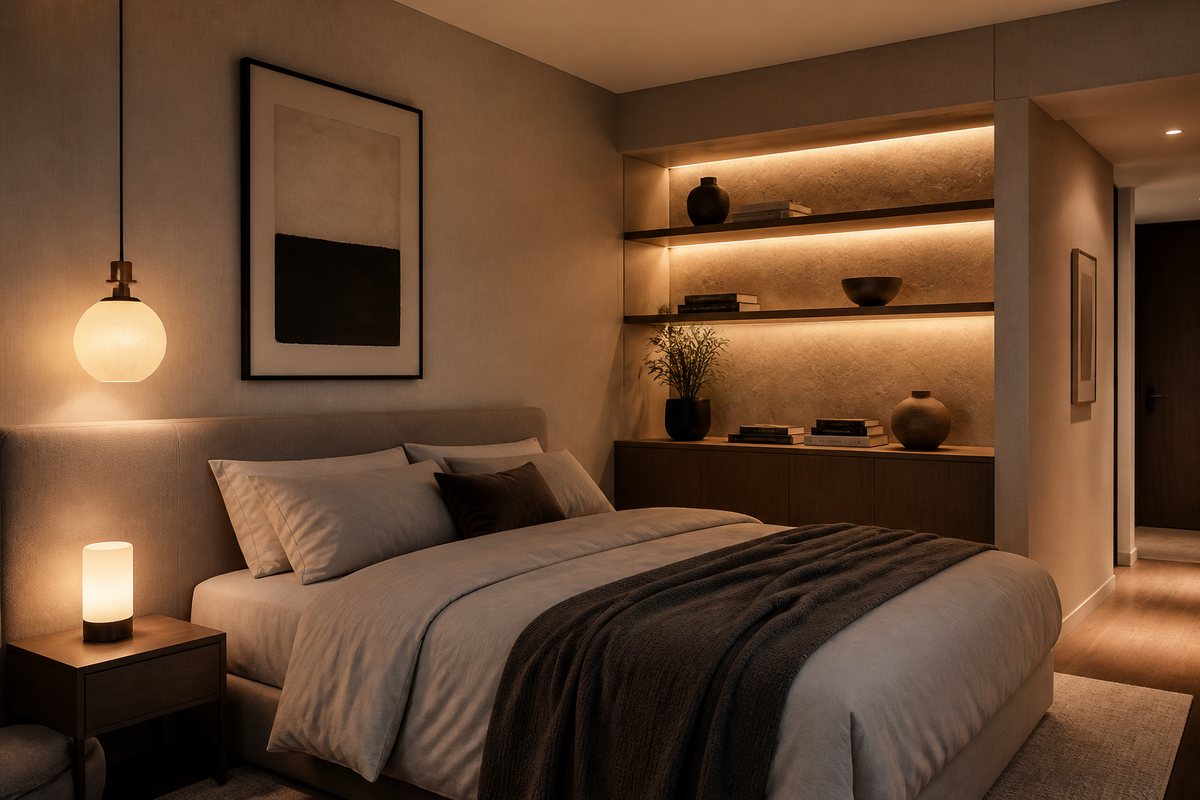
How to Use Decorative LED Lights Without a Dorm-Like Look
Decorative LED lights look sophisticated when they act as part of the room, not the main event. The difference usually comes down to placement, color temperature, visible hardware, and whether the light supports furniture, art, or architecture instead of outlining the entire room.If you want a more finished result, choose fewer light sources, keep them warm, hide cords where possible, and use LEDs to highlight a surface or function. A cordless accent lamp or a focused wall light often looks more intentional than exposed strips running around the ceiling.What makes LED lights look dorm-likeMost dorm-like results come from one of four choices: cool-toned light, exposed adhesive strip lighting, perimeter placement at the ceiling line, or using one decorative light source for the entire room. These approaches make the lighting visible before the room itself.A more mature look starts when the fixture disappears into the design. That means the light should support a reading corner, dining table, shelf, headboard, or artwork rather than create a glowing border around the room. Very cool white or color-changing light used daily Unhidden strips attached directly to walls or ceilings Lights tracing every edge of the room One light source doing both task and ambient lighting Loose cords, battery packs, and visible clips Choose warm, indirect light first For most living rooms, bedrooms, and dining spaces, warm light reads more residential and less temporary. In practice, this usually means using warm white LEDs and prioritizing reflected or shaded light over direct point glare.Indirect light softens surfaces and adds depth. A small lamp on a console, a pendant over a table, or a low-output wall light near shelving will usually look more refined than a bare strand in open view.For example, a cordless lamp with dimming works well when you need ambient light on a side table or shelf without introducing a visible cord. The Moon Cordless LED Dimmable Table Lamp is designed for adjustable ambient lighting and cordless placement, which suits this type of use. Use LED lighting to highlight zones, not room edges The easiest way to avoid a dorm effect is to light specific zones. Instead of outlining the ceiling, place decorative LEDs where they serve a clear visual purpose, such as over a dining surface, beside a bed, near a mirror, or under a cabinet.This approach makes the room feel designed because each light source has a job. It also creates contrast, which gives a space more depth than evenly glowing perimeter lighting.Good zones for decorative LED lighting Above a dining table or kitchen island On a bedside table or dresser Inside shelving or display niches Under upper cabinets for task support Along a hallway, stair edge, or dark storage area If you need low-profile accent lighting for practical areas, a rechargeable wall light can keep the effect clean. The Ultra USB Motion Sensor Rechargeable Wall light is described for hallways, stairs, bathrooms, bedrooms, closets, and storage areas, which makes it more useful as concealed support lighting than as a decorative focal point. Pick fixtures that look intentional in daylightDecorative lighting has to work when it is off, not only when it is glowing. This is where pendants, table lamps, and sculptural wall lights usually outperform adhesive strips or novelty string lights.A visible fixture should contribute shape, material, and scale to the room during the day. A pendant with ceramic, brass, wood, or metal detail often reads as part of the decor instead of a temporary add-on.Over a dining area or breakfast nook, a defined overhead fixture creates a more architectural result than string lights. Options such as the Pleated Ceramic & Brass Cocoon Pendant Light or the Soft Pastel Pendant Light fit this role because both are designed as statement pendants rather than exposed decorative strips. Hide hardware and simplify the layout Even attractive lighting can look unfinished if the installation details are obvious. Clips, sagging cords, exposed charging cables, and misaligned runs are often what make decorative LEDs feel casual rather than polished.Keep the layout simple and symmetrical where possible. If a cord must remain visible, route it tightly along furniture lines or architectural edges so it looks deliberate. Limit decorative LEDs to one or two focal areas per room Hide drivers, battery packs, and extra cable length Center pendants carefully over tables and nightstands Avoid mixing too many LED effects in one space Use dimming to reduce glare in the evening Layer decorative LEDs with other light sourcesA room rarely looks finished when decorative LEDs are the only source of light. The better method is layering: ambient light for overall visibility, task light for function, and accent light for mood or emphasis.This is also the best way to make LED lighting feel expensive. A pendant, a small lamp, and a subtle accent light each do different work, so none of them has to overpower the room. Layer Purpose Best decorative LED use Ambient General room brightness Dimmable pendant or shaded table lamp Task Reading, cooking, grooming, desk work Targeted wall light or under-cabinet light Accent Mood, depth, highlighting decor Small cordless lamp, shelf light, art-adjacent glow If you are comparing options for ambient fixtures, a broader Design Lighting category is the most relevant type of internal reference because it supports layered room lighting rather than a single decorative effect. Best LED lighting approaches by roomBedroomUse a warm bedside lamp, a reading light, or a concealed accent behind a headboard or shelf. Avoid running strips around the full ceiling perimeter unless the room design is very minimal and the strips are fully recessed.Living roomFocus on corners, shelves, and side tables rather than the television wall alone. A cordless lamp can add a soft pool of light that breaks up dark zones without making the room feel overly staged.KitchenUse LEDs where they improve function, especially under cabinets or in darker prep zones. Decorative effect should come from a pendant or material-driven fixture, not from exposed tape lighting.Dining areaCenter a pendant over the table and keep the rest of the lighting secondary. This immediately creates structure and usually looks more elevated than multiple small decorative lights competing for attention.Simple rules that keep decorative LEDs looking refined Choose warm white over cool white for everyday use. Light a function or feature, not every edge of the room. Use fixtures with daylight presence, not only nighttime glow. Keep cords and mounting hardware out of sight. Layer decorative LEDs with ambient and task lighting. Dim whenever possible to reduce glare and visual noise. In most homes, decorative LED lights look best when they are quiet. If the first thing you notice is the LED product itself, the setup is probably too visible. If the room feels warmer, deeper, and more usable, the lighting is doing its job correctly.FAQHow do you make LED lights look more sophisticated?Use warm light, indirect placement, and fixtures that look intentional when switched off. Hide cords and avoid outlining the entire room with visible strips.Are LED strip lights always too dorm-like for a home?No. They usually look better when concealed under cabinets, behind furniture details, or inside shelves rather than mounted visibly around the ceiling perimeter.What color LED light looks best in bedrooms and living rooms?Warm white is typically the safest choice for bedrooms and living rooms because it feels softer and more residential than cool white light.What is better than string lights for a polished room?A dimmable table lamp, a small rechargeable accent lamp, or a pendant light usually creates a more finished result because the light source has a clearer design function.
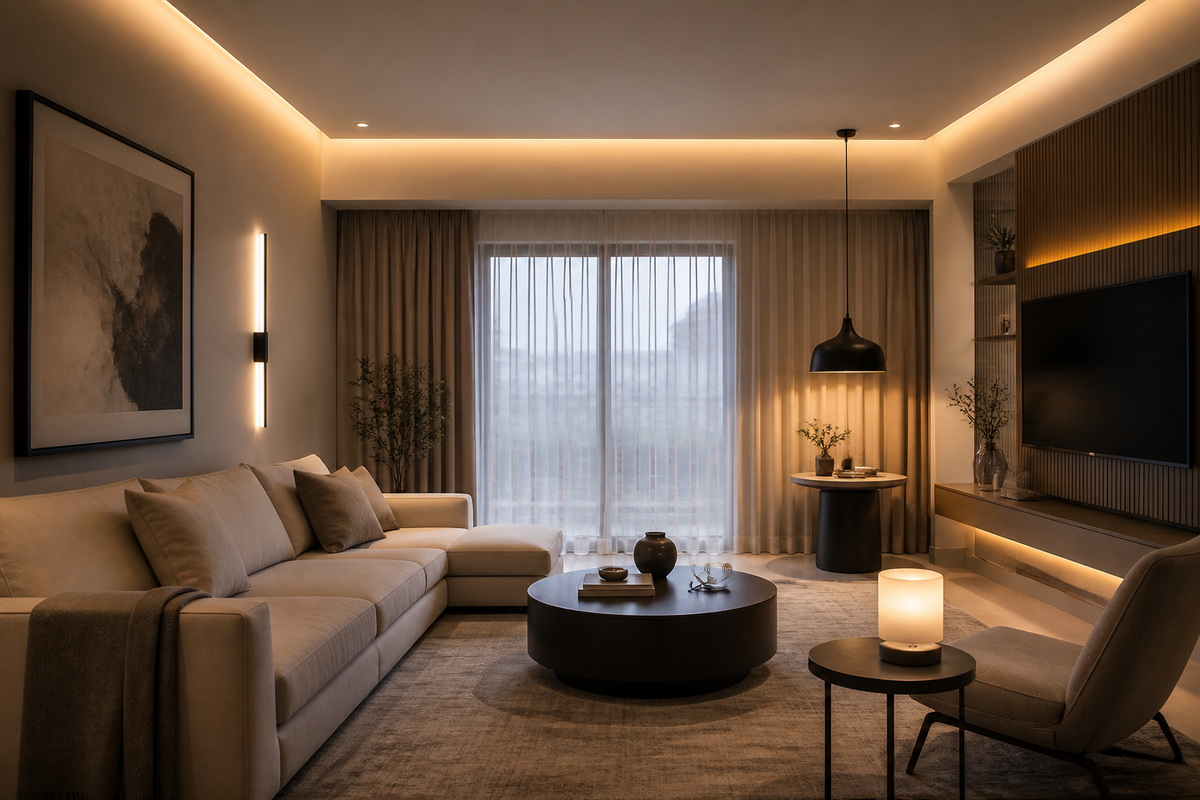
Best LED Decor Ideas for Modern Living Spaces
LED decor works best in modern living spaces when it does more than brighten a room. The most effective ideas improve function, define zones, and add visual depth without clutter. In practice, that means choosing a small number of LED elements and using them with intention.Below are practical LED decor ideas that suit living rooms, bedrooms, dining areas, and compact homes. The focus is on layered light, clean lines, and flexible fixtures that support everyday use.1. Start with layered LED lightingModern interiors usually feel more balanced when light comes from more than one source. A single ceiling fixture can make a room look flat, while layered LED lighting creates ambient, task, and accent light in the same space.A simple approach is to combine an overhead fixture, one movable lamp, and one accent light. This setup helps a room feel brighter where needed and softer where relaxation matters. Ambient lighting: general illumination for the whole room Task lighting: focused light for reading, cooking, or desk work Accent lighting: decorative light that highlights texture, art, shelving, or architectural details 2. Use pendant lights to define key zones Pendant lights are useful when you want LED decor to feel integrated into the architecture of a room. In open-plan spaces, they help visually separate the dining area, kitchen island, or reading corner without adding walls or bulky furniture.A dimmable pendant with simple lines is especially effective in modern interiors because it combines decoration and function. For example, a Soft Pastel Pendant Light can work above a dining table or breakfast area, where suspended lighting creates a clear focal point. The store listing notes LED functionality, multiple sizes, dimming, and a plug-in option, which adds flexibility for placement.
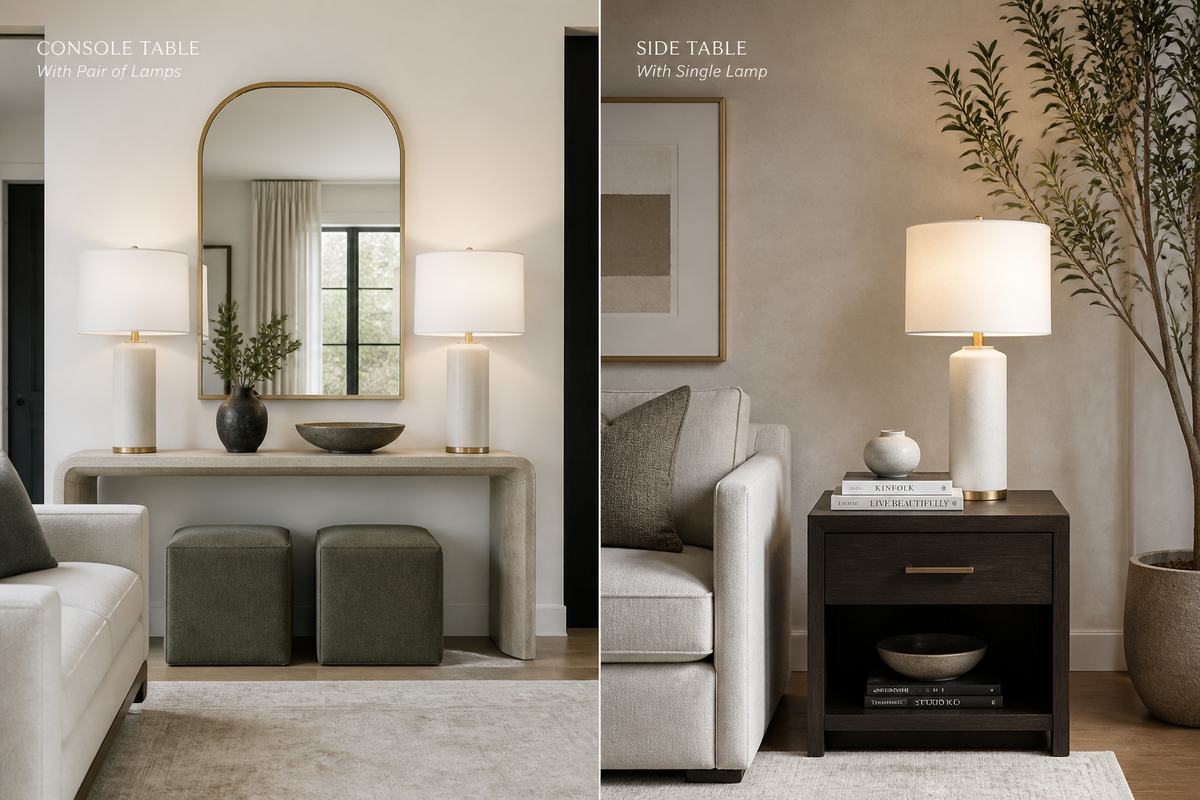
How to Style Home Decor Lamps in Pairs and Singles
Styling lamps well comes down to three decisions: whether the space needs symmetry or variety, how much light the area needs, and what scale fits the furniture. Pairs usually create order and visual balance, while a single lamp works best when you want one clear focal point or need to solve lighting in a smaller zone.A practical rule is to match the lamp layout to the furniture layout. Use two lamps when the furniture arrangement is symmetrical, such as two nightstands or the two ends of a console. Use one lamp when the surface is narrow, the room already has balanced elements elsewhere, or the lamp is meant to support a chair, reading corner, or accent table.When to use lamps in pairs Pairs work best when you want a room to feel anchored and consistent. They are especially useful on bedside tables, long consoles, sideboards, mantels, and large sofas with end tables because they frame the furniture and distribute light evenly.Matching lamps are the simplest option, but pairs do not always need to be identical. You can pair lamps with the same overall height, shade shape, or finish so the arrangement still reads as intentional. Use pairs for symmetry and formal balance. Choose them for wide furniture that needs visual weight at both ends. Keep the shades similar in size so the light output feels even. Leave enough center space for artwork, a mirror, or decor to remain visible. For example, a pair of portable lamps can work well on a console or dining-side surface when you do not want visible cords. A rechargeable option like the Moon Cordless LED Dimmable Table Lamp is designed for adjustable ambient light and cordless placement, which makes it easier to style symmetrical surfaces cleanly.When a single lamp works better A single lamp is usually the better choice when the goal is focused light, asymmetry, or space efficiency. It suits entry tables, reading nooks, small dressers, narrow shelves, desks, and corners that need one source of light rather than two.Single-lamp styling also works well when other large elements already create balance, such as a tall plant on one side of a console or a floor mirror on the other. In that case, the lamp does not need a twin because the room already has visual counterweight. Use one lamp for compact surfaces or tight floor plans. Choose it when you want one area to stand out. Let nearby decor balance the composition instead of forcing symmetry. Prefer a single lamp when task lighting matters more than matching decor. How to style paired lamps without making the room look rigidPaired lamps should feel balanced, not overly formal. The easiest way to soften a pair is to keep the lamps consistent while varying the objects between them, such as a framed print, stacked books, a low bowl, or a sculptural tray.Height layering also helps. If both lamps sit on a console or sideboard, place lower objects in the middle so the lamps remain the tallest elements and create a clean visual rhythm.What to keep consistent in a pair Overall lamp height Shade diameter and shape Finish family, such as brass, ceramic, wood, or matte metal Bulb color temperature so both sides cast the same tone What can vary around a pair Center decor between the lamps Art above the furniture Books, trays, or bowls below lamp height Textiles and nearby accent colors How to style a single lamp so it looks intentionalA single lamp needs supporting elements around it so the arrangement does not feel accidental. The lamp should usually be the tallest object in the grouping, with one or two lower items beside it to build a stepped composition.A reliable formula is one lamp, one horizontal object, and one textured accent. For example, you might place a lamp beside a short stack of books and a small ceramic object. This gives the surface shape variation without clutter.On shelves, desks, or compact bedroom furniture, a low-profile light source can be especially useful. The Ultra USB Motion Sensor Rechargeable Wall light is designed for bedrooms, closets, hallways, and storage areas, so it can support single-point lighting where table space is limited.Scale rules that matter more than style trends The most common lamp styling mistake is choosing the wrong size. A lamp that is too small looks disconnected from the furniture, while one that is too large can overpower the surface and block sightlines. Surface Best lamp approach What to check Nightstand Single on each side as a pair Shade should not overwhelm the tabletop width Console table One or two depending on length Leave open space for decor or a mirror Desk Single task-focused lamp Base footprint should leave usable work surface Sideboard or dresser Usually a pair for balance Lamp height should relate to artwork or wall space above Shelf or narrow ledge Single compact lamp Use cordless or wall-mounted options when depth is tight If you are still deciding on a lamp type, browsing a focused design lighting range can help you compare scale, silhouettes, and finishes before choosing between a pair and a single lamp.How to choose the right lamp placement by roomBedroomPairs are most useful when both sides of the bed need equal light and a calm, symmetrical look. A single lamp works when one side is against a wall, when one nightstand is missing, or when you want layered lighting from a pendant or wall light instead.Living roomUse pairs on matching side tables or a long console behind a sofa. Use one lamp next to an accent chair, on a side table beside the sofa, or on a shelf where it complements floor lighting rather than repeating it.EntrywayA single lamp often feels more natural in a small entry because it leaves space for a tray, mirror, or catchall bowl. Use a pair only if the console is wide enough and the wall above it needs strong framing.Dining areaTable lamps can add low ambient light on a sideboard or bar cart, while pendants define the main overhead lighting. If the room needs a central decorative light, a piece such as the Soft Pastel Pendant Light can handle general ambiance above a dining table or kitchen zone, allowing side surfaces to use one lamp instead of two.Common mistakes to avoid Using two lamps on furniture that is too short or too narrow. Choosing mismatched heights in a pair without any shared design element. Letting lamp shades block artwork, mirrors, or conversation sightlines. Adding a single lamp without nearby objects to balance the arrangement. Ignoring function and choosing a layout that looks balanced but does not provide light where needed. Simple decision guide: pair or single?Choose a pair if the furniture is wide, the room benefits from symmetry, and both sides need equal light. Choose a single lamp if the area is compact, the layout is asymmetrical, or you need one focused source of light.In most rooms, the best layout is the one that matches both the furniture width and the purpose of the light. Start with function, then refine the look with scale, finish, and the surrounding decor.FAQShould lamps in a pair match exactly?No. They can coordinate through height, shade shape, finish, or overall visual weight. Exact matching is the easiest approach, but complementary pairs can also look balanced.Where should a single lamp be placed on a console table?Place it to one side rather than in the center, then balance it with lower decor such as books, a tray, or a bowl on the other side. This creates an intentional asymmetrical arrangement.Are paired lamps only for formal rooms?No. Paired lamps create symmetry, but the room can still feel relaxed if the surrounding decor has texture, varied shapes, and some open space.What type of lamp works best for small surfaces?Compact, cordless, or wall-mounted lamps usually work best because they reduce visual bulk and preserve usable surface area.
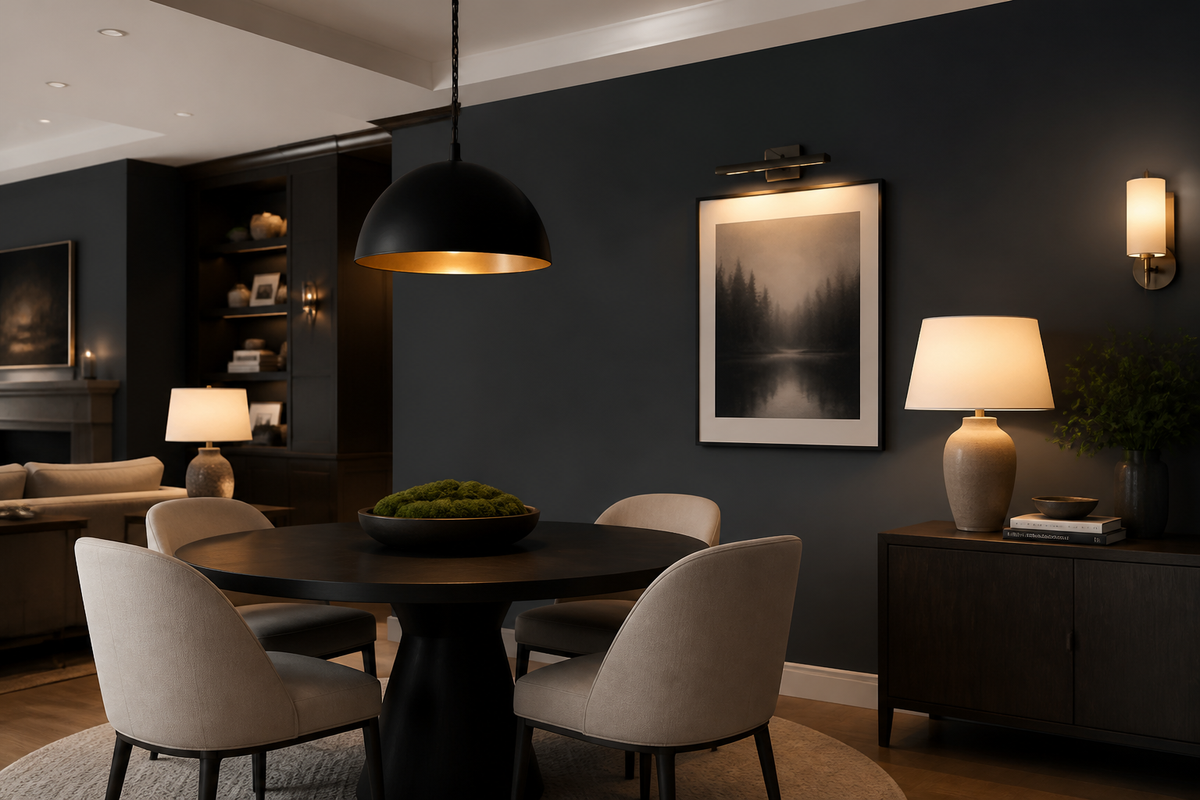
Best Lighting for Homes With Dark Walls
Dark walls can make a home feel dramatic, calm, and visually grounded, but they also absorb more light than pale finishes. That means the best lighting plan is usually not a single bright ceiling fixture. It is a layered approach that combines ambient, task, and accent lighting so the room feels balanced rather than dim.In most homes, dark paint or dark wall coverings benefit from three adjustments: more total lumens, better light placement, and fixtures that direct light onto useful surfaces. The goal is not to wash out the wall color. The goal is to keep depth and contrast while making the room functional and comfortable.What dark walls do to lightDark surfaces reflect less visible light back into the room. In practical terms, that means the same lamp that feels adequate in a white room may feel weak against charcoal, navy, forest green, espresso, or black walls.Because of that light absorption, rooms with dark walls often need both stronger ambient lighting and more local sources of illumination. A single overhead light can leave corners, seating areas, and work surfaces underlit even if the center of the room looks bright enough.Use layered lighting instead of one bright fixture The most effective lighting plan for dark walls uses layers. Each layer handles a different job, and together they reduce glare and shadows. Lighting layer What it does Why it helps with dark walls Ambient Provides overall room brightness Raises the base light level so the room does not feel heavy Task Lights specific activities such as reading, cooking, or grooming Prevents work areas from feeling dim even when walls absorb light Accent Highlights artwork, texture, shelving, or architecture Adds depth so dark walls look intentional rather than flat For many rooms, start with ambient light from a central fixture or several distributed fixtures. Then add task lights near seating, beds, counters, desks, or vanities. Finish with accent lighting to create visual separation between the wall and the objects in front of it.Choose the right fixture types Fixture choice matters as much as brightness. In homes with dark walls, fixtures that spread light broadly or bounce it across ceilings and furnishings usually work better than a single downward beam.Pendant lights for overall coveragePendant lights are useful when a room needs stronger general light over a dining table, kitchen island, or entry. A well-placed pendant can create a clear pool of light at the room's main activity zone while supporting the rest of the lighting plan. A dimmable pendant light can be especially practical because it lets you increase brightness during tasks and reduce intensity later.Wall lights to brighten vertical surfacesWall-mounted lighting is especially effective with dark walls because it puts light directly where the wall would otherwise absorb it. This can reduce contrast between the wall and the rest of the room, which makes the space feel more even. A compact rechargeable wall light can also help in hallways, stairs, bedrooms, and storage areas where extra wiring is not ideal.Portable lamps for local brightnessPortable lamps help break up shadows at eye level. They are useful beside a sofa, on a console, or on a bedside surface because they bring light closer to the user instead of relying on the ceiling alone. A cordless dimmable table lamp can add flexible ambient light to dark corners, shelves, or small rooms without requiring a permanent location.Use more lumens, but avoid harsh glareDark walls usually require higher total light output than light-colored rooms of the same size. That does not mean every bulb should be the brightest available. Too much intensity from one point can create glare, especially if the light source is exposed.Instead, distribute the output across multiple fixtures. Several moderate light sources usually feel better than one very bright lamp because they light the room more evenly. Dimmers are helpful because they let you tune the room for daytime, evening, and task use.Pick a color temperature that suits the roomColor temperature affects how dark walls read. Warm white light, often around 2700K to 3000K, tends to make dark walls feel richer and more comfortable in living rooms, bedrooms, and dining areas. Neutral white light, often around 3000K to 3500K, can work well in kitchens, bathrooms, and work-focused spaces where clarity matters more.Very cool light can make some dark paint colors feel flat or stark. In most homes, consistency also matters. If one fixture is very warm and another is very cool, the wall color can shift across the room in a way that feels unbalanced.Direct light toward ceilings, furniture, and reflective surfacesIn a room with dark walls, it helps to light surfaces that reflect more effectively. Ceilings, tabletops, rugs with lighter tones, metal details, mirrors, and pale upholstery can all help bounce light back into the space.This is why uplighting and shaded fixtures often perform well. They soften the contrast created by dark walls and spread light beyond the immediate beam. If you are choosing decorative fixtures, options within a broader lighting collection can help you combine overhead, wall, and portable light sources in the same room without relying on one type alone.Room-by-room lighting tips for dark wallsLiving roomUse a ceiling fixture or multiple distributed sources for base light, then add lamps near seating. Accent light on shelving, art, or a textured wall finish can keep the room from feeling visually compressed.BedroomUse soft ambient light plus bedside task lighting. Wall lights or portable lamps are often more comfortable than one bright overhead fixture, especially at night.KitchenCombine overhead lighting with direct task lighting over counters, islands, and sinks. Dark wall colors in kitchens benefit from neutral white light and good coverage that reduces shadows on work surfaces.Hallway or stair areaThese areas often feel darker faster because they have fewer windows and less floor space for lamps. Wall-mounted fixtures or low-profile rechargeable lights can improve visibility without major installation work.Common mistakes to avoid Using only one ceiling light for the entire room. Choosing bulbs that are bright but too cool for the wall color and room use. Leaving corners and vertical surfaces unlit. Ignoring dimmers, which make it harder to adapt the room throughout the day. Placing lamps too low or too far from the activity area. How to choose the best lighting planIf your walls are dark, the best lighting setup usually follows a simple sequence. First, make sure the room has enough ambient light. Second, add task lighting wherever people read, cook, dress, work, or move through the space. Third, use accent lighting to give the walls depth and keep the room from feeling closed in.That approach works better than trying to overpower dark walls with one oversized fixture. In most cases, balanced layering, warmer residential color temperatures, and thoughtful fixture placement matter more than maximum brightness alone.FAQWhat is the best type of lighting for dark walls?The best approach is layered lighting: ambient light for overall brightness, task light for specific activities, and accent light to highlight walls, art, or architectural features. This creates even illumination and reduces the heavy effect that dark walls can cause.Should bulbs be warm or cool in rooms with dark walls?Warm white bulbs around 2700K to 3000K usually work best in living rooms, bedrooms, and dining areas because they keep dark colors looking rich. Neutral white light around 3000K to 3500K is often better for kitchens, bathrooms, and work areas.Do dark walls require brighter bulbs?Usually, yes. Dark walls absorb more light, so the room often needs more total lumens than a light-colored room of the same size. It is generally better to spread that output across several fixtures instead of using one harsh source.Are wall lights good for dark rooms?Yes. Wall lights are effective because they illuminate the vertical surface directly, which helps reduce visual heaviness and improves balance across the room.
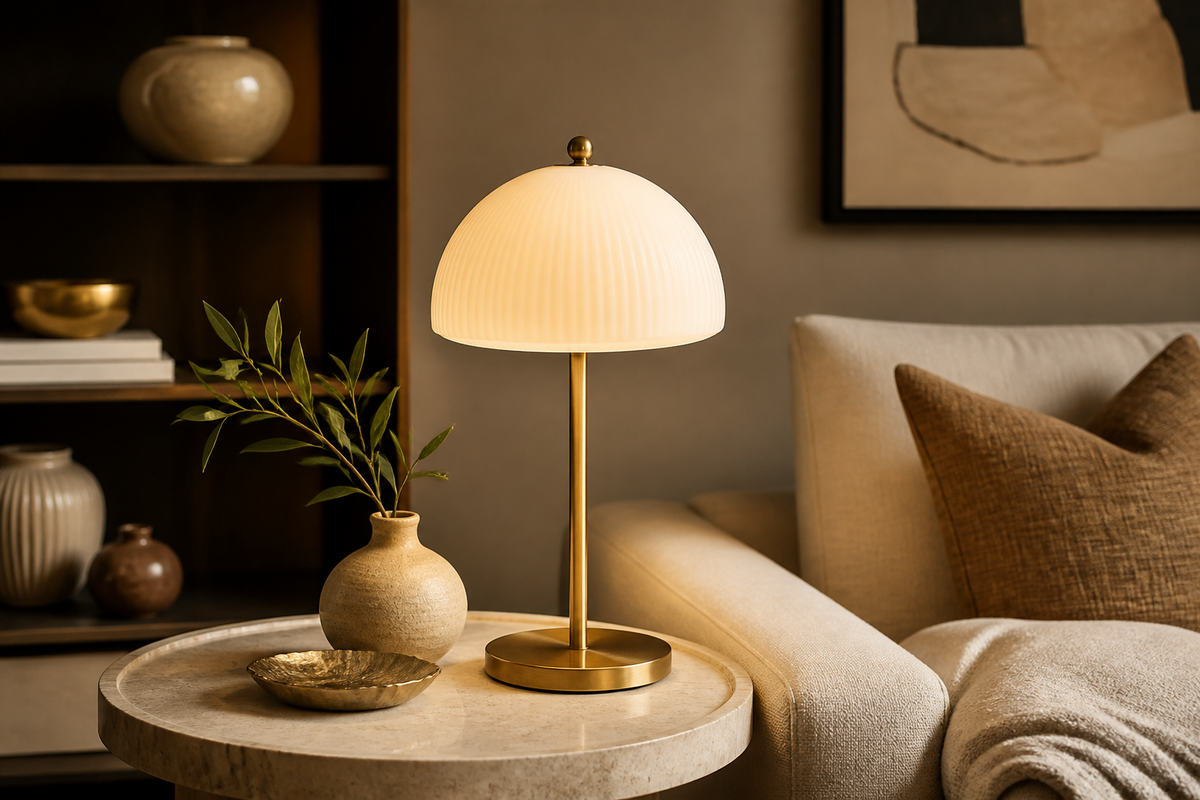
How to Pick a Lamp Gift That Looks Designer
A lamp gift looks designer when it feels intentional in four areas: scale, material, light quality, and placement. The safest choice is usually a simple lamp with a strong silhouette, warm light, and finishes that look substantial rather than overly decorative.If you are buying for someone else, focus less on trend-driven novelty and more on proportion, function, and versatility. That approach makes the gift easier to place in a bedroom, living room, office, or entry without looking random.Start with the type of lamp they will actually useThe most successful lamp gifts solve a real lighting need. A bedside lamp, desk lamp, cordless accent lamp, or small statement pendant each works differently, so the first decision is practical use.For most gifting situations, a table lamp or cordless lamp is the lowest-risk option because it does not require installation and can move between rooms. A cordless design also works well for renters, small apartments, shelves, patios, and dining tables, which is why a rechargeable option such as the Moon Cordless LED Dimmable Table Lamp can make sense when flexibility matters. The product description notes adjustable ambient light, USB recharging, and 8 to 10 hours of continuous use, which supports portable everyday use. Table lamp: best for bedside tables, consoles, desks, and living room surfaces. Cordless lamp: best for flexible placement and homes where outlet access is limited. Pendant light: best when you know the recipient is furnishing a specific dining area, kitchen island, or reading corner. Choose a silhouette that looks intentional, not busy Designer-looking lamps usually have a clear shape. Think globe, cone, pleated dome, cylinder, mushroom, or sculptural ceramic forms rather than bases with too many curves, ornaments, or mixed motifs.A clean silhouette reads more expensive because it feels edited. If you want the lamp to suit many interiors, choose one dominant idea: one strong base shape, one shade shape, and one or two materials at most.Shapes that usually look more refined Rounded or geometric bases with smooth surfaces Pleated or drum shades with simple proportions Slim metal stems with balanced shade sizes Globe forms that create soft ambient light If you are choosing a hanging fixture as a gift for a known project, a piece like the Pleated Ceramic & Brass Cocoon Pendant Light fits this principle because the design centers on a focused material story and a clear pleated form. The listing also notes ceramic and brass construction with customizable cord length, which can help the fixture fit a specific room more precisely.Pay close attention to size and proportion Even a well-designed lamp looks off if it is too small or too large for its setting. Proportion is one of the biggest differences between a lamp that looks designer and one that looks like an afterthought.For gift-buying, medium scale is usually safest. A lamp should feel large enough to anchor a surface, but not so large that it crowds books, trays, or bedside essentials. Placement Safer gift choice Why it works Nightstand Compact to medium table lamp Leaves room for daily essentials Desk Task-friendly lamp with controlled glare Supports reading and work Console or shelf Medium sculptural lamp or cordless accent lamp Adds height without dominating Dining table Cordless ambient lamp Creates mood without visible cords If you are unsure, avoid extremes. Oversized statement lamps and very tiny accent lamps are harder to place successfully in someone else’s home.Materials and finishes matter more than extra decoration A lamp looks more designer when the materials feel considered. Ceramic, metal, linen-look fabric, frosted glass, wood accents, and matte finishes often read more elevated than shiny plastics or heavily distressed surfaces.Material contrast can help, but restraint matters. One warm metal paired with ceramic or one painted metal paired with wood usually looks more sophisticated than a lamp combining many finishes at once.If you want a broader starting point for browsing, a focused category such as Design Lighting is more useful than shopping by novelty because it keeps attention on form, finish, and function rather than decoration alone.Do not overlook bulb color and light qualityA beautiful lamp can still look harsh if the light is wrong. Warm light generally makes interiors, shade materials, and finishes look better than cool blue-white light.For gifting, look for warm ambient output, dimming, or soft diffusion when possible. This is one reason rechargeable ambient lamps can work well: they are often chosen for mood lighting rather than strong overhead brightness, and the Moon Cordless LED model specifically mentions dimmable ambient light.A quick light quality checklist Warm light is usually more flattering than cool white light Dimmable output adds flexibility Opaque or frosted shades reduce glare Soft diffusion helps the lamp feel more architectural and less utilitarian Match the lamp to the recipient's style in broad termsYou do not need to identify their exact design style to choose well. It is usually enough to decide whether their home leans minimal, warm modern, classic, eclectic, or soft contemporary.Then choose a lamp that supports that direction without becoming too theme-specific. Minimal: matte finishes, simple cylinders, globes, black or white palettes Warm modern: ceramic, brass accents, soft curves, cream or muted tones Classic: balanced shapes, tailored shades, refined neutral finishes Eclectic: one sculptural form or color accent, but clean overall lines If the recipient already owns bold furniture or patterned decor, a quieter lamp often looks more expensive because it gives the room balance. If their space is very neutral, one sculptural lamp can become the accent without overwhelming the room.When a pendant light makes a better gift than a table lampA pendant light can be the better gift when the recipient is actively finishing a room and you know where the fixture will go. In that case, style alone is not enough; dimensions, hanging height, and room function matter.For example, the Soft Pastel Pendant Light combines wood and metal, comes in multiple sizes, includes dimmable options, and is described for dining rooms and kitchens, which makes it more appropriate for a defined placement than for a general surprise gift.Choose a pendant gift only if you know at least three things: the room, the approximate scale needed, and whether the recipient wants plug-in or hardwired lighting.A simple 7-point checklist before you buy Can the recipient use it immediately without changing the room? Does the silhouette look clear and uncluttered? Is the size versatile rather than extreme? Do the materials look substantial and easy to mix with existing decor? Will the light be warm, soft, or dimmable? Does it suit the recipient's general style direction? Would it still look good if the room decor changes later? If the answer is yes to most of these, the lamp will usually read more designer and less impulse-bought.FAQWhat makes a lamp look designer?A lamp usually looks designer when it has strong proportion, a clear silhouette, restrained materials, and flattering light output. Simplicity and scale are often more important than decoration.Is a cordless lamp a good gift?Yes, a cordless lamp is a practical gift because it can move between rooms and does not depend on outlet placement. It is especially useful for dining tables, shelves, patios, and small spaces.What lamp color is safest for gifting?Neutral finishes such as cream, matte black, soft white, muted metal, or natural ceramic are usually the safest because they fit more interiors. The goal is to complement existing decor rather than dominate it.Should I give a pendant light as a gift?A pendant light works best as a gift when you know the exact room, scale, and installation needs. For a general gift, a table lamp or cordless lamp is usually easier to place and use.
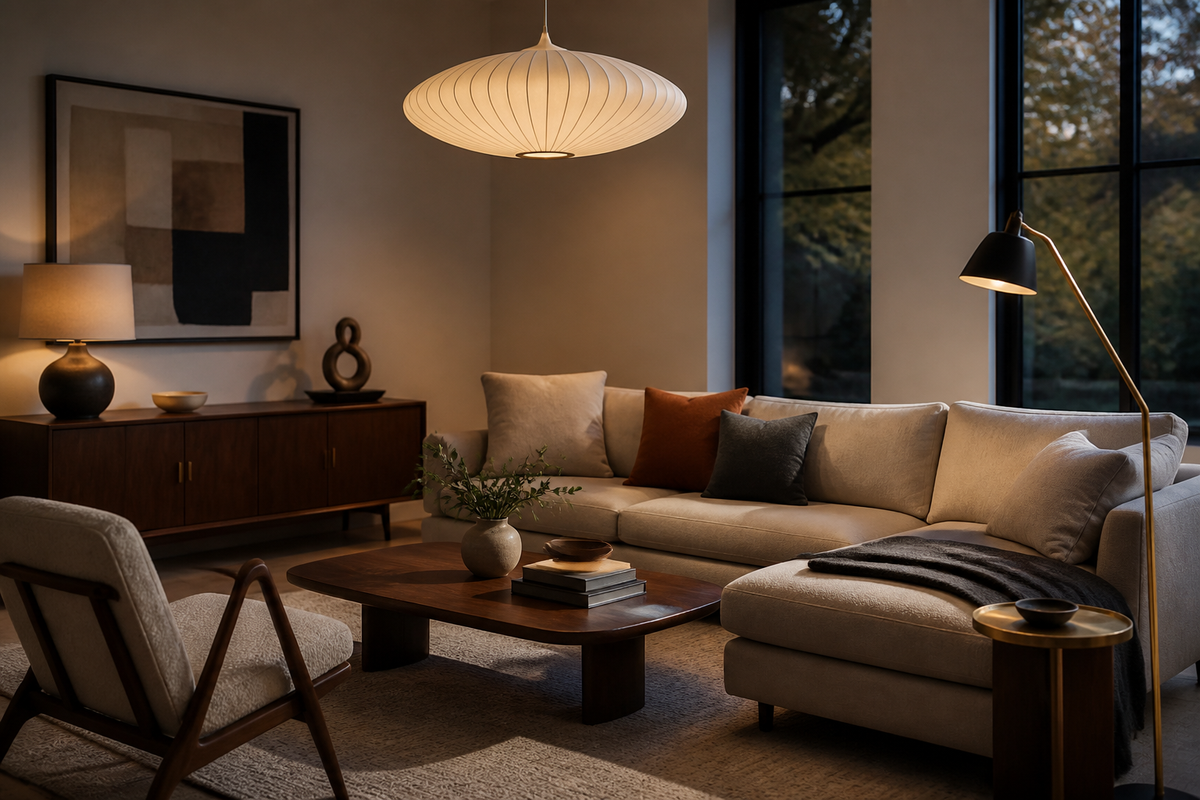
Modern Mid-Century Lighting Ideas for Living Rooms
Modern mid-century lighting in a living room works best when it combines clean lines, warm materials, and layered light. Instead of relying on one bright ceiling fixture, the goal is to mix ambient, task, and accent lighting so the room feels functional, balanced, and visually calm.Mid-century modern lighting usually features geometric shapes, globe forms, tapered silhouettes, brass or black metal finishes, and occasional wood details. In living rooms, these elements help lighting feel intentional without making the space look overly formal.What defines modern mid-century lightingModern mid-century lighting takes cues from 1940s to 1960s design but adapts them for current interiors. Common features include simple profiles, sculptural shapes, warm metallic finishes, frosted or opal glass, and a restrained mix of materials such as metal, wood, and ceramic.For a living room, this style usually avoids ornate crystal details, heavy farmhouse forms, and oversized industrial fixtures. The strongest choices look architectural and practical at the same time. Rounded shades and globe bulbs Sputnik, cone, dome, or drum-inspired silhouettes Brass, matte black, walnut-tone, or cream finishes Soft diffused light rather than harsh glare Fixtures with visible structure and balanced proportions How to layer lighting in a mid-century living roomA well-lit living room usually needs at least three layers: ambient light for overall visibility, task light for reading or focused use, and accent light to add depth. This matters in mid-century spaces because the style depends on clarity of form and shadow, not visual clutter.If the room has only one ceiling light, it can feel flat. Adding a floor lamp near seating and a wall or table light near darker edges makes the room feel more complete and easier to use in the evening.Ambient lightingAmbient lighting is the base layer. In a mid-century living room, this often comes from a semi-flush mount, pendant, chandelier, or a combination of lamps if there is no centered overhead box.Task lightingTask lighting supports reading, conversation areas, and side tables. Look for directional shades, swing arms, or lamps placed low enough to light the seating area without shining directly into the eyes.Accent lightingAccent lighting highlights shelves, artwork, textured walls, or architectural corners. Small wall lights or portable lamps can create this effect without crowding the room.Best fixture types for this look Different fixture types solve different problems in a living room. The most successful layouts use one main visual anchor and one or two supporting lights rather than repeating the same fixture everywhere. Fixture type Best use Mid-century traits Pendant or chandelier Main ambient light Globe forms, brass details, sculptural geometry Floor lamp Reading corner or sofa end Arc arms, cone shades, slim metal frames Wall sconce Accent or secondary task light Compact profiles, opal shades, warm finishes Table lamp Side tables and consoles Ceramic bases, domed shades, soft diffused glow For homes that need a softer overhead statement, a ceramic and brass pendant can work well because it introduces sculptural material contrast without looking busy. A piece such as the Pleated Ceramic & Brass Cocoon Pendant Light reflects the ceramic and brass mix described in the store's lighting catalog.If you are comparing broader fixture categories before choosing a specific shape, browsing a focused design lighting collection can help clarify whether your room needs a pendant, wall light, or smaller secondary fixture first.How to choose the right size and placementScale matters more than decoration in mid-century rooms. A fixture that is too small disappears, while one that is too large can overwhelm low-profile furniture and make the room feel top-heavy.In most living rooms, the main overhead fixture should visually relate to the seating area, not the entire open floor plan. Floor lamps should sit just behind or beside the sofa line, and wall lights should align with sightlines when seated. Center pendants or chandeliers over the main conversation zone Keep floor lamps close enough to seating for practical use Use pairs of sconces only when the architecture is symmetrical Leave visual breathing room around sculptural fixtures Choose warm bulbs to support the softer mid-century palette Materials and finishes that work bestMid-century lighting looks most convincing when finishes feel edited. Brass, black, walnut-tone wood, ceramic, linen-look diffusers, and frosted glass usually work better than highly reflective chrome or heavily distressed finishes.Mixing two materials often creates more depth than choosing one finish for everything. For example, wood and painted metal can make a room feel warmer, while brass and white ceramic create a more refined contrast.A pendant with wood and metal detailing can suit living rooms that lean lighter or more Scandinavian in tone. The Soft Pastel Pendant Light uses that wood-and-metal combination and is described in the store file as a dimmable pendant available in multiple sizes.Lighting ideas for small living rooms Small living rooms benefit from fixtures that keep the floor area clear and prevent visual crowding. In these spaces, wall-mounted or cordless lighting can be more useful than adding several large lamps.Choose one compact overhead light, one reading light, and one subtle accent source. This keeps the room functional without making every corner compete for attention.When wiring is limited, a rechargeable table lamp can add a soft glow on a shelf, side table, or media console without introducing another visible cord. The Moon Cordless LED Dimmable Table Lamp is listed as a rechargeable orb lamp with adjustable ambient light and 8 to 10 hours of runtime, which suits flexible accent lighting in living areas.For tighter layouts, a low-profile wall light can also help reduce table clutter. The Ultra USB Motion Sensor Rechargeable Wall light is described as a wireless, battery-powered wall light, which makes it practical where hardwiring is not possible.Common mistakes to avoidThe most common mistake is treating mid-century lighting as a single statement piece instead of a system. Even a strong chandelier will not solve glare, dark corners, or reading light needs on its own. Using cool white bulbs that make warm finishes look flat Choosing fixtures with too many decorative details Placing lamps too high above seating level Relying only on recessed ceiling lights Matching every fixture exactly instead of coordinating shapes and finishes If the room feels unfinished, the issue is usually not style but balance. A better mix of overhead, side, and accent light usually improves the space more than replacing all fixtures with larger versions.How to build a cohesive lookStart with one dominant fixture type based on the room's main need: overhead light, reading light, or accent light. Then repeat one or two visual cues such as brass accents, globe shades, or wood details in smaller supporting pieces.This approach keeps the room coherent without making it look staged. Mid-century interiors generally feel strongest when the lighting is intentional, comfortable, and easy to use throughout the day and evening.FAQWhat color temperature works best for mid-century living room lighting?Warm white bulbs, typically around 2700K to 3000K, usually work best. They support the warmer materials and softer mood associated with mid-century interiors.Can you mix black and brass finishes in mid-century lighting?Yes. Black and brass are commonly mixed in modern mid-century rooms as long as the shapes stay simple and the overall palette remains controlled.Are pendant lights suitable for living rooms?Yes, if ceiling height and placement allow them to act as the main ambient light source. They work especially well over a central seating area or in rooms where a flush mount feels too plain.How many light sources should a living room have?Most living rooms function better with at least three light sources: one ambient, one task, and one accent light. Larger rooms may need additional layers to avoid dark zones.
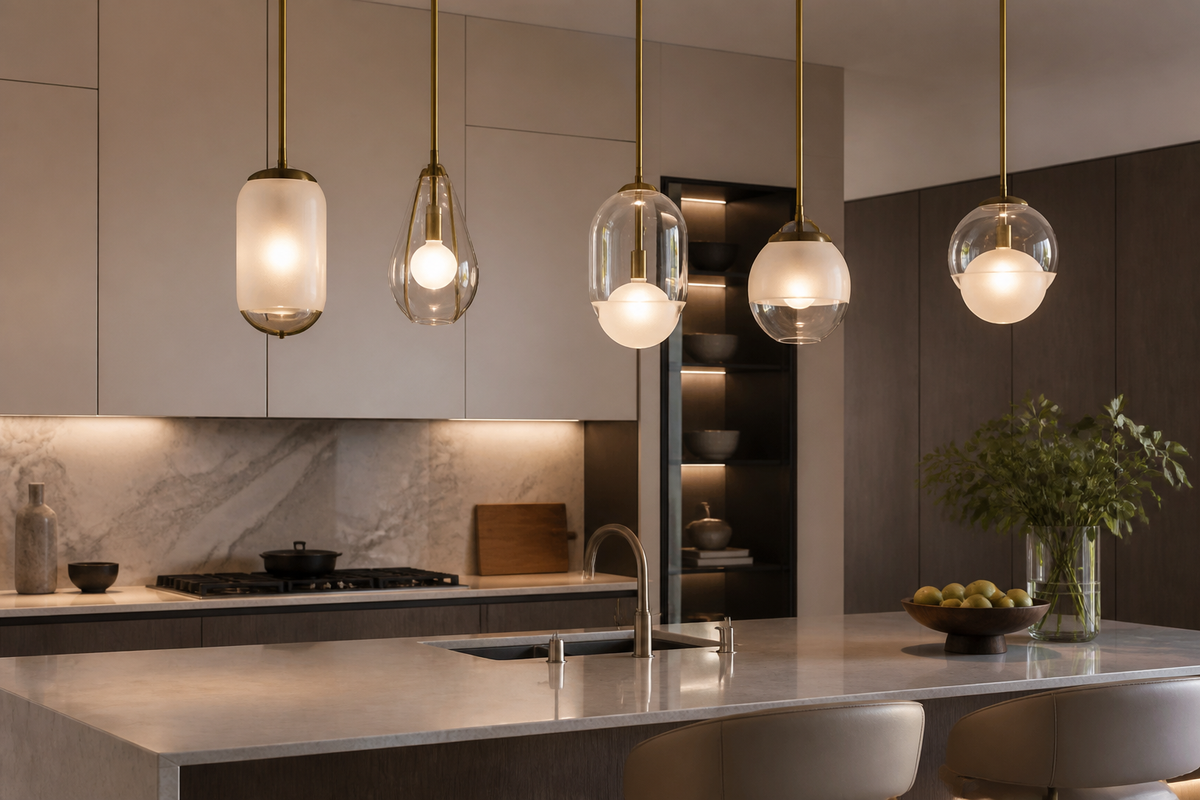
How to Choose Glass Lights for Modern Interiors
Glass lights work well in modern interiors because they add brightness without adding visual weight. They can read as minimal, sculptural, or warm depending on the glass finish, fixture shape, and the material paired with the glass.The best choice depends on four factors: the room's function, the fixture's scale, the glass type, and the quality of light it produces. If you choose those elements in the right order, glass lighting will feel intentional rather than decorative.Start with the room's purposeChoose the fixture type based on what the room needs the light to do. Ambient lighting fills the room, task lighting supports work, and accent lighting highlights surfaces or objects.In kitchens and dining areas, glass pendants are often useful because they direct light downward while keeping the space visually open. For general browsing across modern fixture types, a design lighting collection can help you compare proportions and silhouettes across rooms. Quick room-by-room guidance Kitchen island: Use pendants with focused downward light and enough spacing to avoid glare. Dining area: Choose a fixture that anchors the table without blocking sightlines. Living room: Use glass fixtures as one layer within a broader lighting plan, not as the only light source. Bedroom: Favor diffused or dimmable light over exposed brightness. Hallway or stair zone: Use compact wall or ceiling lighting that adds visibility without bulk. Choose the right glass finish The glass finish changes both the look of the fixture and the behavior of the light. This matters as much as the shape of the lamp itself. Glass type Best use Effect in a modern interior Clear glass Spaces that need brightness and openness Keeps the room airy and shows the bulb or inner structure Frosted or opal glass Bedrooms, dining areas, living rooms Softens glare and creates more even ambient light Smoked or tinted glass Mood lighting and decorative focal points Adds contrast and depth, often with a more sculptural feel Textured or ribbed glass Areas that need softer sparkle with some diffusion Introduces detail while still fitting clean-lined interiors If the room already has many strong finishes, clear or lightly frosted glass is usually easier to integrate. If the palette is restrained, smoked or ribbed glass can add depth without making the space feel heavy.Match the fixture scale to the space Modern interiors rely on proportion. A glass light that is too small can disappear, while one that is too large can dominate the room and create harsh reflections.Start with three measurements: ceiling height, furniture width, and open clearance around the fixture. Over a dining table or kitchen island, the light should feel centered to the surface below rather than floating independently in the room.What to check before buying Ceiling height, especially for pendants with a visible drop Fixture diameter relative to the table, island, or bedside Clearance in walkways and sightlines Whether multiple pendants will look better than one larger fixture For example, a compact pendant with a defined shape can suit smaller dining zones better than a wide chandelier. A piece such as the Pleated Ceramic & Brass Cocoon Pendant Light shows how a focused hanging fixture can combine sculptural form with practical placement over a surface. Coordinate glass with surrounding materialsGlass rarely works alone. In modern interiors, it usually looks best when it relates clearly to nearby finishes such as metal, wood, stone, plaster, or painted cabinetry.Warm metals like brass can make glass feel softer and more architectural. Wood details can reduce the coolness that clear glass sometimes introduces. For example, the Soft Pastel Pendant Light combines wood and metal details in a way that suits cleaner contemporary rooms where mixed materials matter as much as the light source itself. Simple matching rules Pair clear glass with warm metals or natural wood if the room feels stark. Use frosted glass when polished stone or glossy cabinetry already reflects a lot of light. Use tinted glass carefully in darker rooms because it can reduce perceived brightness. Repeat one nearby finish so the light feels connected to the room. Prioritize light quality, not only appearanceA glass fixture can look right and still perform poorly if the bulb, diffusion, or dimming is wrong. Always consider how the light will look at night, not only how the fixture looks when switched off.For dining rooms, bedrooms, and living spaces, dimmable light is usually the safest choice because glass can amplify brightness and glare. In flexible spaces, a rechargeable lamp such as the Moon Cordless LED Dimmable Table Lamp can add a softer secondary layer of ambient light, with adjustable output and cordless placement for indoor or outdoor use. The product description notes 8 to 10 hours of continuous use and USB recharging in about 2 hours. Key performance factors Bulb visibility: Clear glass often exposes the bulb, so bulb shape and brightness matter. Diffusion: Frosted or layered glass helps soften hotspots. Color temperature: Warm light usually suits residential modern interiors better than cool white light. Dimming: Important for glass fixtures in multi-use rooms. Use glass lights as part of a layered plan One glass fixture rarely solves all lighting needs. Modern interiors usually work best with layered lighting: ambient light for overall visibility, task lighting for specific activities, and accent lighting for depth.That is why pendants often perform better when supported by discreet wall, table, or under-cabinet lighting. In circulation areas or low-profile settings, the Ultra USB Motion Sensor Rechargeable Wall light is an example of supplemental lighting that adds function without requiring a visually dominant fixture. Common mistakes to avoid Choosing tinted glass in a room that already lacks natural light Using exposed clear glass bulbs that create glare at eye level Hanging pendants too high or too low for the furniture below Mixing too many glass shapes in one open-plan area Relying on one ceiling fixture instead of layering light sources When in doubt, simplify. A restrained glass form with good proportions and controllable light output usually lasts longer visually than a highly decorative fixture chosen only as a statement piece.How to make the final choice Define the fixture's job: ambient, task, or accent. Pick the glass finish based on brightness and glare needs. Check scale against the room, furniture, and ceiling height. Match the fixture's metal or wood details to nearby finishes. Confirm bulb type, color temperature, and dimming options. Make sure the fixture supports a layered lighting plan. If you follow that sequence, glass lights will feel consistent with the architecture of the room and useful in daily life. In modern interiors, the right glass light should improve clarity, balance, and atmosphere at the same time.FAQWhich glass finish is best for modern interiors?There is no single best finish for every room. Clear glass works well when you want openness and brightness, while frosted or opal glass is better when you need softer, more diffused light.Are glass lights practical for kitchens?Yes, especially over islands and dining areas. They can provide focused task lighting while keeping the room visually light, but glare control and cleaning access should be considered.Do glass light fixtures make a room look bigger?They can help a room feel more open because glass has less visual mass than many opaque materials. Clear glass is especially useful in smaller rooms where heavy fixtures may feel intrusive.Should glass lights be warm or cool in tone?In most residential interiors, warm light is easier to live with and better for comfort. Cooler light may work in task-heavy areas, but it can make glass feel harsher in living spaces.
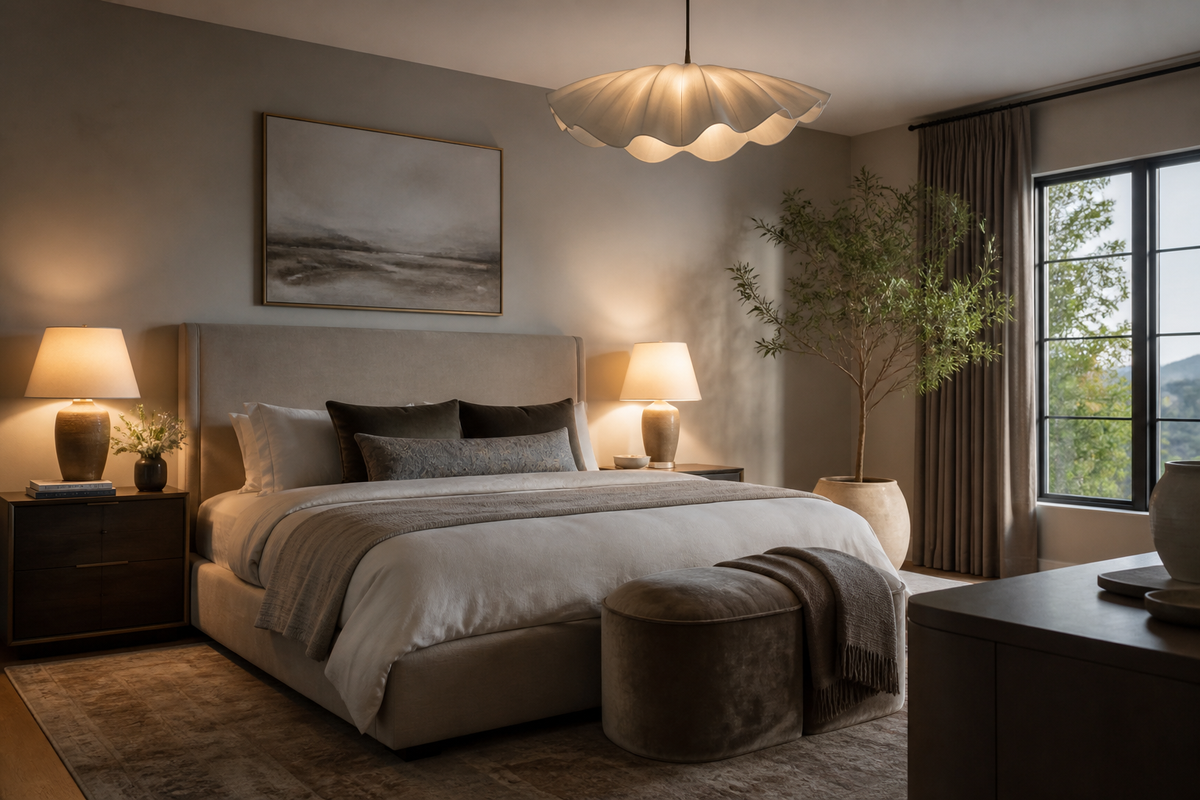
Cool Bedroom Lights That Feel Grown-Up, Not Gimmicky
Cool bedroom lights do not need novelty shapes, harsh color effects, or cluttered string-light setups to feel interesting. The most grown-up options create depth, softness, and function at the same time, usually by layering ambient, task, and accent light.If you want a bedroom that feels modern rather than gimmicky, start with cleaner fixture shapes, warmer light output, and placement that supports how the room is actually used. The ideas below focus on lighting choices that add personality without making the room feel busy.1. Plug-in or hardwired wall sconces for a cleaner bedside setup Wall sconces instantly make a bedroom feel more intentional because they free up the nightstand and place light at a useful height. They work especially well in smaller bedrooms where every surface matters.A bedside sconce is more grown-up than novelty lighting because it solves a practical problem while keeping the room visually calm. If you want to browse streamlined options, a modern lighting collection is the most useful place to compare silhouettes and finishes. Best for: readers, small bedrooms, minimal nightstands Most polished look: matching sconces on both sides of the bed Light quality to aim for: soft warm white, not blue-white 2. Cordless table lamps that add glow without visible clutterA cordless lamp works well when you want light on a dresser, shelf, or bedside table without routing cords across the room. This makes the lighting feel deliberate instead of improvised.The Moon Cordless LED Dimmable Table Lamp is designed as a rechargeable ambient lamp with adjustable light, 8 to 10 hours of continuous use, and USB recharging, which makes it useful for soft evening light in a bedroom. Orb-shaped lamps like this tend to feel more refined when used as low, diffused accent lighting rather than a bright primary source.3. A single pendant light with a simple sculptural shapeIf your bedroom has one central ceiling point, a pendant can make the room feel designed rather than builder-basic. The key is choosing a shape with texture or form, not something overly themed or flashy.The Pleated Ceramic & Brass Cocoon Pendant Light is a good example of a fixture that adds character through material and proportion rather than novelty details. A soft pendant works especially well in bedrooms with high ceilings or in rooms where the overhead fixture is visible from the bed.4. Motion-sensor night lighting for practical, low-level illuminationMany people want bedroom lighting that feels calm at night but still helps with movement after dark. Low-level motion lighting handles that job better than turning on an overhead fixture.The Ultra USB Motion Sensor Rechargeable Wall light is a battery-powered option described for bedrooms, closets, and hallways, with no installation hassle because it is wireless and rechargeable. This type of light feels more adult when used as a subtle path or bedside glow rather than as a decorative focal point.5. Warm-dim lighting instead of color-changing effectsOne of the fastest ways to make bedroom lighting feel more mature is to prioritize warm, dimmable light. This creates atmosphere without drawing attention to the technology itself.In practice, that means looking for soft diffused shades, indirect glow, and adjustable brightness. Dimming is usually more versatile than multicolor effects because it supports reading, winding down, and nighttime movement with the same fixture.6. Layered lighting instead of one dramatic statement piece The most polished bedrooms rarely rely on a single light source. They combine overhead light, bedside light, and one softer accent source to prevent the room from feeling flat. Layer Purpose Good bedroom example Ambient General room brightness Pendant or ceiling fixture Task Reading or focused use Bedside sconce or table lamp Accent Soft mood lighting Cordless lamp or low wall light This approach feels grown-up because each light has a job. It also helps the room look better in the evening, when overhead-only lighting can feel too stark.7. Materials and finishes that add interest without looking playfulIf you want cool lighting that still feels adult, focus on what the fixture is made from. Ceramic, brass, wood, linen, frosted glass, and matte metal usually read as more grounded than plastic, mirrored finishes, or overly bright acrylic forms.For example, the Soft Pastel Pendant Light combines metal and wood details in a dimmable pendant format, which is a more restrained way to introduce personality than a novelty lamp shape. Even when a light includes color, cleaner materials help it stay sophisticated.How to choose cool bedroom lights without making the room feel gimmicky Choose warm white light over stark cool white for a softer evening look. Use one sculptural feature at a time, not several competing statement fixtures. Hide cords where possible, or choose cordless lighting for cleaner surfaces. Pick shades and diffusers that soften glare. Let lighting support sleep, reading, and movement instead of acting as decoration alone. A simple rule helps: if the fixture would still look good in daylight when it is turned off, it is more likely to age well. That is usually what separates a cool bedroom light from a gimmicky one.FAQWhat color temperature makes a bedroom feel more grown-up?Warm white light usually feels calmer and more refined than cool white light. It also reduces the harsh look that can make a bedroom feel clinical.Are LED strip lights always gimmicky in a bedroom?No, but they can look distracting if the light source is fully visible or overly bright. They work better when hidden behind a headboard, shelf, or architectural edge for indirect glow.What is the best type of bedside light for a small bedroom?Wall sconces are often the most efficient choice because they free up nightstand space. A small cordless lamp also works well when wiring is not practical.Can pendant lights work in a bedroom?Yes. Pendant lights work well as ambient lighting, especially in rooms with enough ceiling height and a fixture shape that diffuses light softly.
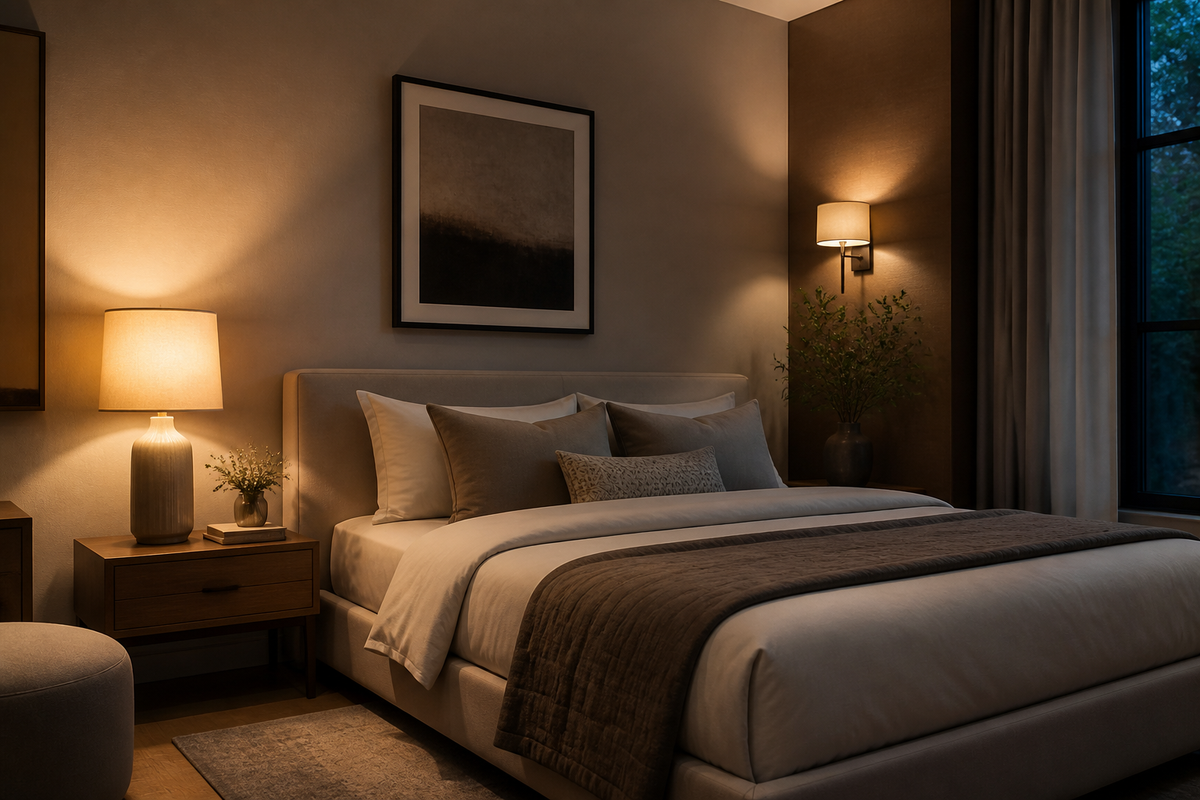
How to Use Decorative Lamps for Bedroom Styling
Decorative lamps help a bedroom feel finished because they do more than add brightness. They shape mood, support bedtime tasks, and add form, texture, and visual balance. The most effective bedroom styling uses lamps as part of a lighting plan, not as isolated accents.A simple approach is to combine ambient light, task light, and decorative glow. In practice, that means choosing lamp types based on where you read, where you move at night, and which surfaces or corners need visual weight.Start with the lamp's job in the roomBefore choosing a lamp shape or finish, decide what the lamp needs to do. In a bedroom, decorative lamps usually serve one of three roles: bedside task lighting, soft ambient lighting, or accent lighting that highlights a surface, corner, or wall.If the lamp is mainly for reading, place function first and choose a shade and height that direct light downward. If the goal is atmosphere, a dimmable lamp with a diffused glow works better than a bright exposed bulb. For small rooms, a rechargeable lamp or wall-mounted light can reduce visual clutter while still adding warmth.Choose the right decorative lamp type Different lamp types solve different bedroom styling problems. Matching the lamp type to the room layout makes the space feel intentional rather than crowded.Bedside table lampsTable lamps are the most common choice because they combine decoration and task lighting. They work well when your nightstands need height, symmetry, or a softer transition between the bed and surrounding furniture.A compact cordless option such as the Moon Cordless LED Dimmable Table Lamp is useful when outlets are awkwardly placed or when you want a cleaner surface with fewer visible cords. The product details note adjustable ambient light, USB recharging, and about 8 to 10 hours of continuous use, which suits flexible bedside placement.Wall lamps and low-glare night lightingWall lighting helps when the bedroom is short on table space or when you want light closer to the bed without adding bulk. This is especially useful in narrow rooms, guest rooms, and children's rooms where clear pathways matter.A rechargeable wall light can also support nighttime movement without turning on a bright overhead fixture. The Ultra USB Motion Sensor Rechargeable Wall light is described as suitable for bedrooms and other low-light transition areas, with wireless battery-powered use that avoids installation hassle.Pendant lights used as decorative bedside lightingPendant lights can replace bedside table lamps when you want to free up surface space or create a more architectural look. They are most effective when hung evenly on both sides of the bed and scaled to the width of the headboard and nightstands.For a softer decorative effect, consider shapes and materials that diffuse light rather than produce glare. The Pleated Ceramic & Brass Cocoon Pendant Light and the Soft Pastel Pendant Light are both relevant examples because they emphasize decorative form and bedroom-friendly softness over harsh direct output.Use placement to create balance Lamp placement affects how calm or cluttered a bedroom feels. The goal is not perfect symmetry in every room, but visual balance across the bed zone and surrounding furniture. Place matching lamps on both nightstands for a formal, balanced look. Use one larger lamp on a dresser or chest if the room already has lighting on one side of the bed. Add a small accent lamp to a corner, shelf, or vanity to prevent the room from feeling flat at night. Keep circulation paths clear so cords, shades, and bases do not interrupt movement. In asymmetrical rooms, you can still create balance by repeating a finish, shape, or shade color instead of repeating the exact lamp.Match lamp scale to bedroom furnitureScale is one of the main reasons decorative lamps look out of place. A lamp that is too small disappears, while one that is too large can overpower the bed or make a nightstand feel cramped.Use the nightstand and headboard as reference points. A bedside lamp should generally feel proportionate to both, with enough height to be useful when seated in bed but not so tall that the bulb shines directly into your eyes. Bedroom element What to look for Small nightstand Compact base, narrower shade, lighter visual weight Wide nightstand Taller or broader lamp that can hold visual balance Low bed or platform bed Moderate lamp height to avoid the lamp looking oversized Room with limited floor area Wall lights or pendant lights to keep surfaces open Style decorative lamps with surrounding decor A decorative lamp should connect with nearby materials and shapes. That does not mean every finish must match, but the lamp should repeat at least one element already in the room, such as brass tones, ceramic textures, wood details, or soft rounded forms.Keep nearby styling simple. A lamp, one book, a tray, or a small object is often enough on a bedside table. Overfilling the surface weakens the lamp's role and makes the bedroom look less restful.If you need more inspiration for finishes and forms that work across modern interiors, a general design lighting reference can help compare silhouettes without forcing a specific style choice.Pick bulbs and shades for a softer bedroom effectEven a well-styled lamp can feel wrong in a bedroom if the bulb is too bright or too cool in color. Bedrooms usually benefit from warm light and controlled diffusion. Choose warm color temperatures for a calmer look. Use dimmable lamps where possible for evening flexibility. Prefer shades or diffusers that soften glare near the bed. Avoid exposed bulbs at eye level unless the brightness is very low and well controlled. This is where decorative lamps often outperform overhead lighting for styling. They create smaller pools of light that make a room feel layered rather than uniformly bright.Use decorative lamps to define bedroom zonesBedrooms often serve more than one purpose. A lamp can help separate the sleep area from a reading chair, vanity, dresser, or shelf without adding a divider.For example, a small lamp on a dresser gives that surface a distinct role at night. A wall lamp near the bed marks the sleep zone, while a pendant or table lamp in another corner helps the room feel complete from multiple angles.Common mistakes to avoid Using only one overhead light and expecting lamps to act as decoration afterward. Choosing lamps that are too small for the bed and nightstands. Placing bright bare bulbs at eye level beside the bed. Ignoring cord management in visible bedside areas. Adding too many decorative objects around the lamp, which reduces function and visual clarity. If the room feels unfinished, the fix is often not another accessory. It is usually better lamp placement, better scale, or a warmer bulb.A simple formula for bedroom lamp styling Choose the main bedside lighting type: table, wall, or pendant. Add one secondary decorative light source elsewhere in the room. Match lamp scale to the bed and furniture, not just to the empty surface. Use warm, soft light and dimming if possible. Keep surrounding decor restrained so the lamp can do both the visual and functional work. This approach keeps the room practical while making the lighting feel intentional. Decorative lamps work best in bedrooms when they support rest, improve usability, and contribute shape, texture, and balance at the same time.FAQWhere should decorative lamps go in a bedroom?Common placements include nightstands, dressers, reading corners, and wall positions beside the bed. The best location depends on whether the lamp is meant for reading, ambient light, or accent styling.Can decorative lamps replace bedside lamps?Yes, if they provide enough usable light for bedtime tasks. Pendant lights and wall lights can replace bedside table lamps when they are positioned correctly and produce low-glare illumination.What type of lamp is best for a small bedroom?Wall-mounted, rechargeable, or narrow-base lamps usually work best in small bedrooms because they save surface space and reduce visual crowding.Should bedroom lamps match?They do not need to match exactly. Bedrooms often look balanced when lamps share a common element such as height, color, material, or shape.