

How to Choose Stylish Area Rugs for Every Room
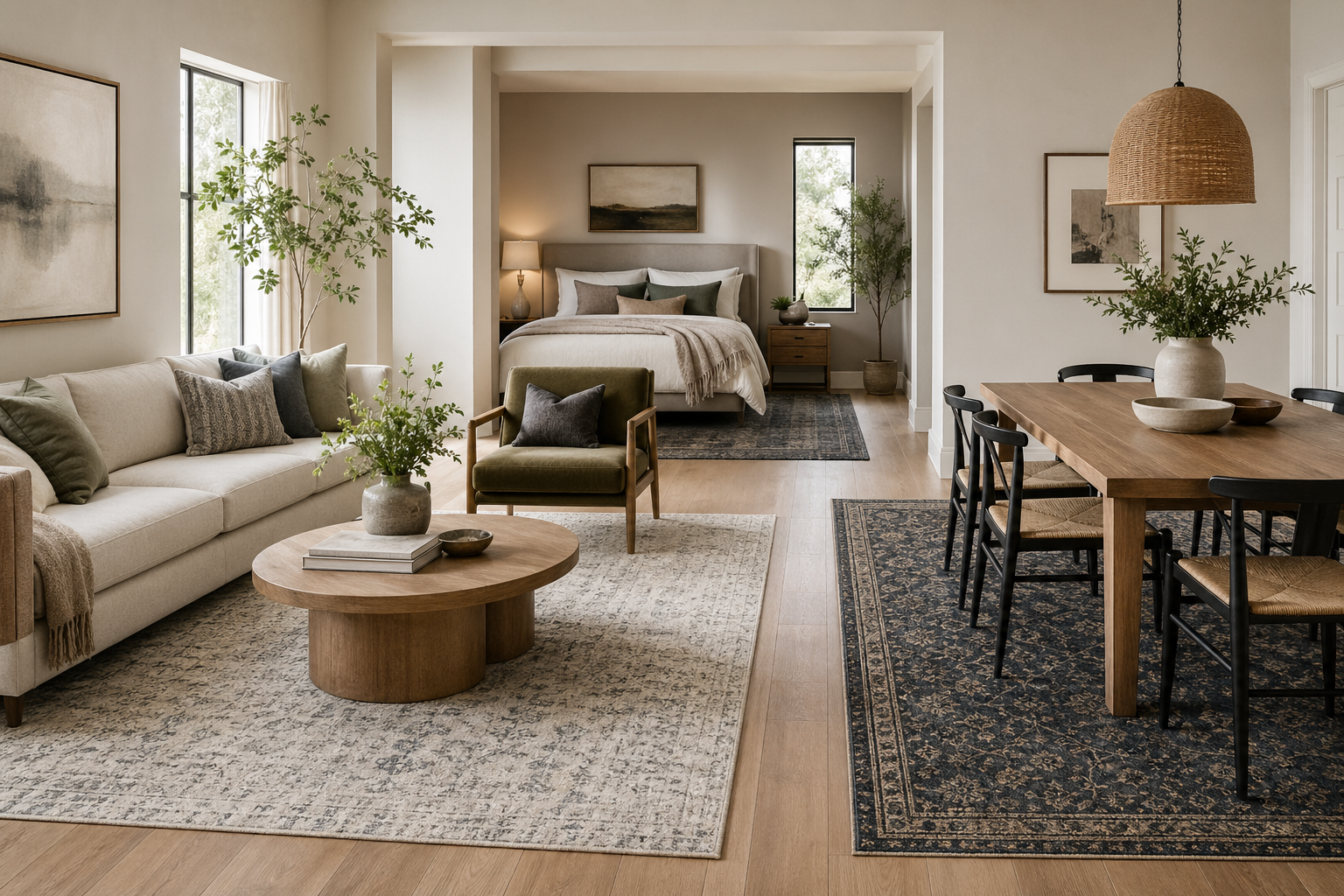
Choosing an area rug starts with function, then moves to size, material, and style. A rug should fit the room layout, support daily use, and visually connect furniture instead of floating alone. When those basics are right, the room looks more balanced and feels more finished.The most useful way to choose a stylish rug is to assess each room separately. Living rooms, bedrooms, dining rooms, hallways, and entryways all place different demands on size, texture, and durability.Start with room function and trafficBefore selecting a pattern or color, identify how the room is used. High-traffic spaces such as entryways, hallways, and family rooms usually need durable, easy-to-clean materials and lower piles that do not trap debris or obstruct door movement.Lower-traffic spaces such as bedrooms can support softer textures and more delicate finishes. This first step helps narrow the rug category before style decisions begin.Choose the right rug size first Size has the strongest effect on how polished a room looks. A rug that is too small can make furniture appear disconnected, while a properly scaled rug helps define the seating or sleeping area clearly.As a general rule, leave a visible border of flooring around the rug, and make sure key furniture pieces relate to the rug rather than sitting far outside it. In most rooms, it is better to size up when deciding between two options.Living room sizingIn a living room, the rug should usually anchor the main seating group. Front legs of the sofa and chairs often sit on the rug at minimum, while a larger rug can hold all furniture legs for a more unified layout.Common living room rug sizes include 8 x 10 feet and 9 x 12 feet, depending on room scale and furniture spacing. The rug should generally extend beyond the sofa width so the arrangement feels intentional.Bedroom sizingIn a bedroom, the rug should extend beyond the sides and foot of the bed so there is a soft landing area underfoot. For larger beds, placing the rug mostly under the lower two-thirds of the bed often creates a balanced look without hiding too much of the design.Smaller rooms can also use runners on each side of the bed if a full large rug is impractical.Dining room sizingA dining room rug should be large enough for the table and chairs to remain on the rug, even when chairs are pulled out. If chair legs catch the rug edge, the layout feels awkward and can wear unevenly over time.Measure the table and allow extra clearance on all sides before choosing a size.Hallway and entry sizingRunners should leave visible flooring along the sides so they do not look wall-to-wall unless that is the intended built-in effect. In entryways, the rug should fit the landing area without blocking the door swing.Match rug material to the room Material affects appearance, comfort, maintenance, and durability. Choosing the right one is often more important than choosing a trend-forward pattern. Material type Best for Key benefit Main consideration Wool Living rooms, bedrooms Soft, resilient, naturally insulating Usually higher cost and may shed at first Cotton Casual rooms, smaller rugs Lightweight and often easy to move Can wear faster in heavy traffic Jute or sisal Living rooms, entry areas, layered styling Natural texture and relaxed look Can feel rougher underfoot and may stain easily Synthetic fibers Dining rooms, hallways, homes with pets or children Often stain-resistant and budget-friendly Texture and longevity vary by construction High-pile or plush constructions Bedrooms, low-traffic sitting areas Soft feel and warmth Harder to clean and less practical under dining chairs If the room sees frequent spills, shoes, pets, or food, durability and cleanability should lead the decision. In quieter rooms, comfort and texture can play a larger role.Use color and pattern to support the roomA stylish rug does not need to dominate the space. In many rooms, the best choice is a rug that supports the main palette, repeats one or two accent tones, and adds enough pattern or texture to create depth.Light rugs can make small rooms feel more open, but they show dirt more easily in busy areas. Darker or patterned rugs tend to hide wear better and can visually ground large furniture pieces. If the room already has bold artwork, patterned curtains, or statement upholstery, a quieter rug often creates better balance.Consider shape and visual balanceRectangular rugs work in most rooms because they align naturally with common furniture layouts. Round rugs can soften angular rooms, highlight a small seating area, or work well under round tables.Shape should follow the furniture arrangement rather than compete with it. The goal is to reinforce the room layout so the rug feels integrated instead of decorative only.Room-by-room styling guidanceLiving roomChoose a rug that connects the sofa, chairs, and coffee table into one visual zone. Medium-pile wool, flatweave, or durable synthetic rugs often work well because they balance comfort with everyday practicality.For a modern look, consider subtle geometric patterns, tonal designs, or textured neutrals rather than highly contrasting motifs.BedroomPrioritize softness and warmth in bedrooms. Plush textures, soft neutrals, and understated patterns usually support a calm atmosphere better than busy, high-contrast designs.Make sure the rug extends enough around the bed to remain visible and functional.Dining roomUse a low-pile or flatweave rug so chairs slide more easily. Pattern can be helpful here because it tends to disguise crumbs or small marks between cleanings.Avoid very thick or shaggy rugs under dining furniture.EntrywaySelect a durable rug with a stable surface that handles dirt and repeated foot traffic. Patterns, darker tones, and lower piles are often the most practical choice.Confirm that doors can open freely over the rug if it sits directly inside the entry.HallwayUse a runner that fits the corridor length and leaves even floor margins on both sides. This creates a tailored look and reduces the chance that the rug appears too narrow or oversized.Do not overlook rug padsA rug pad improves grip, reduces shifting, helps protect flooring, and can extend rug life by limiting friction. It can also add light cushioning and support more even wear.Choose a pad matched to both the floor type and the rug construction. This is especially important in high-traffic spaces and under larger rugs.Common mistakes to avoid Choosing a rug based on pattern before checking size Using a rug that is too small for the furniture layout Selecting high pile for dining rooms or tight-clearance doors Ignoring maintenance needs in pet, child, or food-prone areas Skipping a rug pad where slipping or shifting is likely FAQWhat size rug works best in a living room?A living room rug should usually be large enough for at least the front legs of the main seating pieces to sit on it. Larger rooms often look more cohesive when all major furniture legs fit on the rug.What type of rug is easiest to maintain?Low-pile and synthetic rugs are often easiest to maintain in busy spaces because they tend to resist staining better and collect less debris than plush constructions.Should a bedroom rug go under the whole bed?Not necessarily. A common layout places the rug under the lower two-thirds of the bed, leaving enough rug visible at the sides and foot for comfort and balance.Is a patterned rug better than a solid rug?It depends on the room. Patterned rugs often hide dirt and wear better, while solid or low-contrast rugs can create a calmer look when the room already includes strong visual elements.
Unique Decorative Items That Add Personality to a Home
Unique decorative items add personality when they introduce contrast, texture, memory, or a clear point of view. The goal is not to fill a room with more objects, but to choose a few pieces that feel distinct and intentional. In most homes, the most effective decorative accents are the ones that change how a space feels at first glance and on closer look.What makes a decorative item feel uniqueA decorative item feels unique when it stands apart from standard filler decor. That difference can come from shape, material, craftsmanship, color, scale, or a personal story connected to the piece.Items with visible texture, unusual silhouettes, or handmade character often create more personality than generic matching sets. A home usually feels more individual when decor is layered, not overly coordinated.Decorative items that add personality most effectivelySome decor categories consistently make a room feel more personal because they draw attention without requiring a full redesign. These pieces work best when each one contributes a different visual quality, such as height, softness, shine, or pattern. Sculptural lighting: Table lamps, cordless lamps, and pendants with distinctive shapes can function as both lighting and decor. Statement wall art: Large-scale art, textured panels, and framed prints help define the mood of a room quickly. Ceramic and glass objects: Vases, bowls, and art objects add form, color, and surface variation to shelves and tables. Accent textiles: Throws, cushions, and area rugs introduce pattern and softness that make a room feel lived in. Decorative trays and boxes: These add structure while displaying smaller meaningful objects in a controlled way. Natural elements: Branches, stone, wood, and plants add irregularity and visual warmth. How to choose items that reflect your personalityStart by identifying what you want a room to communicate. For example, a calm minimal room may benefit from one bold sculptural object, while a more layered room may suit collected ceramics, art, and mixed materials.Choose decor based on recurring preferences rather than trends alone. If you repeatedly gravitate toward curved forms, matte finishes, vintage-inspired silhouettes, or monochrome palettes, those patterns can guide your selections.Questions to use when selecting decor Does this item introduce a shape or texture the room does not already have? Does it connect to the room's scale, or is it too small to matter? Would the space feel less specific without it? Does it reflect something I actually like, collect, or use? How to style unique decorative items without clutterPersonality does not require excess. In fact, unusual pieces have more impact when they have visual space around them.A practical approach is to combine one statement piece, one grounding element, and one smaller accent. For example, a sculptural lamp can be paired with a tray and a small ceramic object, or a large artwork can be balanced with a simple console and one vase.Useful styling principles Vary height: Combine low, medium, and tall objects so displays do not look flat. Mix materials: Pair soft textiles with hard surfaces such as metal, wood, glass, or stone. Use negative space: Leave empty areas on shelves and tables so standout pieces remain visible. Repeat one element: A repeated color or finish can connect different items without making the room look matched. Best decorative items by roomLiving roomLiving rooms benefit from larger decorative gestures because they are often the most visible spaces in the home. Oversized wall art, sculptural lamps, textured rugs, and distinctive coffee table objects usually make the strongest impact.BedroomBedrooms often respond best to personality through softer materials and lighting. Decorative pillows, layered bedding, bedside lamps, and a small amount of meaningful wall decor can add character without making the room feel busy.Dining areaIn dining spaces, centerpieces, pendant lighting, and statement ceramics can create identity quickly. Because the furniture is often simple and functional, one strong decorative element can define the room.EntrywayEntryways need decor that creates immediate recognition. A mirror with a distinctive frame, a narrow console with a sculptural object, or a bold piece of wall art can make a small area feel intentional.Common mistakes that make decor feel genericThe most common mistake is buying multiple items that are similar in scale, color, and finish. This often creates a flat, staged look rather than a personal one.Another mistake is choosing decor that is too small for the room. Underscaled objects disappear visually, which makes the space feel unfinished rather than curated. Mistake Effect on the room Better approach Matching everything Reduces contrast and individuality Mix finishes, shapes, and textures Using only small accents Makes decor easy to overlook Add one larger focal piece Overfilling shelves Creates visual clutter Edit displays and leave open space Following trends too closely Can feel temporary or impersonal Choose items that match long-term preferences How many unique decorative items a room actually needsMost rooms do not need many standout objects. One to three distinctive pieces are often enough to create personality, especially if they are visible, well-scaled, and different from the room's basic furniture.In a smaller home or apartment, fewer decorative items usually work better. A single statement lamp, one piece of art, and one textured accent can often do more than many small accessories.FAQHow do decorative items add personality to a home?They add personality by introducing visual features that feel specific to the homeowner, such as unusual shapes, meaningful materials, collected objects, or distinctive color and texture.What types of decorative items stand out most in a room?Items that usually stand out most are statement lighting, large wall art, sculptural objects, patterned textiles, and pieces with strong texture or contrast.How can you make decor look personal instead of generic?Use fewer, more intentional pieces, mix materials and scale, and choose objects that reflect consistent preferences or personal meaning rather than buying complete matching sets.Can small spaces use bold decorative items?Yes. Small spaces often benefit from one bold decorative item because a clear focal point can make the room feel more intentional without adding clutter.
Aesthetic Room Decor Ideas That Look Expensive
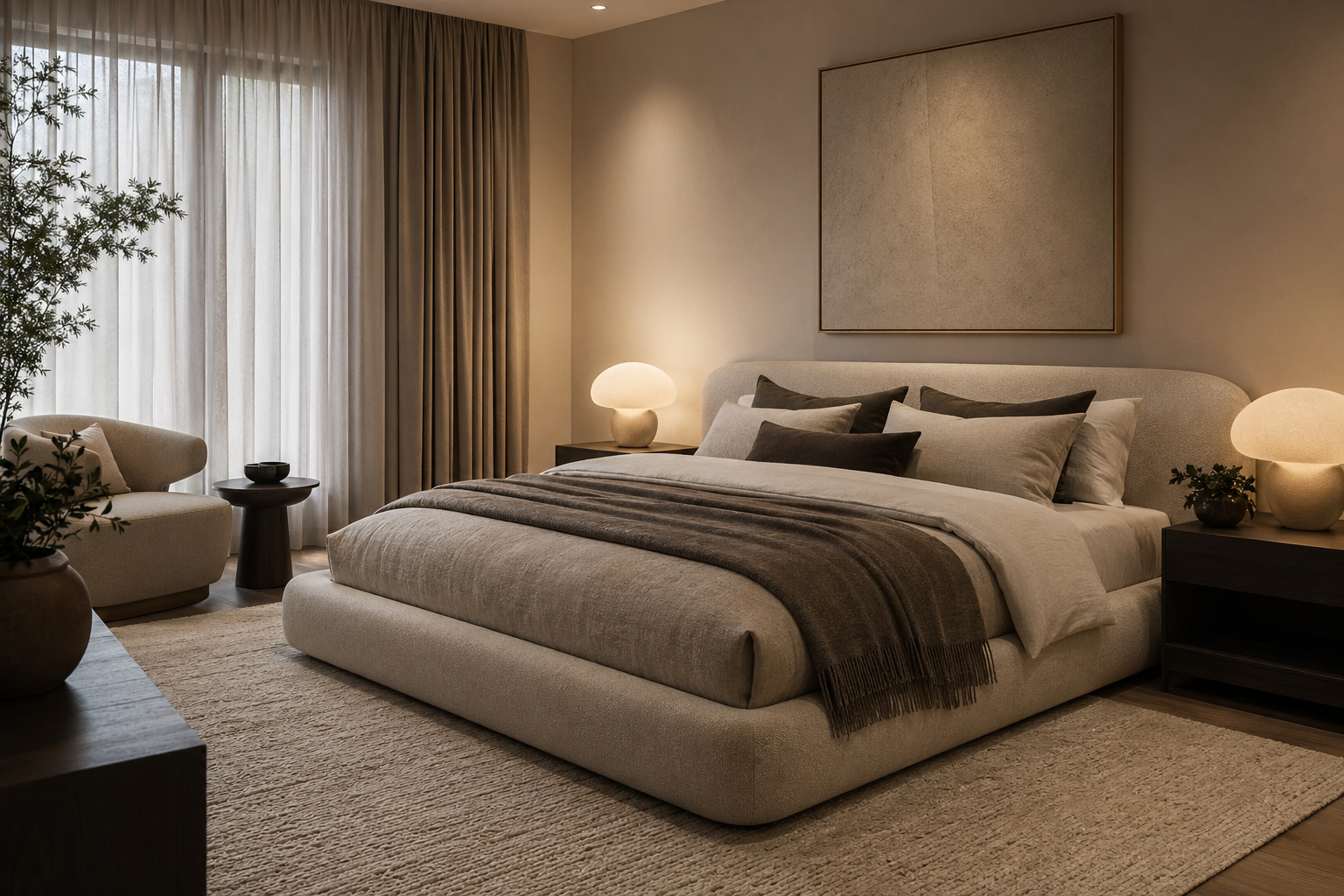
An expensive-looking room usually feels calm, layered, and intentional rather than crowded or overly styled. The goal is not to add more decor, but to use a few visual principles that make a space look cohesive, balanced, and finished.These aesthetic room decor ideas focus on high-impact changes such as lighting, texture, color restraint, scale, and styling. Each one can help a room look more refined without requiring a full redesign.Use a limited color paletteRooms that look expensive often rely on a narrow range of colors instead of many competing tones. Soft neutrals, warm whites, taupe, charcoal, muted green, and dusty earth tones tend to create a more composed visual effect than highly saturated mixes.Choose one dominant color, one supporting color, and one accent. Repeating those tones across bedding, curtains, rugs, art, and accessories helps the room feel coordinated, which is one of the clearest signals of a more elevated space.Layer lighting instead of relying on one source A single ceiling fixture can make a room feel flat. A more expensive look usually comes from layered lighting that combines overhead light, task light, and ambient light at different heights.Table lamps, wall lighting, and soft accent lighting help reduce harsh shadows and make finishes look warmer. Warm bulbs in the 2700K to 3000K range generally create a softer atmosphere than cool white light, especially in bedrooms and living spaces.Choose fewer pieces with better scaleSmall decor scattered across every surface can make a room feel busy. A more polished approach is to use fewer items that are properly sized for the wall, table, bed, or seating area.For example, one larger piece of art usually looks more intentional than several tiny frames. The same applies to mirrors, rugs, pendant lights, and vases: correct scale helps a room feel designed rather than improvised.Add texture through fabrics and finishes Texture is one of the easiest ways to make a room look richer without using bright colors or excessive ornament. Linen curtains, woven rugs, matte ceramics, glass, wood, boucle, velvet, and brushed metal all add depth that photographs and reads well in person.The key is contrast. A room with smooth walls, soft bedding, natural wood, and one tactile accent such as a textured pillow or ribbed lamp base feels more complete than a room where every surface has the same finish.Make the bed or sofa the visual anchorIn most rooms, one large element should act as the focal point. In a bedroom, that is usually the bed. In a living room, it is often the sofa or a central seating area.To make that anchor look expensive, keep the lines clean and the styling symmetrical or nearly symmetrical. Matching bedside lighting, balanced cushions, a centered rug, or a throw placed with restraint can make the room look more structured and intentional.Use wall decor with breathing roomWalls do not need to be filled to look finished. In fact, negative space often makes a room feel more premium because each piece has room to stand out.Choose artwork or wall decor that relates to the room's color palette and leave enough margin around it. Hanging art too high, using pieces that are too small, or crowding multiple objects together can make the room feel less cohesive.Include one statement light or decor pieceA room usually benefits from one feature that draws attention, such as a sculptural lamp, pendant light, oversized mirror, bold headboard, or distinctive chair. This creates a focal point and gives the room a more designed appearance.The statement piece does not need to be ornate. Clean shapes, interesting silhouettes, and quality-looking materials often create a stronger upscale effect than highly decorative pieces used in large numbers.Style surfaces in small groups Coffee tables, dressers, and nightstands look more refined when styled with only a few objects. A useful approach is grouping items in sets of two or three, mixing height, shape, and material.For example, a lamp, a small tray, and one ceramic object often looks more expensive than many unrelated items. Trays are especially useful because they visually organize small objects and reduce clutter.Upgrade soft furnishings firstIf a room feels plain, soft furnishings often offer the fastest visual improvement. Curtains, bedding, cushions, and rugs cover a large part of the room, so they strongly influence whether the space feels basic or elevated.Look for fuller curtains, bedding with visible texture, and rugs large enough to define the furniture layout. Undersized rugs and thin curtains are common reasons a room looks less finished than intended.Keep visible clutter lowEven well-chosen decor can lose impact if everyday items remain in view. Aesthetic rooms that look expensive usually have strong visual editing, with storage built into baskets, trays, cabinets, or closed furniture.Clear surfaces, visible floor space, and consistent organization help finishes, lighting, and decor stand out. The result is not emptiness, but a room where each object appears chosen and placed on purpose.FAQWhat colors make a room look more expensive?Neutral and muted colors often make a room look more expensive because they create a calm, cohesive backdrop. Warm white, beige, taupe, gray, olive, and soft brown are common choices.Does lighting affect whether a room looks expensive?Yes. Layered lighting adds depth, reduces harsh shadows, and highlights materials more effectively than a single overhead light. Warm ambient light generally creates a more refined atmosphere.What type of wall art looks more upscale?Wall art usually looks more upscale when it is appropriately scaled, coordinated with the room's palette, and given enough empty space around it. One larger piece often looks more intentional than many small pieces.How can a small room look expensive?A small room can look expensive when it uses a restrained palette, correct furniture scale, layered lighting, and low visual clutter. Mirrors, curtains hung higher, and fewer but better-placed decor items can also help.
Home Organization Tips for a Clutter-Free Modern Home
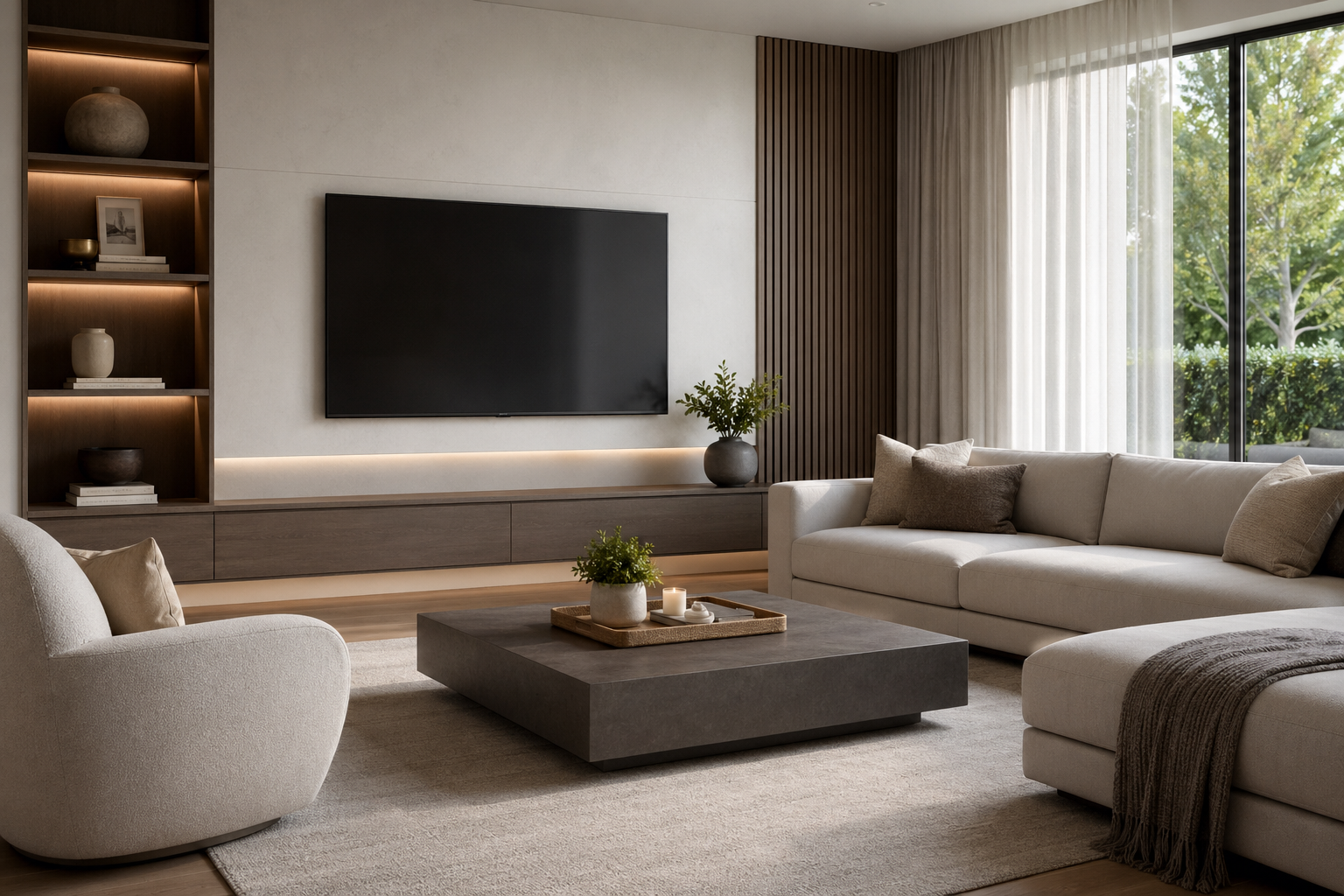
A clutter-free modern home depends less on buying more storage and more on using a clear system. The most effective approach is to reduce what stays, assign every item a specific place, and make daily reset habits easy to follow. When storage is visible, accessible, and matched to how a room is used, it is easier to maintain order over time.Modern spaces also work best when surfaces stay intentional. That means prioritizing closed storage for visual calm, keeping everyday essentials within reach, and limiting decorative items to pieces that add function or clear visual structure.Start by decluttering before you organizeOrganizing clutter usually hides the problem instead of solving it. Begin by removing items that are broken, duplicated, expired, or no longer used, then sort what remains by category rather than by random shelf or drawer.A practical method is to make four groups: keep, relocate, donate, and discard. This reduces decision fatigue and helps you see how much storage you actually need. In homes with limited square footage, this step matters even more because every shelf, hook, and drawer should support regular use.Create zones so each room has a clear functionClutter often builds up when rooms do too many jobs without defined boundaries. Divide each room into zones based on activity, such as entry drop-off, food prep, reading, work, or bedside storage, and store related items only in that zone.This approach makes tidying faster because objects have a logical destination. In a kitchen, for example, cooking tools should stay near prep space while serving pieces can be grouped elsewhere. In a living room, remote controls, charging items, and throws need one contained home rather than several scattered surfaces.Use storage that supports daily behaviorThe best storage system is the one people will actually use. Open containers work well for quick-access items, while drawers, boxes, and lidded organizers are better for categories that create visual noise.If a household tends to drop items on the nearest surface, place storage exactly there instead of expecting different behavior. A dedicated organizer collection such as Storage & Organizers can help contain small everyday items without spreading them across counters or shelves. Letifly also lists a Penthouse Wood Desk Organizer Box for keeping desk essentials grouped in one place and a Zig Zag Ceramic Tray & Organizer for compact catch-all storage on dressers, entry consoles, or bathroom counters. These URLs and titles appear in the store catalog file Keep surfaces mostly clearClear surfaces are one of the strongest visual signals of an organized home. Limit countertops, coffee tables, and nightstands to a few regularly used items and remove anything that does not support the function of that surface.Trays can help by visually grouping necessities into a single footprint. This keeps essentials accessible while preventing the scattered look that makes a room feel busier than it is. In kitchens, decorative yet practical pieces from Kitchen Essentials can help reduce countertop clutter when used selectively rather than layered across every open area. That collection URL is listed in the store file Use vertical space in small areas When floor area is limited, walls become valuable storage. Hooks, rails, wall-mounted shelves, and hanging planters can move frequently used items upward and free up counters, desktops, and narrow walkways.This works especially well in kitchens, entryways, and bathrooms where small objects accumulate quickly. Letifly lists the Enza Wall Rail as a wall-mounted storage option for mugs, towels, or aprons, which is useful for compact zones that need accessible organization without adding bulk. That product URL and description appear in the catalog file Choose dual-purpose pieces for modern livingIn a modern home, each object should ideally serve a purpose beyond decoration. Storage trays, organizers, portable lighting, and display pieces that also contain essentials help reduce item count while keeping rooms functional.For example, cordless lighting can reduce cable clutter on side tables, shelves, and dining surfaces when an outlet is not conveniently placed. Letifly includes a dedicated Cordless Lamps collection and a related guide, Cordless Lamps Explained: Pros, Cons, and Best Uses, both of which can support cleaner layouts in small or flexible spaces. These links are listed in the store file Set simple maintenance habits that prevent clutter from returningLong-term organization depends on repeatable habits, not one large reset. A five- to ten-minute daily tidy, a weekly paper sort, and a one-in, one-out rule for categories like decor, clothing, or kitchen tools can stop buildup before it spreads.It also helps to keep a donation bag or box in a closet so unwanted items leave the home quickly. If an item has no assigned place after you use it, that is a sign the system needs adjustment. The goal is not perfection, but a setup that makes putting things away easier than leaving them out.FAQWhat is the first step to organizing a cluttered home?The first step is decluttering. Remove items you no longer use, need, or want before buying bins or rearranging storage, because organizing excess items usually creates temporary order instead of a lasting system.How often should a home be decluttered?Light decluttering works best as an ongoing habit. Daily resets and weekly reviews of high-traffic areas usually prevent buildup, while deeper category-based decluttering can be done seasonally.What storage works best in a modern home?Storage that is simple, easy to access, and visually calm works best. Closed storage reduces visual noise, while trays, boxes, and wall-mounted solutions help contain smaller items without crowding surfaces.How do you keep a small home from feeling cluttered?Use vertical space, limit what stays on visible surfaces, and choose multi-purpose items. Clear room zones and compact storage near the point of use also make small homes easier to maintain.
Small Space Solutions That Actually Work in Apartments
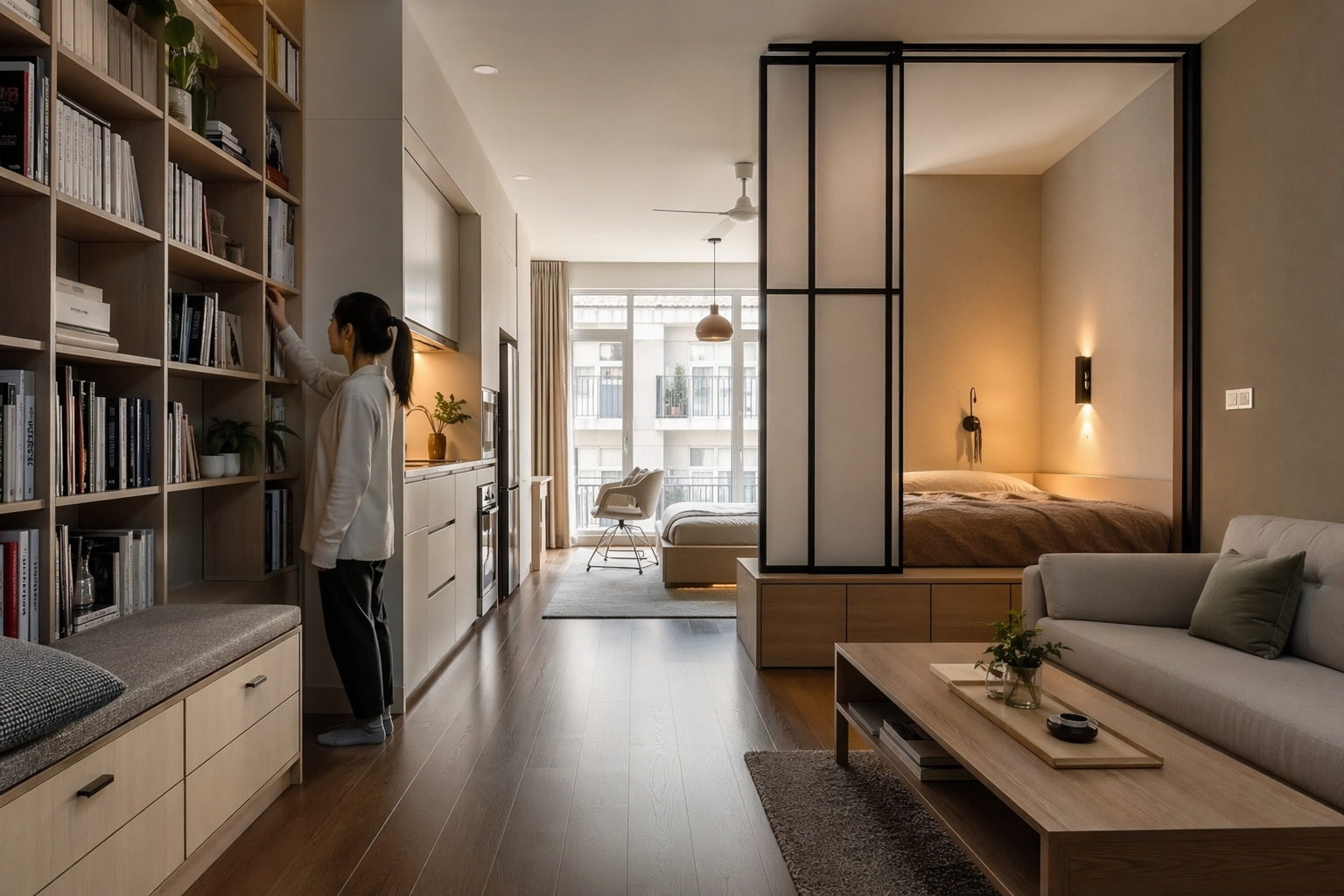
Small apartments work best when every item has a job, every wall does some work, and open floor area is protected. The most effective fixes are usually not complicated: use vertical storage, choose dual-purpose furniture, reduce visual clutter, and place lighting where it improves function without taking up surfaces.If you want practical upgrades, start with the areas that create the most friction: entryways, kitchens, living rooms, bedrooms, and bathrooms. The goal is not to fit more things into the apartment. It is to make daily movement, storage, and cleaning easier.Prioritize floor space firstThe fastest way to make a small apartment feel more usable is to keep the floor as open as possible. When walkways are blocked, even a well-decorated room feels cramped. Start by removing low-value pieces that take up space without adding storage, seating, or useful light.Then check each large item and ask whether it earns its footprint. A narrow floor lamp, a wall-mounted light, or a rechargeable lamp can sometimes replace bulkier lighting setups and free side tables for storage or daily use. For compact lighting options, Letifly offers space-efficient cordless lamps and decorative wall lamps that can reduce surface crowding.Use vertical storage instead of wider furniture In apartments, width is usually more limited than height. Tall shelving, wall hooks, mounted organizers, and over-door storage often solve the same problem as a larger cabinet while using far less floor area.This approach works especially well in entryways, kitchens, bathrooms, and bedrooms. Small organizers also help contain loose items that create visual clutter. If you need catch-all storage for surfaces, Letifly has a Storage & Organizers collection for trays, boxes, and similar solutions that help keep essentials contained. Use the upper wall area for shelving above desks, beds, and toilets. Add hooks where you normally drop bags, keys, or jackets. Choose narrow, tall pieces before wide, low units. Store items by frequency of use, with daily items at arm level. Choose furniture that does more than one jobMultifunctional furniture is useful because it reduces the number of separate pieces you need. In a small apartment, one item that solves two problems is usually better than two items that each solve one.Look for benches with storage, nesting tables, extendable dining tables, beds with drawers, or desks that can also serve as console tables. In living areas, compact side tables and portable lamps can help a single corner shift between reading, dining, and work without a full furniture rearrangement.Make storage visible only when it is attractiveOpen storage can help in small rooms, but only if it stays organized. When shelves hold too many unrelated items, the room feels busier and smaller. Closed bins, baskets, trays, and matching containers create a cleaner look and make cleaning faster.Use open shelving for items that look intentional, such as books, ceramics, or a small number of decorative objects. Keep utility items grouped inside containers. Decorative storage works best when it combines function with visual order, which is also the role of small home accents and organizers.Use lighting to separate zones without adding walls Many apartments need one room to do multiple jobs. Lighting helps define those zones. A focused reading light by a chair, a task light near a desk, and softer ambient light near the sofa can make a studio or one-bedroom layout feel more structured.This is often more effective than trying to divide the room with bulky furniture. For example, a compact lamp on a dining surface or console can create a clear evening zone without reducing circulation. Letifly's guide on cordless lamps is useful if you need portable lighting where outlets are limited.Use walls for function, not just decorationWall space is one of the most underused assets in small apartments. It can hold lighting, hooks, shelves, mirrors, and art without shrinking the room's footprint. The key is balance: functional wall pieces should support daily routines while keeping the room visually calm.Mirrors can help bounce light, while a well-placed art arrangement can draw the eye upward and make ceilings feel higher. If you are planning a layout that uses wall surfaces efficiently, Letifly's Wall Art collection and article on wall art decor ideas can help with placement and scale.Fix the entryway to reduce clutter everywhere else Small apartments often feel messy because there is no proper landing zone near the door. Shoes, keys, bags, and mail spread into the living room or kitchen. A simple entry setup prevents that overflow.You do not need a full mudroom. A few hooks, a slim tray, a small organizer, and a dedicated shoe area are usually enough. A wall-mounted option like the IllumiKey Magnetic Wooden Key Holder and Sensor Nightlight can combine key storage and light in one compact spot.Use the kitchen and bathroom for hidden efficiency gainsThese rooms are often small but high impact because they are used constantly. Improvements here save time every day. Focus on drawer dividers, shelf risers, inside-cabinet organization, and keeping countertops clear except for the items used daily.In kitchens, storing by task helps: coffee items together, cooking tools together, food prep tools together. In bathrooms, divide items into daily, weekly, and backup categories so the most-used products stay easy to reach. For apartment kitchens with limited space, Letifly's Kitchen Essentials collection and article on kitchen essentials cover compact, practical tools and accessories.Keep decor intentional and limitedSmall-space design works better when decorative pieces are edited carefully. Too many accents compete for space and attention. A few larger or more purposeful pieces usually look cleaner than many small objects.This does not mean an apartment should feel bare. Rugs, wall art, lighting, and a small number of decorative accents can make the space feel finished while still functioning well. If you want softness without overcrowding, a defined rug zone from Letifly's Rugs & Bath Mats collection can help separate living and sleeping areas in open-plan rooms.FAQHow can I make a small apartment feel bigger without renovating?Keep floors open, use vertical storage, reduce visible clutter, and use lighting and mirrors to improve depth and brightness. These changes can make the layout feel more open without altering the structure.What type of furniture works best in a small apartment?Furniture with more than one use works best, such as storage beds, nesting tables, extendable tables, benches with hidden storage, and compact lighting that frees surfaces.How do I add storage to an apartment with very little closet space?Use tall shelving, under-bed storage, over-door organizers, wall hooks, and closed containers. Spread storage across unused wall and vertical areas instead of relying only on closets.Do wall-mounted items help in small spaces?Yes. Wall-mounted lights, hooks, shelves, and organizers free up floor and tabletop space while improving function in entryways, bedrooms, kitchens, and bathrooms.

Living Room Accents That Instantly Update Your Space
A living room usually looks outdated for one of three reasons: the lighting is flat, the textiles feel disconnected, or the surfaces and walls lack visual structure. The fastest update is not a full redesign. It is a focused change to a few accents that improve texture, scale, contrast, and light.The most effective living room accents are the ones that change how the room feels at a glance. In most spaces, that means updating layered lighting, pillows, rugs, wall art, and a small number of decorative objects rather than replacing large furniture pieces.Start with lighting because it changes the room fastest Lighting is often the accent that produces the biggest visual shift with the least disruption. A living room with one overhead fixture can feel flat, while a room with layered light feels warmer, more deliberate, and more current.Use accent lighting to create depth in different parts of the room. A table lamp on a side table, a wall light near seating, or a portable lamp on a shelf can make the room look more finished and improve function at the same time.If you want flexible options, a cordless lamp can add light to corners, consoles, or shelves without depending on outlet placement. For more permanent ambient lighting, decorative wall lamps help frame seating areas and reduce reliance on harsh ceiling light.Use pillows and throws to add contrast and softnessTextiles are one of the easiest ways to update a living room quickly. New pillows or a throw can change the color balance of the room, introduce pattern, and make existing furniture feel more intentional.The key is contrast, not quantity. If the sofa is plain, use pillows that vary in texture, shape, or tone. If the room already has strong color, choose accents that repeat one or two existing hues so the space feels connected rather than busy.A focused mix usually works better than a large assortment. The Pillows & Throws collection is useful when the room needs softness, shape variation, or a clearer accent color.Anchor the seating area with the right rug sizeA rug can instantly modernize a living room, but only if it is scaled correctly. A rug that is too small makes the furniture look disconnected and can make the room feel unfinished.In most layouts, the rug should visually unite the main seating group. At minimum, the front legs of the sofa and chairs should sit on the rug. In larger rooms, placing all major seating on the rug creates a more stable and cohesive look.If the room still feels fragmented after adding decor, the issue is often proportion rather than style. Rug scale matters more than pattern in creating a polished result.Add wall art to make the room feel finished Blank walls are one of the clearest signs that a living room is incomplete. Wall art adds height, visual rhythm, and a focal point that helps the room feel designed rather than assembled over time.Choose art based on scale first. Oversized art works well over a sofa, while grouped pieces can support narrower walls or transition areas. The main goal is to relate the art to the furniture below it so the wall does not feel separate from the rest of the room.If the room needs personality without adding floor or table clutter, wall art is one of the most efficient updates. You can also reinforce the effect with nearby wall lighting or by building a balanced gallery arrangement.Refresh surfaces with a small number of decorative objectsAccent decor works best when it is edited. A coffee table, console, or sideboard does not need many objects to look current. It needs variation in height, material, and shape.A simple grouping can include a vase, a bowl, a candle, or a sculptural object. For example, a ceramic or glass vessel from the Vases collection can add height and color, while decorative accessories with stone, wood, or metal finishes can introduce texture.Try to avoid covering every surface. Leaving open space around accents makes them more visible and keeps the room from feeling crowded.Use mirrors and reflective accents to increase lightMirrors can update a living room by changing both light and proportion. They reflect daylight, brighten darker corners, and can help a small room feel more open.Placement matters. A mirror opposite or adjacent to a window can amplify natural light, while a mirror above a mantel or console adds structure to a focal wall. Reflective finishes in glass or polished metal can have a similar effect on a smaller scale.If you want one accent to do both decorative and practical work, a sculptural mirror can be especially effective in compact living rooms.Choose accents that repeat the room's existing paletteThe fastest updates usually come from accents that connect what is already in the room. Repeating a color from artwork, upholstery, wood tones, or flooring makes new pieces look integrated immediately.A helpful rule is to work with one dominant neutral, one secondary tone, and one accent color. Then repeat those elements across lighting, textiles, and tabletop decor. This creates a more refined look than introducing several unrelated colors at once.What to update first if you want the biggest visual changeIf the goal is a noticeable change without replacing furniture, update in this order: Lighting Rug Pillows and throws Wall art Decorative objects and mirrors This order works because light affects the whole room, the rug defines the seating zone, textiles adjust comfort and color, and wall decor finishes the visual envelope. Smaller objects should come last so they support the room rather than compete with it.FAQWhat accents make a living room look updated fastest?Layered lighting, a properly sized rug, updated pillows, and scaled wall art usually create the fastest visible improvement because they affect the room's light, color balance, and structure.How many accent colors should a living room have?Most living rooms look cohesive with one main neutral, one secondary tone, and one accent color repeated across textiles, decor, and art.Does a rug need to go under the sofa?In most living rooms, at least the front legs of the sofa and chairs should sit on the rug. This helps unify the seating area and makes the room look more intentional.Are wall lights useful in a living room?Yes. Wall lights add ambient light, reduce shadows, and help define seating zones without taking up floor space.
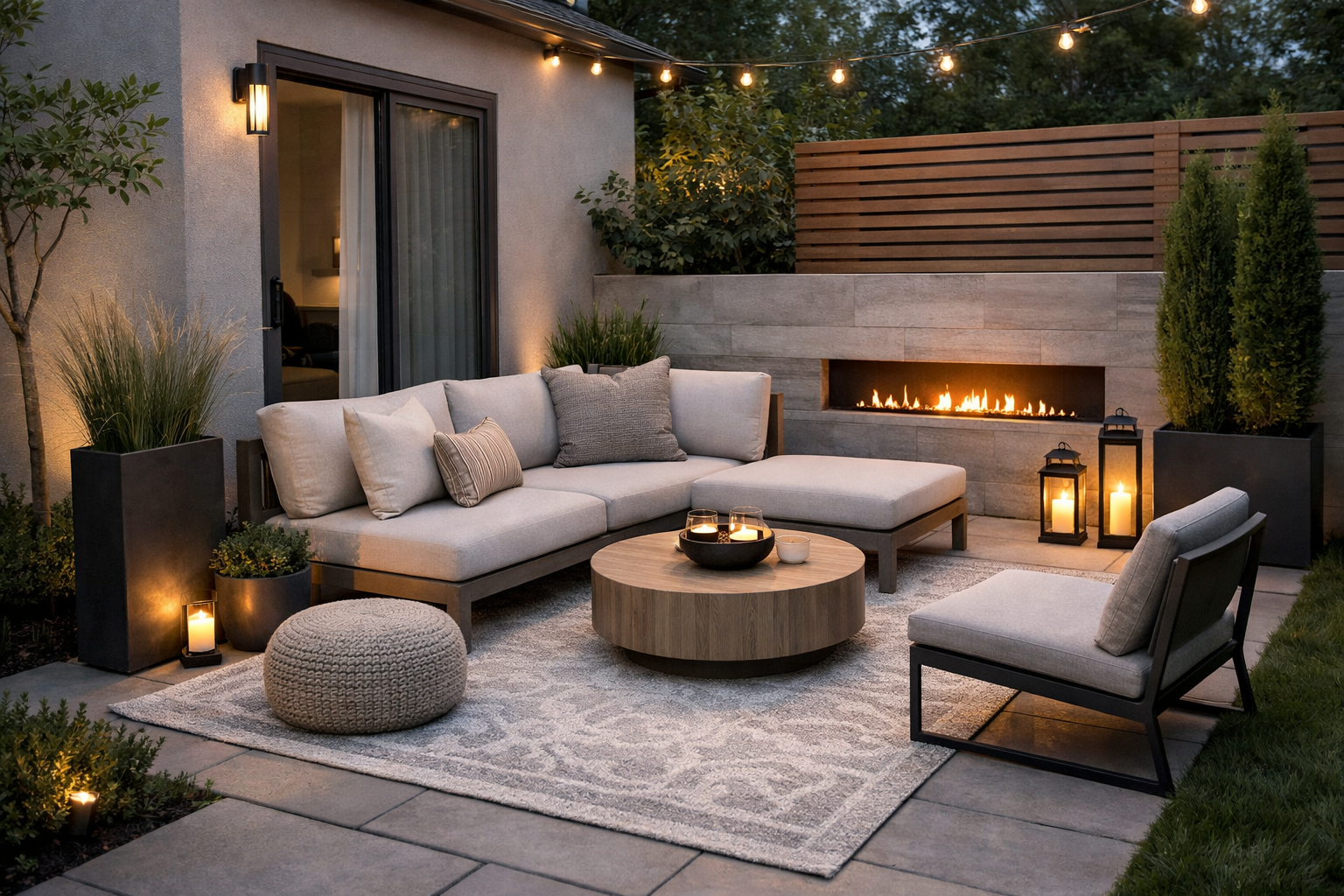
Outdoor Living Space Ideas for Small Backyards
A small backyard can still function as a comfortable outdoor living space when each element has a clear purpose. The main goal is to improve usability without making the area feel crowded. In most cases, that means defining zones, choosing compact furniture, using vertical surfaces, and keeping circulation paths open.The ideas below focus on layout decisions that help small backyards feel more organized, practical, and visually balanced. They are suitable for patios, narrow yards, townhouse backyards, and compact urban outdoor spaces.Start with one clear functionThe most effective small backyard plans begin with a single primary use. For example, the space may be designed mainly for dining, lounging, container gardening, or small-group entertaining. Choosing one main function prevents too many competing elements from taking up limited square footage.Secondary uses can still be included, but they should support the main purpose. A dining space might include a bench with storage, while a lounge area might add a small side table for drinks or meals. This approach keeps the layout efficient and easier to maintain.Divide the backyard into simple zones Zoning helps a small backyard feel intentional instead of cramped. Even in a compact space, it is possible to create separate areas for seating, planting, and movement. The separation does not need walls; it can be achieved with rugs, pavers, planters, or changes in material.Simple zones also improve how the space is used day to day. When furniture, plants, and decor each have a defined place, the backyard feels more open and easier to navigate.Practical zoning methods for small spaces Use an outdoor rug to define a seating area. Place planters along edges to frame the perimeter. Use gravel, decking, or pavers to mark functional areas. Keep one obvious walking path from the door to the main zone. Choose furniture scaled for a small footprintOversized furniture is one of the most common reasons a small backyard feels crowded. Compact pieces with slimmer frames usually provide better function while preserving open floor area. Armless chairs, narrow benches, folding dining sets, and small sectionals often work better than bulky outdoor sofas.Multi-use furniture is especially useful in small backyards. Storage benches, nesting tables, and stackable chairs reduce clutter and allow the space to adapt to different needs. Backyard Need Space-Saving Option Dining Bistro set or foldable table and chairs Lounge seating Compact loveseat or built-in bench Extra seating Stackable stools or poufs Storage Bench with concealed storage Flexible surface Nesting or side tables Use vertical space to add function without taking floor area When the ground area is limited, walls, fences, and railings become more important. Vertical space can hold planters, shelving, hooks, or privacy screens without reducing room for seating or movement. This makes the backyard feel more layered while preserving usable square footage.Vertical planting is one of the simplest ways to increase greenery in a small yard. Trellises, wall planters, and climbing plants can create softness and privacy while keeping the floor area open.Keep planting simple and proportionalPlanting can make a small backyard feel finished, but too many plant varieties or oversized beds can create visual clutter. A restrained planting plan usually works best. Repeating a few plant types and limiting the color palette can make the space feel calmer and larger.Containers are often more practical than in-ground beds in compact yards. They are easier to move, easier to maintain, and useful for defining edges or corners. Taller plants can be placed at the perimeter, while lower plants should stay closer to seating areas and pathways.Planting ideas that work well in small backyards Use tall, narrow planters to save floor space. Repeat the same planter style for a more unified look. Place larger plants in corners to soften hard edges. Choose a limited mix of shrubs, grasses, and seasonal flowers. Add shade and privacy with lightweight structuresSmall backyards often need privacy, but heavy barriers can make the space feel enclosed. Lightweight solutions such as slatted screens, outdoor curtains, slim pergolas, or trellises usually create a better balance. They provide definition and comfort without blocking all light or airflow.Shade is also important for making the space usable throughout the day. Depending on the layout, a compact umbrella, shade sail, or pergola can make seating or dining areas more comfortable in warm weather.Use lighting to extend the space into the evening Lighting improves both function and atmosphere in a small backyard. The most useful approach is layered lighting, with ambient light for general visibility and smaller sources for task or accent lighting. This helps the yard remain practical after sunset while avoiding harsh brightness.Wall-mounted fixtures, string lights, lanterns, and pathway lighting are common solutions for compact outdoor spaces. For a clean and modern look, outdoor lighting should be scaled to the space and placed where it supports movement, seating, or dining rather than illuminating every surface evenly.For homeowners looking at modern lighting styles for indoor and outdoor-adjacent spaces, Letifly Lights & Decor focuses on affordable modern design. When selecting lighting near doors, patios, or covered transitions, consistent fixture style can help connect interior and exterior spaces visually.Reduce clutter with built-in or hidden storageStorage is essential in a small backyard because visible clutter can quickly overwhelm the space. Cushions, tools, planters, and outdoor accessories should be stored in ways that do not interrupt circulation. Hidden or built-in storage supports a cleaner layout and reduces maintenance.Benches with interior storage, deck boxes, wall hooks, and compact shelving are practical options. In very small yards, vertical storage usually works better than adding another freestanding cabinet or table.Make the backyard feel larger with visual continuityA small outdoor space often appears larger when materials and colors are kept consistent. Repeating similar tones across paving, furniture, planters, and textiles creates visual continuity and reduces fragmentation. This is especially useful in narrow backyards or spaces with multiple functions.Leaving some negative space is equally important. Not every corner needs furniture or decor. Open floor area helps the yard feel less crowded and makes each feature stand out more clearly.Design choices that visually expand a small backyard Use a limited palette of materials and colors. Choose furniture with visible legs to create a lighter appearance. Align planters and furniture with the shape of the yard. Avoid blocking sightlines with tall items in the center. Focus on a few strong features instead of many small onesSmall backyards benefit from restraint. A single focal point, such as a compact fire pit, a planted trellis, a dining set, or a textured wall, usually works better than several decorative features competing for attention. This keeps the space visually organized and easier to use.When every item serves either a functional or visual purpose, the backyard feels more intentional. That balance is often what makes a small outdoor space feel complete rather than temporary or overcrowded.FAQHow do you make a small backyard look bigger?A small backyard usually looks bigger when the layout stays open, the number of materials is limited, and furniture is scaled correctly. Vertical planting, clear pathways, and consistent colors also help create a more spacious appearance.What type of seating works best in a small backyard?Compact seating with a narrow profile usually works best. Benches, bistro chairs, stackable seating, and small loveseats often provide enough function without taking up too much floor space.Can a small backyard have both dining and lounge space?Yes, but the layout needs clear priorities. This is usually easiest with flexible furniture, such as benches, foldable chairs, or a compact table that can serve more than one purpose.What are the best plants for a small backyard?The best plants are those that stay proportional to the space and are easy to maintain. Tall narrow shrubs, climbing plants, ornamental grasses, and container-friendly perennials are common choices for compact yards.How important is lighting in a small outdoor space?Lighting is important because it improves safety, usability, and visual definition after dark. In small backyards, layered lighting is often more effective than one bright fixture because it supports both function and comfort.
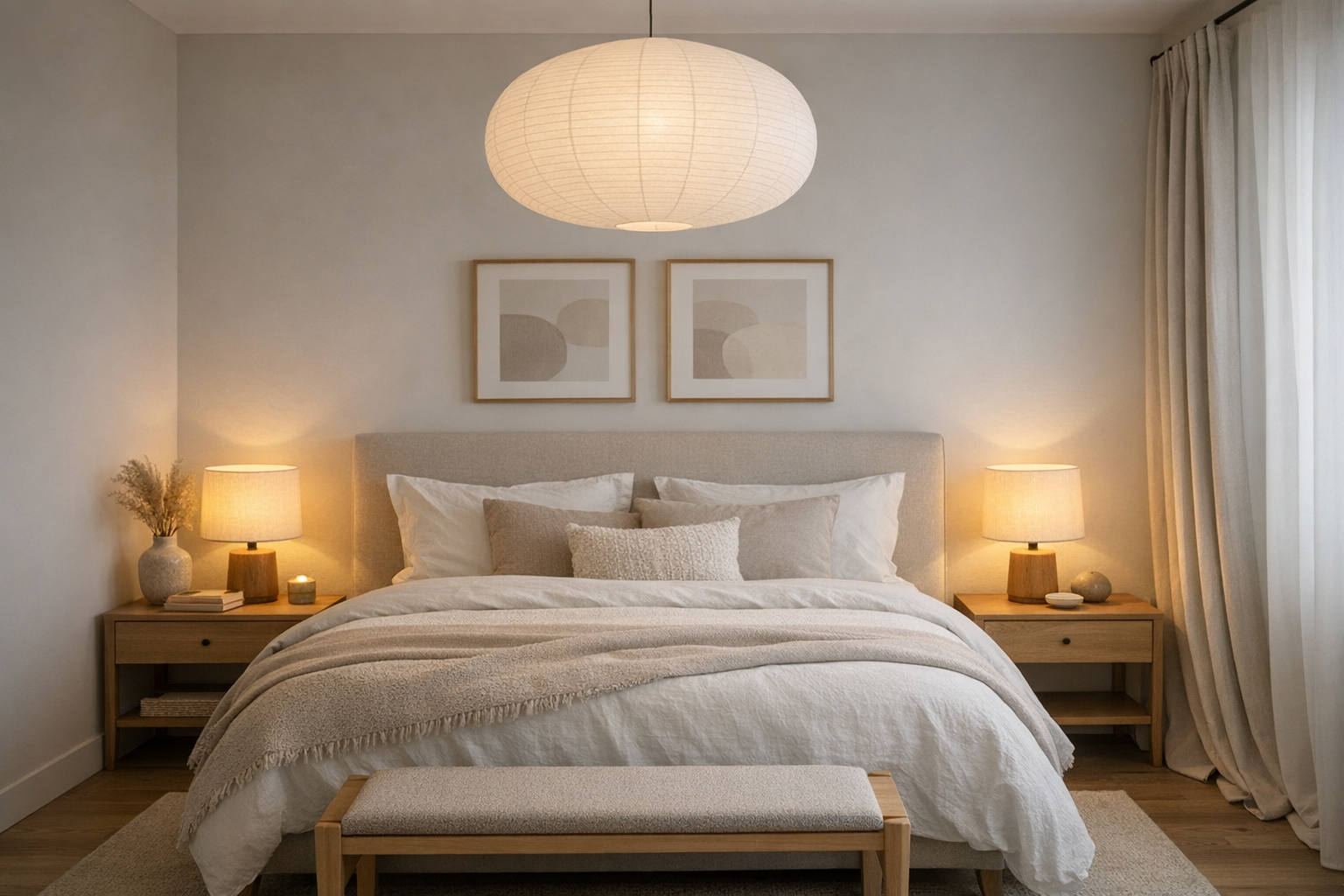
Bedroom Lighting Ideas for Better Sleep and Style
Bedroom lighting should support two goals at the same time: helping the body wind down at night and making the room practical for reading, dressing, and daily routines. The most effective approach is layered lighting, which combines ambient, task, and accent light instead of relying on one bright ceiling fixture.For better sleep, evening light should be soft, warm, and easy to dim. For style, fixtures should match the room scale, layout, and design language so the space feels calm rather than visually harsh.Why bedroom lighting affects sleepLight influences the body's circadian rhythm, which helps regulate sleep and wake cycles. Bright light and cooler color temperatures in the evening can make it harder for the body to prepare for sleep, while lower, warmer light generally supports a more restful environment.This is why bedroom lighting plans work best when they include options for different times of day. A bright setting may be useful in the morning, but a softer setting is better during the hour or two before bedtime.Use layered lighting instead of one overhead lightA single central fixture often creates uneven brightness, glare, and a flat look. Layered lighting solves this by spreading light across the room and allowing each source to serve a specific function.A practical bedroom lighting plan usually includes three layers: Ambient lighting: general illumination from a ceiling light, pendant, or other primary fixture Task lighting: focused light for reading, getting dressed, or grooming Accent lighting: softer decorative light that adds depth and helps create a restful mood This layered approach also aligns with common interior lighting guidance that recommends using multiple light sources in a room rather than depending only on overhead lighting.Choose warm color temperatures for evening comfort For bedrooms, warm light is generally the most suitable choice for evening use. Bulbs around 2700K are widely used because they produce a softer, less clinical appearance than cooler light.If a bedroom needs brighter light for daytime tasks, a dimmable fixture can help bridge both needs. The key is to reduce intensity and avoid cool-toned brightness as bedtime gets closer. Color temperature How it looks Best use in a bedroom 2200K-2700K Very warm to warm Evening lighting, bedside lamps, accent lighting 3000K Warm white General bedroom lighting when a slightly brighter look is needed 3500K and above Neutral to cool Usually less suitable for bedtime atmosphere Make dimmers a priorityDimmers are one of the simplest ways to improve bedroom lighting. They allow one fixture to handle different needs, from brighter morning light to a low glow in the evening.If hardwired dimmers are not available, lamps with low-medium-high settings or smart bulbs with adjustable brightness can serve a similar purpose. The goal is flexibility without visual harshness.Best lighting types for a bedroom Bedside table lampsTable lamps provide direct light where it is needed most and reduce dependence on overhead fixtures. They are especially useful for reading and for creating a softer transition before sleep.For balance, use lamps that suit the scale of the nightstands and bed. Matching lamps create symmetry, while mixed lamps can work in more relaxed layouts if their height and brightness are consistent.Wall sconcesWall sconces save surface space and work well in smaller bedrooms. Mounted beside or above the bed, they can provide focused task lighting without crowding the nightstand.Sconces are most useful when they direct light downward or have a shade that softens glare. If the fixture is visible from the bed, diffused light is often more comfortable than an exposed bulb.Pendants or ceiling fixturesA pendant or ceiling fixture can provide ambient light while contributing to the room's overall style. In a bedroom, diffused shades and softer materials are generally more effective than bare bulbs or highly directional light.For modern interiors, clean-lined fixtures often work best when they provide broad, even light rather than dramatic brightness. The fixture should fit the room scale so it does not overpower the bed or visually crowd the ceiling.Floor lampsFloor lamps are useful when a bedroom has an empty corner, a seating area, or limited space for side tables. They can add a secondary glow that softens the room and improves overall light distribution.A shaded floor lamp usually creates a calmer effect than a bright uplight. In bedrooms, avoiding direct glare is often more important than maximizing brightness.Placement tips that improve comfort and appearance Good fixture placement affects both function and visual balance. Lights should support common bedroom activities without shining directly into the eyes from the bed. Place bedside reading lights so the beam falls onto the page, not across the sleeper's face. Center overhead fixtures in relation to the room or bed, depending on the layout. Use two light sources on opposite sides of the room to reduce shadows and visual imbalance. Add a low-level light source in darker corners to make the room feel calmer and more complete. If the bedroom includes a dresser or vanity, task lighting near that area should be bright enough for visibility but still consistent with the room's warm overall tone.How to match lighting to bedroom styleBedroom lighting should relate to the furniture, finishes, and scale of the room. In modern, Scandinavian, or Nordic-inspired spaces, simple forms, soft finishes, and diffused light often support a calmer visual environment.To keep the room cohesive, repeat materials or shapes across fixtures where possible. For example, a bedroom with clean wood furniture and soft neutral textiles often works well with understated pendant lights, warm bedside lamps, or minimal wall sconces.For readers exploring modern lighting and decor, Letifly Lights & Decor presents a range of contemporary design directions relevant to bedrooms focused on both function and visual simplicity.Common bedroom lighting mistakes to avoid Using only one overhead light for every activity Choosing bulbs that are too cool or too bright for evening use Placing exposed bulbs in direct sightlines from the bed Ignoring dimming options Selecting fixtures that are too large or too small for the room Adding task lighting that creates glare instead of focused illumination Most of these problems can be corrected by adding one or two secondary light sources and shifting to warmer, adjustable bulbs.A simple bedroom lighting planFor most bedrooms, an effective setup does not need to be complicated. A balanced plan usually includes one ambient source, one task source on each side of the bed, and one soft secondary light for depth. Start with a dimmable ceiling fixture or pendant for general light. Add bedside lamps or sconces for reading and nighttime use. Use warm bulbs, ideally around 2700K, for evening comfort. Add a floor lamp or other accent light if the room feels flat or shadowy. Test the room at night to check for glare, overbright areas, and uneven light. This combination supports sleep, improves function, and creates a more polished bedroom without requiring excessive brightness.FAQWhat color temperature is best for bedroom lighting?Warm light is usually best for bedrooms, especially in the evening. Bulbs around 2700K are commonly used because they create a softer and calmer appearance.Are LED lights good for bedrooms?Yes, LED lights are suitable for bedrooms if they have the right color temperature and brightness. Warm, dimmable LEDs are typically the most practical option for combining efficiency with comfort.Is overhead lighting enough for a bedroom?No, overhead lighting alone is usually not enough for a well-functioning bedroom. Most bedrooms benefit from layered lighting that includes ambient, task, and accent sources.What type of light is best for reading in bed?Focused task lighting is best for reading in bed. Bedside lamps and wall sconces work well when they direct light onto the book without causing glare.
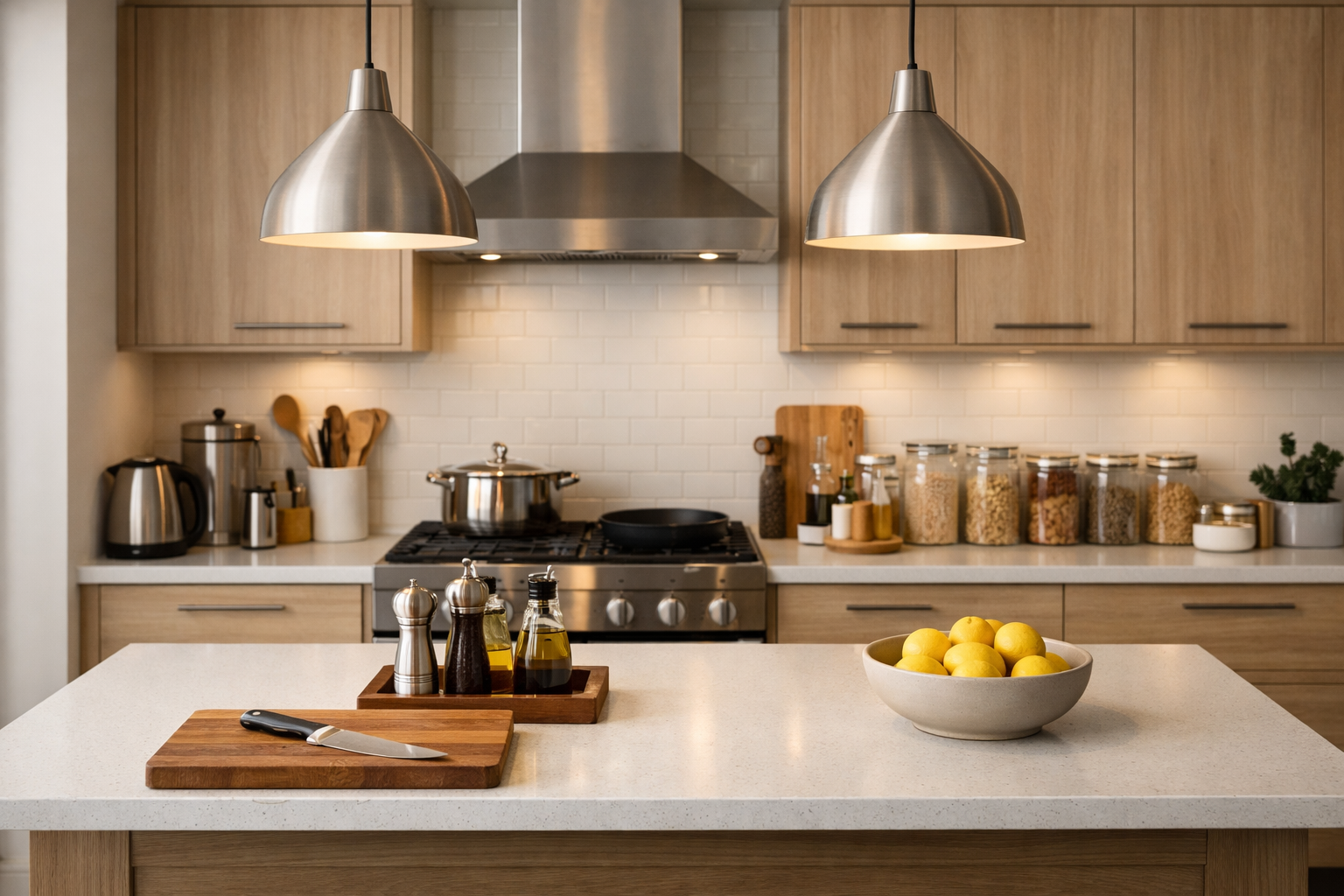
Kitchen Essentials for a Stylish and Functional Home
A stylish and functional kitchen depends on a small group of well-chosen essentials. The most useful items support daily cooking, keep surfaces organized, and help the room feel visually calm and efficient.For most homes, the right kitchen essentials fall into four categories: core cookware, everyday tools, practical storage, and effective lighting. Choosing durable basics in simple finishes usually creates a more cohesive result than buying many single-use items.Start with core cookware and prep toolsThe foundation of a functional kitchen is a limited set of versatile tools used every week. These basics cover most cooking tasks without filling cabinets with rarely used gadgets.Cookware that handles everyday meals A frying pan for sauteing, eggs, and quick meals A saucepan for grains, sauces, and reheating A stockpot or Dutch oven for soups, pasta, and batch cooking A sheet pan for roasting vegetables, proteins, and baked foods A baking dish for casseroles and oven meals Prep tools worth prioritizing A chef's knife and a paring knife A stable cutting board Measuring cups and spoons Mixing bowls in two or three sizes Tongs, a spatula, a wooden spoon, and a whisk A colander and a can opener These tools support the main tasks in most kitchens: cutting, mixing, heating, roasting, and serving. Buying a small set of dependable basics is usually more practical than collecting specialty tools for occasional recipes.Choose storage that reduces visual clutter A stylish kitchen often looks orderly because storage is consistent and easy to maintain. Good storage also improves workflow by keeping the most-used items visible and accessible.Useful storage essentials Clear food containers for dry goods Drawer dividers for utensils and small tools Bins or baskets for pantry grouping A utensil crock or tray for daily-use items A dish rack or drying mat sized to the sink area Storage works best when it matches actual habits. For example, households that cook often benefit from keeping oils, spices, and prep tools near the stove, while baking supplies are easier to manage when stored together in one zone. Kitchen area Best essentials Main benefit Countertop Utensil holder, tray, cutting board stand Keeps daily items accessible Drawers Dividers, knife organizer, measuring tool tray Reduces clutter and saves time Pantry Clear containers, labeled bins, shelf risers Improves visibility and inventory control Under sink Cleaning caddy, small bins Contains supplies neatly Use lighting as a functional kitchen essential Lighting affects both how the kitchen works and how it looks. A well-lit kitchen supports safe food preparation, makes surfaces easier to clean, and helps materials and finishes appear more balanced.Layered lighting is usually the most effective approach. Ambient lighting brightens the room overall, task lighting improves visibility at work surfaces, and decorative lighting helps define the kitchen's style.Where lighting matters most Over islands or peninsulas used for prep and dining Above sinks and main work zones Under cabinets to reduce shadows on countertops In dining-adjacent kitchen areas where atmosphere matters For kitchens with an island, pendant lighting is often both practical and decorative. At Letifly Lights & Decor, the focus on affordable modern design aligns with kitchens that need clean lines, contemporary finishes, and lighting that supports a polished but usable space.Pick materials and finishes that stay cohesiveA stylish kitchen usually relies on consistency rather than excess decoration. Repeating a few finishes across hardware, lighting, cookware, and accessories helps the room feel intentional.Common combinations include matte black with wood, brushed metal with white ceramics, and soft neutral tones paired with glass storage. These combinations work well because they are visually quiet and easy to maintain over time.Simple ways to keep the look consistent Limit visible countertop items to daily-use essentials Choose storage containers in one material or color family Match metal tones where possible Use textiles such as towels and mats in neutral or coordinated shades This approach supports both style and function. Fewer visual interruptions make the kitchen easier to clean, easier to organize, and simpler to update later.A practical checklist for most homesFor a kitchen that feels complete without becoming overcrowded, focus on essentials that are used often and stored efficiently. The list below covers the items most homes need for everyday cooking and a clean modern appearance. One frying pan, one saucepan, one large pot, and one sheet pan A chef's knife, paring knife, and cutting board Mixing bowls, measuring tools, and a colander Tongs, spatula, wooden spoon, and whisk Food storage containers and drawer organizers Dish towels, trivets, and basic cleaning supplies Task lighting and, if space allows, decorative pendant lighting When these essentials are selected carefully, the kitchen becomes easier to use and easier to keep visually organized. That balance is what gives a home kitchen both practical performance and a refined look.FAQWhat are the most important kitchen essentials for a new home?The most important essentials are basic cookware, knives, a cutting board, measuring tools, mixing bowls, storage containers, and reliable lighting. These items support daily cooking, prep, cleaning, and organization.How can a kitchen look stylish without adding more decor?A kitchen often looks more stylish when visible items are limited to practical essentials in consistent materials or finishes. Coordinated storage, reduced countertop clutter, and layered lighting usually have a stronger effect than extra decoration.Why is lighting considered a kitchen essential?Lighting improves safety, visibility, and the overall appearance of the space. Task lighting helps with food preparation, while ambient and decorative lighting make the kitchen more balanced and usable throughout the day.What storage items are most useful in a functional kitchen?Clear containers, drawer dividers, pantry bins, and under-sink organizers are among the most useful storage items. They help group similar items, reduce clutter, and make supplies easier to find.
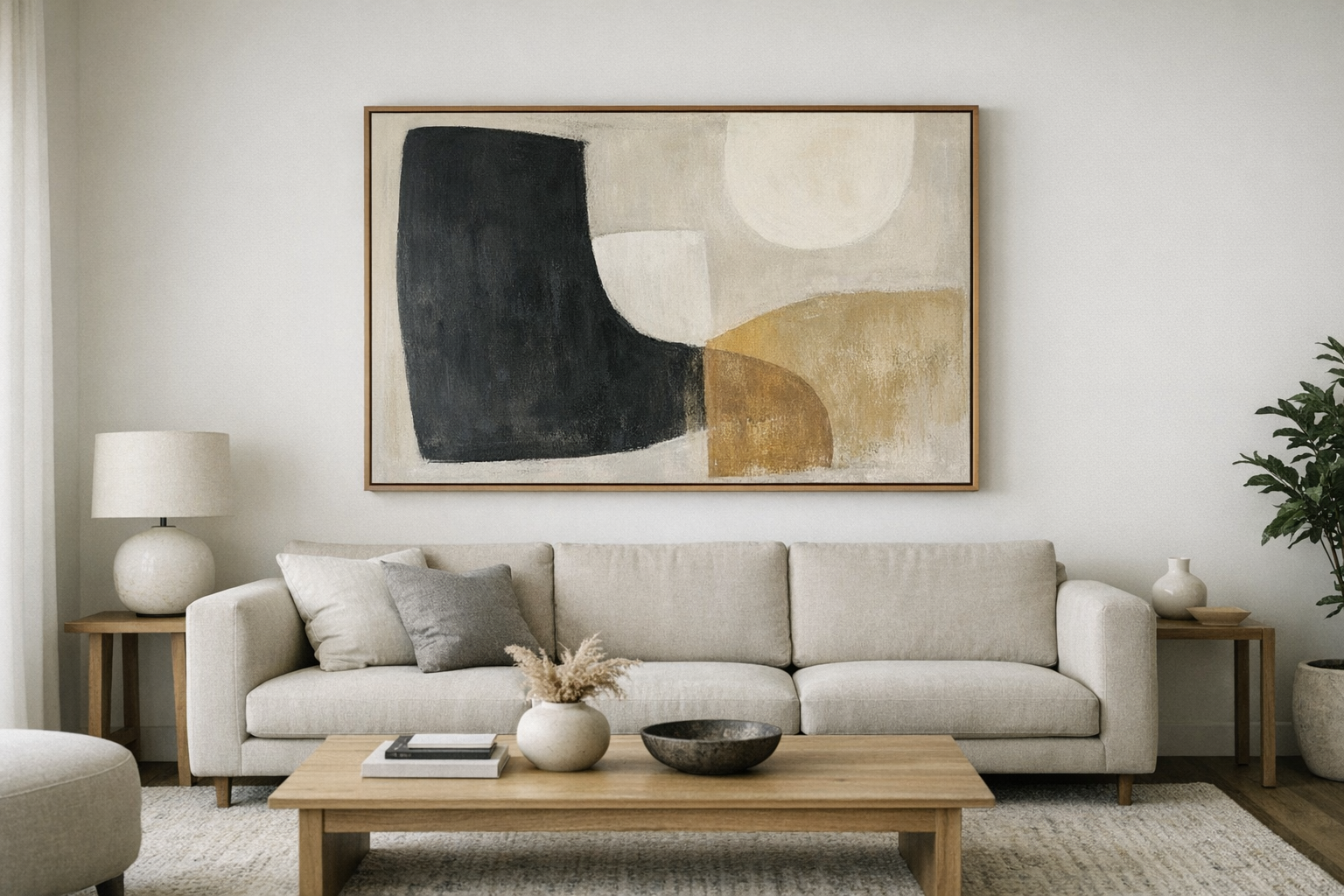
Wall Art Decor Ideas That Make a Room Look Finished: Placement, Scale, and Layout Rules
Wall art often makes a room feel unfinished when it is the wrong size, hung at the wrong height, or visually disconnected from furniture and lighting. The ideas below focus on measurable placement rules and repeatable layouts so wall decor looks intentional in living rooms, bedrooms, dining areas, and hallways. Start with scale: choose art sized to the wall and furniture For most rooms, scale is the fastest way to make wall decor look complete. If art is too small, it can look like an afterthought; if it is too large, it can crowd the wall or overwhelm nearby furniture. Use the wall and the furniture below it as your sizing reference, not the frame size you prefer in isolation. Above a sofa, console, or bed: aim for art (or the combined width of a group) that is about two-thirds to three-quarters the width of the furniture. On an empty feature wall: one large piece usually reads more finished than several small pieces scattered across the wall. In tight spaces: a taller vertical piece can add presence without taking up extra width. Hang art at the right height (and adjust for furniture) Most art looks best when the center aligns with typical eye level, then shifts slightly based on what is below it. Height mistakes are common: art that floats too high can feel disconnected from the room, while art hung too low can look cramped. General rule: place the center of the artwork around 57 to 60 inches from the floor (often used as a gallery standard). Above furniture: keep the bottom edge about 6 to 10 inches above the top of a sofa back, headboard, or console. With tall ceilings: resist the urge to chase the ceiling line; keep art visually anchored to the furniture grouping. Use a clear layout: one statement piece, a pair, or a gallery wall Rooms look finished when wall decor follows a deliberate layout rather than a collection of unrelated items. Choose one structure per wall and repeat it where appropriate in the home for consistency. Statement piece A single oversized piece is the simplest way to create a focal point. It works well above sofas, beds, fireplaces, or dining buffets where the furniture already forms a strong horizontal base. Diptych or pair Two coordinated pieces can read as one larger composition while giving flexibility for narrower walls. Keep the frames the same size and hang them at the same height for a clean, finished look. Gallery wall A gallery wall looks intentional when it has a defined boundary and consistent spacing. Plan the overall rectangle (or grid) first, then fill it with pieces that share a unifying element such as frame color, mat style, or a limited color palette. Keep spacing consistent for a tidy, finished look Spacing determines whether a wall arrangement reads as one composition or as separate items. Inconsistent gaps are visually distracting and can make even high-quality art feel unplanned. Between frames: keep gaps consistent, typically 2 to 3 inches for a tight gallery and 3 to 6 inches for a looser layout. From corners and edges: leave enough breathing room so art does not feel squeezed; avoid placing frames too close to a wall corner or doorway trim. Align key edges: align tops, bottoms, or centers across a group to create order even when frame sizes vary. Coordinate wall art with lighting and glare control Lighting affects color perception and whether glass frames show distracting reflections. A room can feel incomplete when art is poorly lit or hard to view from the main seating position. Avoid glare: do not place glossy, glass-front art directly opposite large windows or strong light sources. Use appropriate lighting: picture lights, wall sconces, or ceiling lighting can help art read as part of the room plan rather than an add-on. Choose finishes carefully: matte prints and non-glare glazing reduce reflections in bright rooms. If you are updating lighting alongside wall decor, browse modern lighting options from Letifly Lights & Decor to match finishes and color temperature with the artwork and room palette. Match frames and materials to the room to create cohesion Cohesion does not require every frame to match, but it does require a repeatable logic. Choose 1 to 2 frame finishes and repeat them across the room, then echo that finish in other elements such as hardware, mirrors, or lighting details. Modern rooms: black, white, and natural wood frames are common anchors; keep profiles simple. Warm, layered rooms: mixing wood tones can work if undertones are similar and repetition is intentional. Textural wall decor: woven pieces, relief art, and sculptural objects add depth, especially in monochrome spaces. Place art where it supports common room zones Finished rooms usually have clear zones: seating, sleeping, dining, entry, and circulation. Wall art should reinforce these zones by anchoring the main furniture groupings and filling common blanks that read as forgotten. Room zone Wall art that tends to look finished Placement note Living room seating One large piece, diptych, or centered gallery wall Anchor to the sofa width; keep the bottom 6 to 10 inches above the back. Bedroom Wide art above headboard or a pair over nightstands Keep the group visually centered on the bed, not the wall. Dining One statement piece or a balanced set Center to the table, especially in open plans. Entry or console Mirror plus art, or one oversized piece Hang so it relates to the console height and any table lamps. Hallway/stairs Linear set of frames or a tight gallery Keep consistent height along the walking line; avoid overcrowding narrow walls. Common wall art mistakes that keep a room from looking finished Many rooms feel incomplete for predictable, fixable reasons. Checking these issues often improves the result without buying additional pieces. Art is undersized for the wall or the furniture below it. Art is hung too high, creating a floating effect. Frames are scattered without a consistent boundary or alignment. Too many styles of frames and mats compete in one room without repetition. Glare and shadows make the art hard to see, especially at night. FAQ How high should I hang wall art in most rooms? A common guideline is to hang art so the center is about 57 to 60 inches from the floor, then adjust slightly based on furniture height and sightlines. How wide should wall art be above a sofa? A typical target is for the art (or the total width of a grouped arrangement) to be about two-thirds to three-quarters the width of the sofa. How much space should be between frames in a gallery wall? Many gallery walls use consistent gaps of about 2 to 3 inches for a tight look, or 3 to 6 inches for a more open layout. Consistency matters more than the exact number. How far above furniture should I place the bottom of a frame? A common guideline is 6 to 10 inches above the top edge of a sofa back, headboard, or console so the art reads as connected to the furniture grouping. How can I reduce glare on framed art? Avoid placing glass-front frames opposite windows or strong light sources, use matte prints or non-glare glazing, and consider directional lighting that can be aimed to minimize reflections.
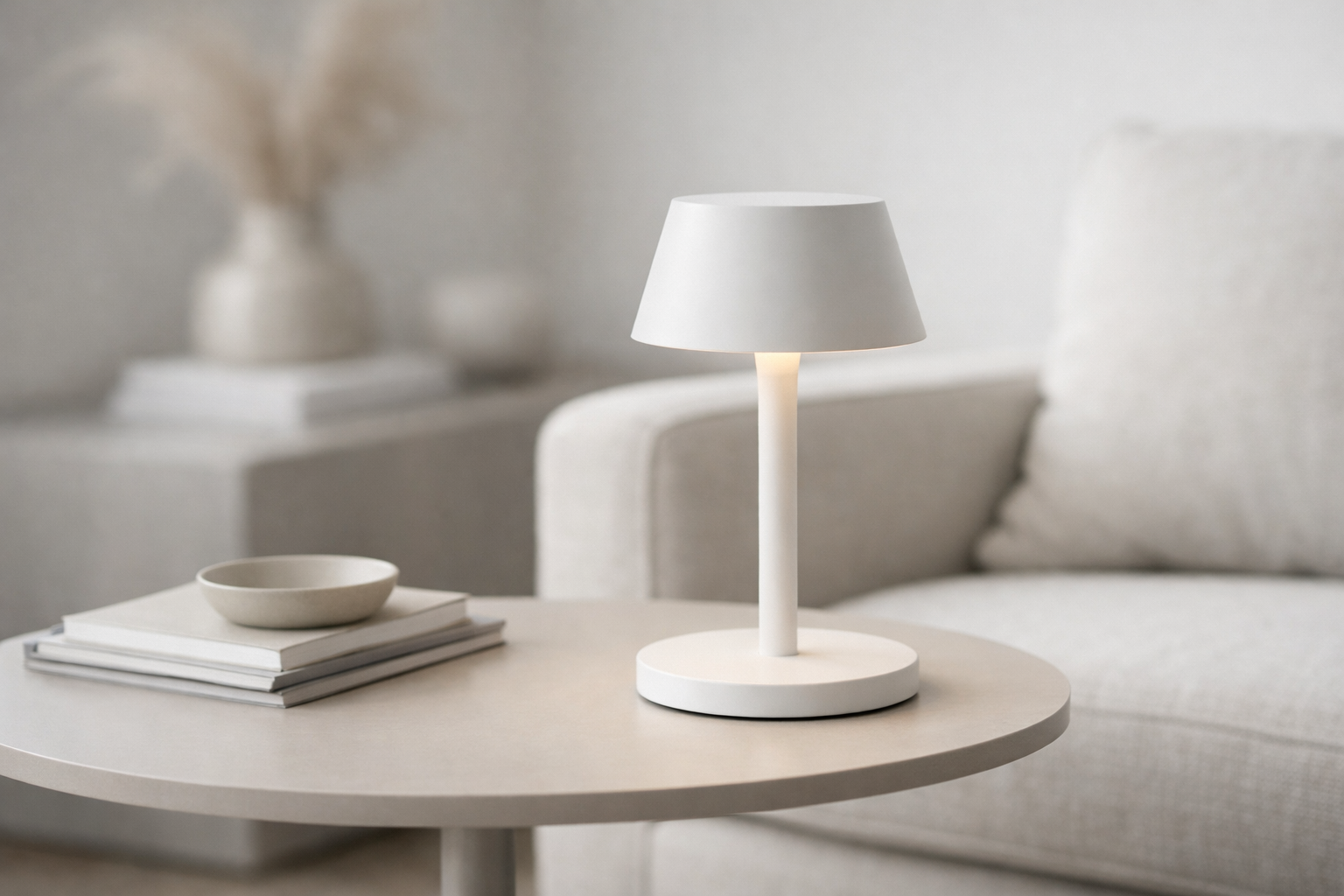
Cordless Lamps Explained: Pros, Cons, and Best Uses
Cordless lamps are portable lamps powered by internal batteries instead of a wall outlet. Most modern models use rechargeable lithium-ion batteries and charge by USB (often USB-C) or a proprietary charging base. They are mainly used where outlets are inconvenient, where cords create clutter or trip hazards, or where lighting needs change frequently. What is a cordless lamp and how does it get power? A cordless lamp is a self-contained light with a battery, LED light source, and charging electronics inside the body or base. Power typically comes from a rechargeable battery (commonly lithium-ion), though some models use disposable batteries. Many cordless lamps include touch controls and multiple brightness levels to extend runtime. Because the light source is usually LED, cordless lamps can provide useful light with relatively low power draw. Battery runtime depends heavily on brightness, battery capacity, and how efficiently the lamp regulates power. Key specs to check before buying Comparing cordless lamps is easiest when you focus on a small set of measurable specifications. Not every brand publishes every metric, but these are the most decision-relevant items for typical home use. Runtime per charge: Many models are commonly specified around 8 to 20 hours depending on brightness setting. Charging method and time: USB-C vs other USB types, magnetic base vs direct plug-in; charging time varies by battery size and charger output. Brightness and adjustability: Look for multiple dimming levels; higher brightness shortens runtime. Light color (CCT) and color quality (CRI): Warm white is typical for ambient lighting; higher CRI generally renders colors more accurately. Portability and stability: Weight, base diameter, and center of gravity matter if the lamp will be moved often. Ingress protection (if used outdoors): An IP rating indicates resistance to dust and water; lack of a rating usually means indoor-only. Replaceable battery: Some designs allow battery replacement; others are sealed, which can affect long-term serviceability. Pros of cordless lamps Cordless lamps solve problems created by fixed outlets and visible cords. They are often used as flexible accent lights, bedside lights, dining table lights, or temporary task lights in spaces where wiring is limited. Placement flexibility: Works on shelves, sideboards, or tables without planning around outlet locations. Reduced cord clutter: Helps keep surfaces and walkways visually clean and easier to maintain. Lower trip risk: No trailing cord across floors or around furniture. Useful during outages: A charged cordless lamp can provide immediate light when mains power is unavailable. Easy to re-stage lighting: Practical for entertaining, seasonal rearrangements, and temporary room layouts. Cons and limitations (and why they matter) The main tradeoffs are battery management and performance limits versus plug-in lamps. Understanding these constraints helps prevent mismatch between expectations and real-world use. Battery runtime is finite: Higher brightness usually reduces runtime; users often manage brightness to extend use. Charging is a routine task: You need a charging plan (spare cable, charging station, or regular schedule). Maximum brightness can be lower than plug-in lamps: Many cordless lamps are optimized for ambient light rather than full-room illumination. Battery aging: Rechargeable batteries lose capacity over time; sealed designs may be harder to service. Outdoor exposure can be restricted: Without an appropriate IP rating, moisture and dust can damage electronics. Best uses for cordless lamps (room-by-room) Cordless lamps are most effective when you need local light exactly where people sit, eat, or move, not necessarily where an outlet exists. They are commonly used as supplemental lighting layered on top of ceiling fixtures and wall lights. Dining table: Creates localized light without a cord across the table or floor. Bedside: Convenient for reading and nighttime navigation; reduces cord clutter on nightstands. Living room side tables and shelves: Adds flexible accent lighting and can be repositioned to reduce glare on screens. Entryway console: Provides welcoming light even when outlets are limited. Home office (supplemental task light): Useful for short sessions or as a movable secondary light source. Patio or balcony: Suitable only if the lamp is rated for outdoor use or protected from weather. Cordless vs corded lamps: when each is the better choice Cordless lamps prioritize flexibility; corded lamps prioritize continuous power and consistent output. If you need dependable, all-night illumination at higher brightness, plug-in lighting is usually simpler. Factor Cordless lamp Corded lamp Power availability Limited to battery runtime Continuous while plugged in Placement Flexible, not outlet-dependent Constrained by outlet location and cord length Brightness for long periods May be limited by battery capacity Usually easier to sustain higher output Maintenance Charging cycles; battery aging over time Minimal (mostly bulb/LED and switch) Safety and clutter No cord on floors or surfaces Cords can create clutter or trip hazards Charging and battery life: what to expect Most rechargeable cordless lamps use lithium-ion batteries and are charged through USB or a docking base. Typical reported runtimes for many models are often in the range of about 8 to 20 hours, with shorter runtimes at higher brightness settings. Battery lifespan is affected by heat, depth of discharge, and how the lamp is stored between uses. Some manufacturers state it is safe to leave rechargeable lamps plugged in, but it is often considered unnecessary once fully charged and may not be ideal for long-term battery health. Safety and care basics Use the charging cable and power adapter that meet the lamp's requirements, and keep charging ports dry and free of debris. Avoid placing the lamp where it can be knocked into water or exposed to rain unless it is designed for that environment. If a lamp becomes unusually hot, shows swelling, or the battery life drops suddenly, stop using it and follow the maker's service guidance. FAQ How long do batteries last in cordless lamps? Many cordless lamps are commonly specified around 8 to 20 hours of runtime per charge, depending largely on brightness level and battery capacity. Can you leave rechargeable lamps plugged in all the time? Some manufacturers indicate it can be safe, but it is often unnecessary once fully charged and may not be optimal for long-term battery health. How do cordless lamps get power? They are powered by internal batteries, typically rechargeable lithium-ion packs, and are recharged through USB (often USB-C) or a charging base. Are cordless lamps bright enough to light a whole room? Many cordless lamps are designed for ambient or local lighting. For full-room illumination at higher brightness for long periods, corded lamps or fixed fixtures are usually better suited. Can cordless lamps be used outdoors? Only use a cordless lamp outdoors if it is rated for outdoor or damp locations (often indicated by an IP rating) or it is kept protected from moisture and dust.
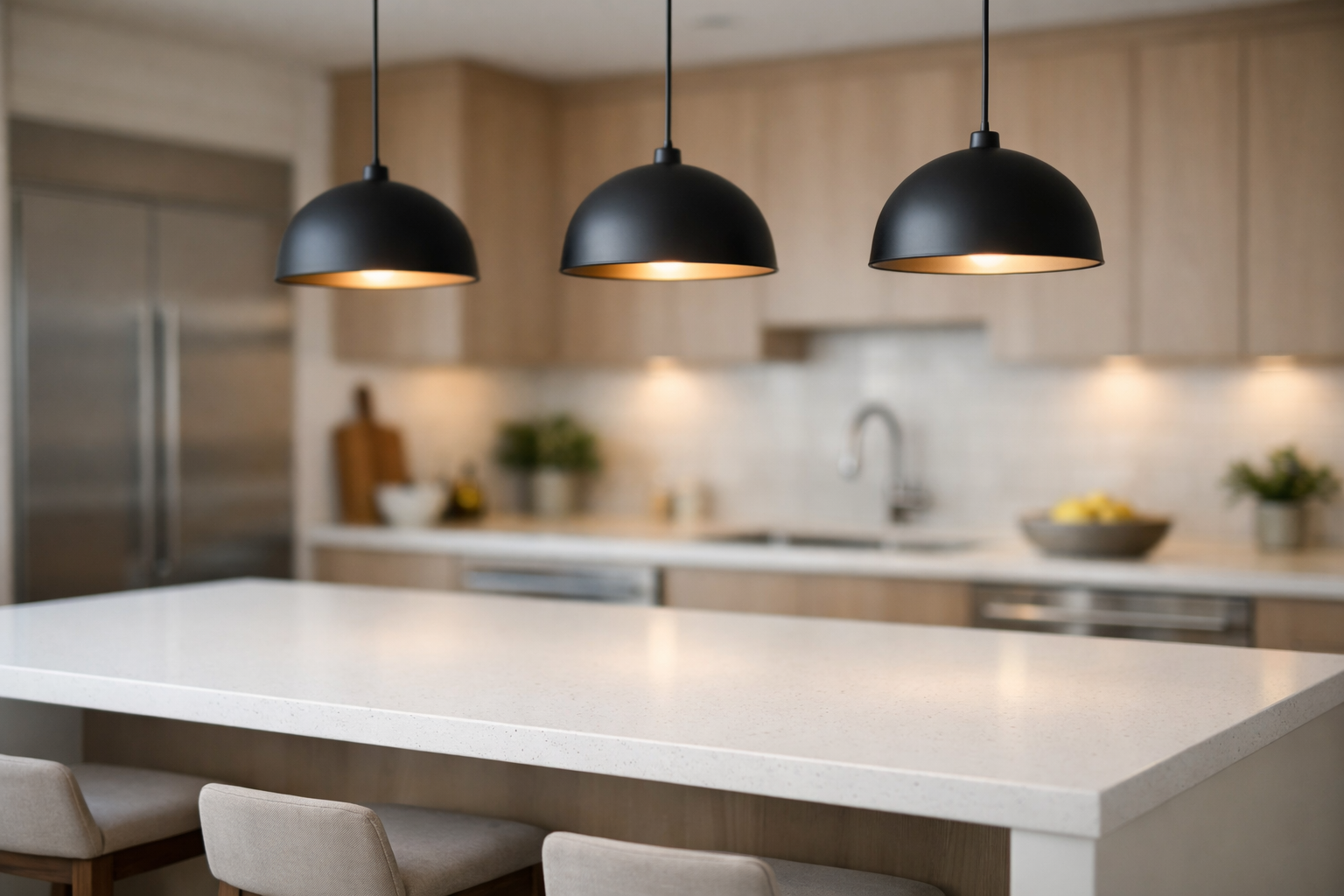
Best Pendant Lights for Kitchen Islands: Sizes, Spacing, Height, and Light Output
Pendant lights over a kitchen island need to support task lighting (prep and cooking) while avoiding glare and shadows. The best choice depends less on a single style and more on correct sizing, spacing, hanging height, and light output for your island and ceiling height. This guide explains how to select pendant lights using practical measurements and lighting parameters. Measure your island and define the lighting goal Start with the island length and width, plus the ceiling height and the location of seating. Islands used for chopping and cooking generally need brighter, more direct task light than islands used mostly for serving. If you already have recessed or under-cabinet lights, pendants can focus on targeted task lighting while contributing to ambient light. Island length helps determine the number of pendants or whether a linear pendant is more suitable. Island width affects pendant diameter and glare risk, especially over narrow islands. Work zones and seating influence where pendants should be centered (prep area vs. seating line). Choose pendant types that work well over islands For kitchen islands, the most consistently functional pendant categories are those that control glare and direct light downward. Shade shape and material affect both brightness at the countertop and comfort at eye level. In open-plan kitchens, visual mass also matters because the island fixture is often in direct sightlines from adjacent rooms. Dome, bell, and cone pendants (task-forward) These shapes typically aim light down, supporting prep tasks and reducing spill into eyes. They are a common choice when you want clear countertop illumination and a defined pool of light. Globe and clear glass pendants (more ambient, more glare-sensitive) Clear glass and exposed bulbs can look visually light but may create glare from certain angles, especially when seated. If choosing glass, consider frosted, seeded, or opal glass to diffuse the light and reduce harshness. Drum pendants (diffused, wide distribution) Drum shades can provide softer, more even light, depending on diffuser design. They can be effective for islands used for dining and gathering, but ensure the fixture still provides enough light on the countertop. Linear pendants and multi-light bars (coverage for long islands) Linear fixtures can distribute light across a longer work surface with fewer junction boxes. They are often practical when you want continuous coverage and a cleaner ceiling layout. Size pendants to the island width (diameter and visual scale) Pendant diameter should relate to island width to avoid crowding and glare. A common sizing approach is to keep the pendant diameter comfortably smaller than the island width so edges remain visually clear and people can move around the island without feeling obstructed. Island width Typical single-pendant diameter range Notes 24 to 30 in 6 to 10 in Favor compact shades and good glare control, especially with seating. 30 to 36 in 10 to 14 in Works for many standard islands; consider 2 to 3 pendants depending on length. 36 to 42+ in 14 to 20 in Allows larger statement pendants; ensure adequate clearance to sightlines. If your island is narrow or has seating close to the edge, prioritize smaller diameters and diffusers to reduce direct view of the light source. Decide how many pendants you need (2 vs 3 vs linear) The best number depends mainly on island length and the width of each pendant. Two pendants often suit medium-length islands, while three pendants can better cover longer islands and reduce dark gaps between light pools. A linear pendant can be simpler when you want continuous coverage and fewer ceiling penetrations. 2 pendants: Often works for islands around 5 to 7 ft long, depending on pendant size and beam spread. 3 pendants: Often works for islands around 7 to 9+ ft long, keeping light distribution more even. 1 linear pendant: Useful when you want uniform coverage across the length and a streamlined look. As pendant diameter increases, fewer fixtures may be needed to achieve coverage without visual clutter. Set pendant spacing for balanced light and clear sightlines Good spacing prevents overly bright hotspots and dark zones on the work surface. It also helps keep the island feeling open, especially in kitchens with seating. Use consistent spacing between pendants and maintain comfortable distance from the island ends. From island ends: Place pendants in from the ends to keep edges visually open and to avoid lighting outside the island surface. Between pendants: Keep enough separation so light pools overlap slightly rather than forming isolated circles. Align to use: Center pendants over the primary work zone or sink/cooktop zone if the island includes them. If seating is on one side, consider shifting pendants slightly toward the work side to reduce glare for seated guests. Choose the right hanging height (clearance above the countertop) Hanging height affects glare, head clearance, and how much light reaches the countertop. A common target is to hang pendants so the bottom of the fixture is well above normal sightlines while still close enough for effective task lighting. Higher ceilings may require longer stems or chains, but the bottom-of-fixture height can remain consistent relative to the counter. Typical range: Many kitchens use a bottom-of-pendant height around 30 to 36 in above the countertop, adjusted for ceiling height, pendant size, and occupant sightlines. Over seating: If people will face the pendants while seated, raise slightly or choose diffused shades to reduce glare. Tall pendants: Large or tall shades may need a slightly higher hang so the visual mass does not block views across the room. Brightness, bulb type, and color temperature (what to look for) For islands, brightness is primarily about usable light on the countertop without discomfort. Choose fixtures that can use efficient LED sources or LED bulbs and consider dimming so light levels can change between cooking and entertaining. Color temperature influences how food and finishes appear, so keep it consistent with the rest of the kitchen lighting. Lumens and distribution Rather than relying on wattage, compare lumens and the shade design. Downward-shielded shades concentrate light on the surface, while open or clear glass distributes light widely but can increase glare. Color temperature (Kelvin) Many kitchens use warm to neutral whites for a clean but comfortable look. If you mix temperatures (for example, very cool pendants with warm recessed lights), surfaces can look uneven from one area to another. Color rendering (CRI) Higher CRI lighting renders food and countertop materials more naturally. If CRI is listed, consider higher-CRI options for task areas. Dimming compatibility If you plan to dim, ensure the light source (bulb or integrated LED) and the dimmer type are compatible. Mismatched components can cause flicker or a limited dimming range. Material and finish considerations (cleaning, heat, and durability) Kitchens expose fixtures to grease, moisture, and frequent cleaning. Smooth metal and glass are generally easier to wipe down than porous materials. If the island is near the cooktop, prioritize finishes that tolerate regular cleaning and consider more enclosed shades to reduce residue on bulbs. Glass: Easy to clean; diffused glass helps reduce glare compared to clear glass. Metal: Durable and often easy to maintain; interior finish can affect light output (white interiors reflect more). Fabric or porous shades: Can trap odors and grease in some kitchens; may require more careful maintenance. Quick checklist for choosing kitchen island pendant lights Measure island length, width, and ceiling height. Choose a pendant type that matches your lighting goal (task vs diffused). Size the pendant diameter to the island width and sightlines. Decide quantity (2, 3, or linear) based on island length and coverage. Set spacing to avoid dark gaps and keep clear edges. Set hanging height for countertop illumination and low glare. Confirm lumens, color temperature, CRI, and dimming compatibility. Pick materials and finishes that are easy to clean in a kitchen. FAQ How high should pendant lights hang above a kitchen island? A common target is for the bottom of the pendant to be about 30 to 36 inches above the countertop, adjusted for ceiling height, pendant size, and glare control. How many pendant lights should I put over a kitchen island? The number depends on island length and pendant size. Two pendants often fit medium-length islands, three pendants often fit longer islands, and a linear pendant can cover long islands with a single fixture. What is the best light color temperature for kitchen island pendants? Warm to neutral white light is commonly used in kitchens to balance clarity and comfort. The most important factor is matching the color temperature to the rest of the kitchen lighting to avoid mismatched appearance. Are clear glass pendants a good choice over an island? They can provide wide light distribution, but they are more likely to cause glare if the bulb is visible. Diffused glass (opal, frosted, or seeded) can reduce glare while still providing good light. Do kitchen island pendant lights need to be dimmable? Dimming is often useful because islands serve multiple tasks. If you plan to dim, confirm the bulb or integrated LED and the dimmer are compatible to avoid flicker or limited dimming performance.
How to Choose Modern Lighting for Your Home: A Practical Room-by-Room Guide
Choosing modern lighting is easier when you treat it as a planning problem: what each room needs to do, where light should land, and how fixtures will look when the lights are off. A modern lighting plan typically uses multiple light sources and controls (like dimmers) to shift between tasks and ambiance. The steps below focus on measurable choices such as placement, brightness, color temperature, and fixture proportions. Start with a lighting plan: ambient, task, and accent Most homes work best with layered lighting rather than a single overhead fixture. Start by deciding where you need general room light (ambient), focused work light (task), and directional or decorative light (accent). In modern interiors, layering also prevents harsh shadows and reduces glare by spreading light across different heights. Ambient: ceiling fixtures, recessed lights, indirect lighting, or a combination. Task: under-cabinet lights, desk lamps, reading lamps, vanity lighting. Accent: wall washers, picture lights, directional spotlights, or grazing light on textured walls. Measure first: room size, ceiling height, and viewing angles Modern fixtures often use clean lines and minimal shades, which can increase perceived brightness and visible glare if sizing and placement are off. Measure the room dimensions, ceiling height, and key furniture locations before choosing fixture sizes. For spaces with seated use (living rooms, dining areas), also consider typical viewing angles so light sources are not directly in the line of sight. Common clearance checkpoints Walkways: keep hanging fixtures out of circulation paths to avoid head clearance issues. Tables and islands: plan pendant height so the fixture lights the surface without blocking sightlines across the room. Bathrooms: check mirror height and where faces are lit to reduce shadows under eyes and chin. Choose brightness using lumens (not watts) Brightness is best compared using lumens because wattage mostly describes energy use rather than light output. Add up lumens across all light sources in the room (ambient + task + accent) instead of relying on one fixture to do everything. Dimmers help you cover both high-output tasks and low-light evening use without changing bulbs. Quick lumen planning approach Use higher lumens where you perform detail work (kitchen counters, desks, vanities). Use moderate, distributed lumens in living rooms and bedrooms to avoid a single harsh source. Use accent lighting to add visual brightness to walls and vertical surfaces; this can make a room feel brighter without increasing glare. Select color temperature and CRI for accurate, comfortable light Color temperature (measured in Kelvin, K) affects how warm or cool the light looks, while CRI (Color Rendering Index) describes how accurately colors appear compared to a reference source. Modern lighting often looks most consistent when you standardize color temperature within an open-plan area and choose a CRI appropriate for color-critical tasks (like wardrobes or vanities). Mixing multiple color temperatures in the same sightline can make whites and paint colors look inconsistent. Use case Typical color temperature goal Why it helps Bedrooms, living rooms Warm to neutral white Supports relaxation and reduces a stark look at night Kitchens, home offices Neutral white Maintains clarity for reading, cooking, and cleanup Bathrooms/vanities Neutral white More accurate skin tone and grooming visibility For color accuracy, look for a stated CRI on product specifications. Higher CRI is generally more important near mirrors, closets, and any space where you evaluate color. Pick fixture types that match modern function and layout Modern lighting is less about a single "style" and more about clean geometry, purposeful placement, and consistent finishes. Choose fixture types based on what needs lighting, then confirm the fixture form and scale fits the architecture. In open layouts, repeating one or two fixture families (for example, matching pendants and wall sconces) can keep the lighting visually consistent. Room-by-room fixture selection Living room: combine ceiling ambient light with floor or table lamps for reading zones and softer evening light. Kitchen: prioritize task lighting on counters (under-cabinet or well-placed downlights) plus ambient ceiling light; add pendants where they directly light islands. Dining: a centered pendant or linear suspension over the table, plus optional wall lighting for perimeter brightness. Bedroom: layered bedside task lighting and low-glare ambient; consider separate control for each side of the bed. Bathroom: vertical light near the mirror (or well-designed integrated mirror lighting) plus overhead ambient for the full room. Hallways: evenly spaced ceiling fixtures or wall sconces to avoid dark gaps. Control glare and shadows with placement and diffusion Glare happens when a light source is too bright in your field of view or reflects off glossy surfaces. Shadows become noticeable when light comes from a single direction, especially in bathrooms and kitchens. Use diffusers, shades, indirect lighting, and multiple sources at different locations to balance the room. Practical glare-reduction checks Avoid exposed high-output bulbs at eye level in seating areas. Use diffused or indirect light near TVs and monitors to reduce reflections. In bathrooms, add face-level lighting near the mirror to reduce under-eye shadows. Unify finishes and details across an open-plan home Modern interiors often look most coherent when fixture finishes are limited and repeated. Pick one primary finish (such as black, brushed metal, or white) and a secondary finish if needed, then reuse them across connected spaces. Also keep consistent details such as color temperature, trim shape (for recessed lights), and switch style to avoid a piecemeal look. Prioritize controls: dimmers, zones, and smart compatibility Controls are a functional part of modern lighting because they let one layout serve multiple needs. Zoning separates groups of lights (for example, pendants vs under-cabinet lights), and dimmers allow quick adjustment of brightness. If you use smart bulbs or smart switches, confirm compatibility with dimmers and drivers, because not all LEDs dim well with every control type. Control planning checklist Separate ambient and task lighting onto different switches where possible. Use dimmers in living areas, bedrooms, and dining spaces. Confirm LED dimming method (leading-edge, trailing-edge, 0-10V, or manufacturer-specific) if specified by the fixture/driver. Safety and installation basics to confirm before buying Before selecting fixtures, verify practical constraints: electrical box type, load ratings for ceiling mounting, and whether the location is dry, damp, or wet (especially in bathrooms and exterior-adjacent areas). For hardwired fixtures, confirm the fixture size fits the junction box and canopy coverage. If you are unsure about wiring or ratings, use a qualified electrician and follow local electrical codes. FAQ What is the difference between modern and contemporary lighting? Modern lighting typically refers to design influenced by modernist principles such as clean lines, simple geometry, and minimal ornament. Contemporary lighting usually means what is currently popular and can include multiple styles, including modern-inspired designs. How many light sources should a room have? Many rooms work better with multiple light sources rather than a single overhead fixture. Using separate ambient, task, and accent lights helps reduce glare and shadows while supporting different activities. What color temperature is best for a whole home? A consistent color temperature within connected spaces helps lighting look uniform. Many households choose one warm-to-neutral setting for living areas and a slightly more neutral setting for task-heavy areas, but the best choice depends on finishes, daylight, and how the rooms are used. What CRI should I look for in kitchen and bathroom lighting? Check the product specifications for CRI. Higher CRI is typically preferred in kitchens, closets, and bathrooms because it improves color accuracy for food prep, grooming, and clothing selection. Why do my LED lights flicker when dimmed? Flicker commonly happens when the LED bulb or fixture driver is not compatible with the dimmer type, or when the dimmer is not rated for the electrical load. Using a compatible dimmer and LED-rated components usually resolves the issue.
Modern Home Decor Ideas for Every Room in 2026: Practical Updates That Look Current
Modern home decor in 2026 centers on warmer minimalism, tactile materials, and lighting that supports both function and mood. Most room updates can be done without renovation by adjusting color temperature, layering textures, improving layout, and choosing fewer, better-scaled statement pieces.This guide gives room-by-room ideas that align with widely discussed 2026 directions: layered and lived-in interiors, stronger personal expression through art and objects, warm neutrals and earthy tones, and more emphasis on craftsmanship and texture. Use the sections that match your space and priorities.2026 modern decor foundations that work in any roomStart with shared rules that keep rooms consistent while still allowing each space to feel distinct. In 2026, many modern interiors lean away from stark, all-white minimalism and toward warmer palettes, softer edges, and layered surfaces.Color and finish directionChoose a warm-neutral base (off-white, cream, warm gray, or light taupe), then add one deeper accent (brown, olive, terracotta, ink, or charcoal). Prefer low-sheen finishes on walls and ceilings to reduce glare and make color feel richer.Texture and materialsMix at least three tactile surfaces per room: for example, wood, woven textile, and stone/ceramic. This supports the 2026 trend toward craftsmanship-driven details and lived-in layering rather than flat, uniform surfaces.Lighting as a design layerUse three layers when possible: ambient (general), task (work), and accent (highlight). Select warmer color temperatures in living areas for comfort and use higher brightness and better glare control where focus tasks happen (kitchen counters, desks, vanities).Living room: layered comfort with clearer focal points Many 2026 living rooms balance modern shapes with more softness and nostalgia-driven elements, such as rounded forms or vintage-like textiles. The goal is a room that looks intentional but not staged.Layout and focal pointAnchor seating with a rug large enough that at least the front legs of sofas and chairs sit on it. Create one primary focal point (art wall, fireplace, or a media wall) and keep competing focal points minimal so the room reads as calm.Statement lighting and art scaleUse one oversized element to set the room's hierarchy: a large pendant, a sculptural floor lamp, or a single large artwork. Oversized art is a recurring 2026 theme; it often looks cleaner than many small frames when wall space is limited.Layering that still looks modernCombine a solid sofa with two different accent chair materials (for example, wood frame plus upholstered). Add two textiles with different weaves (boucle, linen, wool) and keep patterns to one family so the room stays cohesive.Kitchen and dining: warm materials and better task lighting Modern kitchens in 2026 often soften high-contrast looks with warmer woods, richer colors, and more texture. Prioritize function first: lighting, counter usability, and visual clutter control.Cabinet and hardware choices that feel currentConsider wood tones, muted paint colors, or a two-tone scheme to reduce the starkness of all-white cabinetry. If you update hardware, keep it consistent across the kitchen and choose finishes that coordinate with faucets and lighting rather than matching every item exactly.Practical lighting upgradesImprove under-cabinet lighting for continuous, shadow-free task light on counters. Over an island or table, a linear pendant or a set of evenly spaced pendants can provide both ambient light and a strong design element.Dining area: focus on comfort and proportionChoose chairs that support longer sitting, then add one soft element such as a textured runner or upholstered seating. Hang the dining light centered over the table and sized so it visually relates to the table width, not the room size.Bedroom: calm minimalism with richer materials Bedrooms in 2026 often keep layouts simple while adding depth through textiles, warm color, and softer silhouettes. The room should prioritize sleep comfort, glare control, and storage clarity.Headboard wall and bedding layersCreate a single, quiet statement behind the bed: an upholstered headboard, wood slats, or a large artwork. Layer bedding in two to three solids (for example, duvet, coverlet, and throw) and vary texture to avoid a flat look.Lighting for wind-down routinesUse bedside lighting that prevents glare when reading, such as shaded lamps or adjustable sconces. Keep overhead lighting on a dimmer when possible so you can shift from bright task use to low evening light.Bathroom: spa-like simplicity without a remodelBathrooms can feel more modern in 2026 by reducing visual clutter and adding tactile, natural materials. Small changes are often enough because bathrooms have limited surfaces.Surface updates that do not require demolitionReplace a mirror with a better-scaled one and use a warmer light temperature to soften reflections. Add wood or stone accessories (tray, stool, canister) and use matching dispensers to make the counter read as one set.Functional lighting placementPlace light at face level to reduce shadows for grooming, typically with sconces or a well-positioned bar light. If the ceiling light is harsh, add a secondary, dimmable source to improve nighttime use.Home office: cleaner backgrounds and better ergonomicsIn 2026, home offices often need to serve video calls and focused work while still looking like part of the home. The most effective upgrades are layout, lighting direction, and storage.Lighting for screens and callsPosition a task lamp to avoid reflections on screens and use a soft, forward-facing light source for calls when possible. Keep the background visually simple: one artwork, one plant, or one shelf zone rather than many small items.Storage that reduces visual noiseUse closed storage for cables, chargers, and paper stacks. If using open shelves, group items into a few large clusters so the wall reads as organized rather than busy.Entryway and hall: modern impact in a small footprintEntryways are ideal for modern updates because a few elements can set the tone for the whole home. In 2026, entries often use sculptural lighting, warm wood, and practical drop zones.Drop zone essentialsInclude a tray or bowl for keys, a hook or rail for bags, and a concealed spot for shoes. Add a runner with low pile for durability and easier cleaning.Mirror and lighting pairingA mirror increases brightness and makes narrow halls feel wider. Pair it with a wall sconce or a flush mount that provides even light and avoids harsh shadows.Quick room-by-room checklist for a 2026-modern refresh Room High-impact update What to measure/confirm Living room Oversized art or statement lamp Rug size, art center height, clear walk paths Kitchen Under-cabinet lighting + new pendants Glare control on counters, pendant spacing Dining Centered light + comfortable seating Fixture width relative to table, hanging height Bedroom Headboard wall + layered bedding Bedside reach for switches, dimmable options Bathroom Mirror + coordinated accessories Face-level lighting, moisture-safe materials Office Task lighting + closed storage Screen reflections, cable routing Entry Mirror + organized drop zone Door swing clearance, shoe storage capacity FAQWhat makes a home look dated in 2026?Common reasons include lighting that is too cool or harsh, overly uniform finishes with little texture, and layouts that do not support how the room is used (for example, poor seating flow or insufficient task lighting). Updating lighting layers and adding varied materials typically modernizes a space without major renovation.What color palettes are commonly associated with modern decor in 2026?Many modern interiors use warm neutrals as a base and add earthy or deeper accents such as browns, olives, terracotta tones, and charcoals. Matte or low-sheen finishes are often used to keep walls from looking glossy under strong lighting.How do you choose the right size for a statement light over a dining table?The fixture is typically sized relative to the table rather than the room so it feels centered and proportional. Confirm the fixture width does not crowd the table edges and that hanging height leaves comfortable sightlines across the table.What is the simplest way to make a small room feel more modern?Reduce visual clutter, choose one clear focal point (a large artwork or a single sculptural light), and use layered lighting instead of relying on one overhead fixture. Adding one or two tactile materials, such as wood and a textured textile, also increases depth without making the room feel busy.
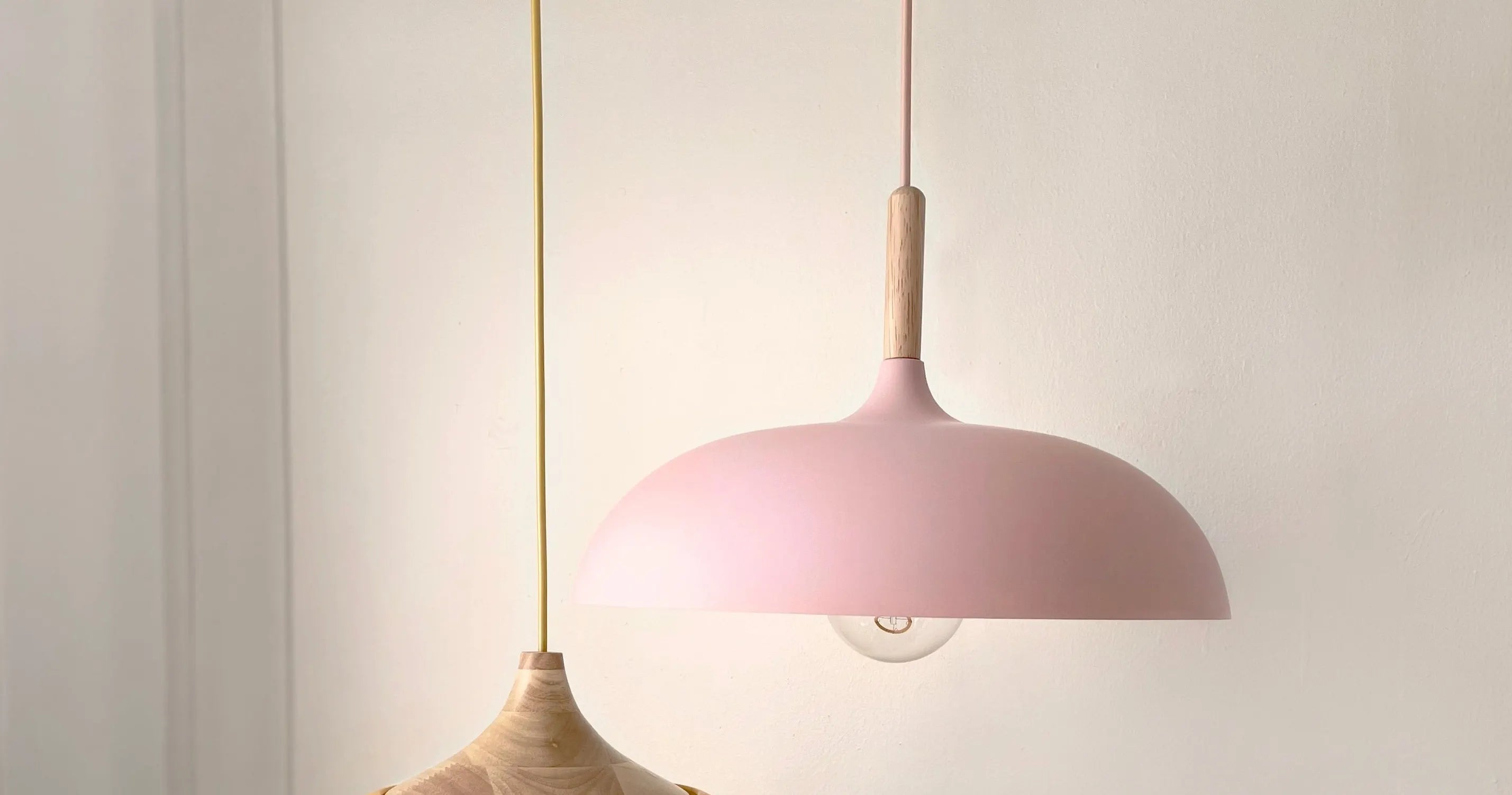
Why these 10 Top Pink Pendant Lights are the Perfect Addition to Any Room
In the realm of interior design, lighting plays a pivotal role, not only in illumination but also in setting the tone and mood of a space. Pink pendant lights, often overlooked, have emerged as a sublime choice for those seeking a blend of warmth, elegance, and contemporary style. This article, "Why These 10 Top Pink Pendant Lights are the Perfect Addition to Any Room," delves into the allure and versatility of pink pendant lights. We will explore a curated selection of ten best-selling pink pendant lights from Letifly, each unique in design yet unified in their ability to transform a room. From the Soft Palette Pendant Lights in Metal & Wood, offering a blend of rustic charm and modern sleekness, to the Draped Flower Glass Ceiling Pendant Light, which adds a touch of whimsical grace, each lamp is a testament to the power of pink in interior design. We'll also look at other options like the Saturn Halo Colorful LED Pendant Lights and the Lumina Colored Pendant Lights, which bring a vibrant yet soothing ambiance. This collection is not just a showcase of lighting fixtures but a journey through various styles and design philosophies, demonstrating how the right pink pendant light can elevate any room from ordinary to extraordinary. The Soft Palette Pendant Lights in Metal & Wood present a fusion of modern design and classic elegance, making them a splendid choice for anyone seeking pink pendant lights. These fixtures, with their alluring pink shade, are more than just lighting elements; they are a statement in interior design. Each light is crafted with precision, ensuring both durability and style. The gentle pink hue emanates warmth, creating a cozy yet refined atmosphere. Ideal for various settings, from a chic living room to a serene bedroom, these lights add a touch of sophistication and are adaptable to both contemporary and traditional decor. The combination of metal and wood in their construction offers a unique textural contrast, enhancing their aesthetic appeal. These pendant lights are a testament to tasteful design, effortlessly becoming the focal point in any room. Perfect for those who appreciate the finer details in home decor, these pink pendant lights are not just functional; they're a transformative element for any space.The Ingrid Nordic Cylinder Pendant Lights are a stunning representation of modern simplicity and elegance, making them a fantastic choice for anyone seeking pink pendant lights. Their sleek, cylindrical design offers a contemporary flair that complements a variety of interior styles. These lights, with their soft pink hue, create a gentle and welcoming ambiance, ideal for spaces that require a touch of warmth and sophistication. Their minimalistic yet striking appearance makes them versatile for both residential and commercial settings. Whether it's to illuminate a cozy reading nook or to add a stylish accent to a café or boutique, these pendant lights are sure to enhance the space with their chic, understated beauty. The Ingrid Nordic Cylinder Pendant Lights are not just lighting fixtures; they are a statement piece that seamlessly blends functionality with aesthetic appeal.The Saturn Halo Colorful LED Pendant Lights, particularly in pink, blend artistic design with functionality. These lights, inspired by Saturn, add a modern and unique touch to any space, making them perfect as pink pendant lights. They create a celestial-like visual experience, enhancing the ambiance of both homes and professional settings. These fixtures are ideal for those seeking a combination of playful sophistication and warm, inviting lighting. Their innovative design serves as both an illuminating element and a captivating conversation starter.The PH5 Colored Layered Pendant Light, available in a stunning pink hue, is a design masterpiece that embodies the elegance and vibrancy of pink pendant lights. Its layered structure, a homage to mid-century design, ensures a unique light diffusion that adds warmth and sophistication to any room. Ideal for those who appreciate a blend of style and practicality in their lighting, this pendant light makes a striking statement whether in a home setting or a professional space. It's not just a light source; it's a piece of art that enhances the ambiance of its surroundings.The Astrid Metal & Wood Pendant Lights, especially in pink, offer a charming mix of natural wood and metal, perfect for those searching for pink pendant lights. These lights bring a rustic yet modern aesthetic to any interior. Ideal for adding a touch of warmth and character, their design is both simple and elegant, making them versatile for various decor styles. The pink variant introduces a soft, gentle ambiance, perfect for creating a cozy and welcoming atmosphere in any room.The Devon Cone Pendant Lamp in pink is an exceptional choice for those seeking pink pendant lights. Its sleek and modern design, characterized by its cone shape, makes it a stylish addition to any contemporary space. The pink variant adds a pop of color, creating a warm and inviting ambiance. Perfect for both home and commercial settings, this lamp is versatile and can adapt to various interior styles, enhancing the overall aesthetic with its elegant and refined look.The Lumina Colored Pendant Lights, particularly in pink, are an excellent choice for those searching for pink pendant lights. These lights, with their minimalist yet striking design, are a versatile addition to any interior, blending seamlessly into both modern and traditional spaces. The pink hue adds a gentle and playful touch, perfect for creating a welcoming and stylish atmosphere. Ideal for various settings, from cozy home environments to chic commercial spaces, these pendant lights are not just functional but also a statement piece, elevating the overall aesthetics of the room.The Colorful Metal & Wood Pendant Lights, available in pink, are a charming choice for those in search of pink pendant lights. These lights merge the warmth of wood with the modern appeal of metal, resulting in a fixture that is both eye-catching and versatile. The pink color option offers a delightful and trendy touch, perfect for softening the ambiance of any room. These pendant lights are ideal for adding a splash of color and elegance to various spaces, enhancing the overall aesthetic with their unique design.In conclusion, pink pendant lights offer an exceptional balance of style, warmth, and modernity, making them the perfect addition to any space. Each lamp in this curated selection not only stands out for its aesthetic appeal but also for its ability to create an inviting and unique ambiance. From the subtle elegance of the Soft Palette Pendant Lights to the playful charm of the Colorful Metal & Wood Pendant Lights, there's a light to suit every taste and decor need. These lights exemplify how a simple change in lighting can transform a room, infusing it with personality and warmth. As these top ten pink pendant lights demonstrate, the right lighting can indeed become the focal point of your space, making a stylish statement while fulfilling practical lighting needs.
![Top 27 Cordless Lamps from Letifly: Illuminate Your Space [Updated: August 2024]](http://www.letifly.com/cdn/shop/articles/globe_cordless_table_lamps.png?v=1704941444&width=1864)
Top 27 Cordless Lamps from Letifly: Illuminate Your Space [Updated: August 2024]
Explore the world of cordless lighting with Letifly.com's diverse range of table lamps. These stylish and functional pieces blend art with utility, providing the perfect lighting solutions for any space. Discover our sleek cordless LED table lamps and practical rechargeable lamps, designed to illuminate every corner of your home. Beyond traditional lighting, our collection includes battery-powered lamps and motion sensor closet lights, each crafted to meet your lighting needs without compromising on style. Letifly.com’s selection showcases thoughtful design, catering to both aesthetics and the modern demand for flexible home decor solutions. Find the best cordless lighting options to enhance your living spaces today. Let's have a look at our top 27 Cordless lamps. Introducing the Rechargeable Globe Lamp, a cordless LED table lamp that will elevate your home decor while providing functionality. With its rechargeable batteries, you can place it anywhere without the hassle of cords. The soft and warm glow creates a cozy ambiance perfect for any setting. Customers rave about its long-lasting battery life and sleek design, making it a must-have for any modern space. Say goodbye to traditional table lamps and hello to the convenience and style of the Rechargeable Globe Lamp. Introducing the Flowerpot Cordless Table Lamp, the perfect blend of modern design and functionality. This sleek and stylish lamp is not only cordless but also rechargeable, making it perfect for adding ambience to any space, inside or out. Its sophisticated design and warm LED glow create a cozy atmosphere, while its durable construction ensures long-lasting use. With rave reviews on its practicality and aesthetic appeal, this lamp is a must-have for anyone looking to elevate their decor. Check it out now for the perfect lighting solution! Introducing the Motion Sensor LED Rechargeable Magnetic Night Light! This innovative and stylish wall light is perfect for adding a touch of elegance to any space while providing the convenience of hands-free lighting. With its magnetic design, it's easily mountable on any surface, making it perfect for use in the kitchen, bathroom, or even as a cabinet light. And with its motion sensor technology, it's energy-efficient and perfect for lighting up those late-night trips to the fridge or for adding a warm ambiance to any room. Check out the rave reviews and get yours today! Introducing the Loft LED Table Lamp with Rechargeable USB Batteries, the perfect blend of modern design and functionality. This sleek and stylish lamp provides adjustable lighting with its built-in touch control, making it ideal for any workspace or bedside table. The rechargeable USB batteries ensure convenience and portability, while the energy-efficient LED bulbs offer long-lasting illumination. Customers rave about the lamp's contemporary look and practical features, making it a must-have for anyone in need of versatile and efficient lighting. Experience the convenience and style of the Loft LED Table Lamp for yourself! Step into a magical world with the Cordless Mushroom Lamp from Letifly. These whimsical and stylish lamps bring a touch of enchantment to any space. Constructed from high-quality materials, the Mushroom Lamp emits a soft, warm glow that creates a cozy atmosphere. With glowing customer reviews praising its unique design and ambient lighting, these lamps are a must-have for anyone looking to add a touch of charm and elegance to their home decor. Experience the wonder of the Mushroom Lamp for yourself! The Cordless Metallic Mushroom Lamp from Letifly is a stunning and innovative lighting solution for any space. With its sleek and elegant design, this lamp is both functional and stylish, providing a soft and ambient glow wherever it is placed. Its cordless feature allows for easy placement and mobility, making it a versatile addition to any room. The product has received rave reviews for its quality and modern design, making it a must-have item for anyone looking to elevate their home decor. Visit the link to learn more about this unique and eye-catching lamp! Add a playful touch to any space with the Balloon Dog Cordless LED Table Lamp from Letifly. This adorable lamp combines whimsy and functionality, creating a fun and modern decor piece. Featuring a cordless design and energy-efficient LED technology, this lamp is both practical and stylish. With a variety of color options to choose from, it's the perfect addition to any room. The glowing reviews speak for themselves, making this lamp a must-have for any design-savvy individual looking to enhance their space. The Bell Side Lacquered Metal Table Lamp is a stylish and modern lighting solution for any space. Its sleek design and high-quality construction make it a standout piece in any room. The lacquered metal finish adds a touch of elegance, while the bell-shaped shade emits a warm and inviting light. With positive reviews praising its durability and aesthetic appeal, this lamp is a must-have for anyone looking to enhance their home decor. Shop now and bring a touch of sophistication to your living space with this eye-catching table lamp. Introducing the Night Talk Cordless Table Lamp, the perfect combination of style and functionality. This modern, sleek lamp is the ideal addition to any room, providing both ambient lighting and a touch of elegance. With its cordless design, you can easily move this lamp from room to room without the hassle of finding a nearby outlet. The Night Talk Cordless Table Lamp is a must-have for anyone looking to add a chic and practical lighting solution to their home decor. Check out the link for more information and glowing reviews! The Goldlink Cordless Table Lamp is a stylish and versatile lighting solution for any space. This innovative lamp is cordless, making it easy to move from room to room without the hassle of finding a nearby outlet. With a sleek gold finish and a modern design, this lamp is not only functional but also adds a touch of elegance to any decor. The adjustable brightness settings and long-lasting battery make it perfect for creating the perfect ambiance in any room. Check out the product and see why customers are raving about this must-have accessory! Illuminate your space with the charming Cordless Type Lamp from Letifly. This sleek and modern lamp brings a cozy ambiance to any room with its intricate design and warm glow. Crafted from high-quality materials, this lamp is a standout piece that will complement any decor style. With glowing reviews from satisfied customers, it's clear that this lamp is a must-have for creating a relaxing atmosphere. Don't miss out on the perfect lighting solution for your home, shop the Candle Type Lamp today! Introducing the Dainty Waterproof LED Table Lamp with Rechargeable Batteries, a versatile and functional addition to any home or outdoor space. This sleek and modern lamp offers the convenience of portable lighting with the added benefit of being waterproof, making it perfect for outdoor gatherings or camping trips. With its included rechargeable batteries, you can enjoy up to 8 hours of continuous light, making it an eco-friendly and cost-effective lighting solution. Don't miss out on the opportunity to add this stylish and practical lamp to your collection! Visit the link for more information and glowing customer reviews. The Sparkle Glam Table Lamp from Letifly is the perfect combination of elegance and modern design. With its crystal-embellished shade and sleek chrome base, this lamp adds a touch of sophistication to any room. Its soft, warm glow creates a cozy atmosphere, making it an ideal addition to your living room, bedroom, or office space. Customers rave about the high-quality craftsmanship and stunning appearance of this lamp, making it a must-have for those seeking a glamorous and stylish lighting solution. Introducing the stunning Waltz Sparkle Cordless Table Lamp from Letifly! This elegant lighting solution is the perfect addition to any room in your home. With a sleek design and cordless functionality, you can easily place this lamp anywhere you need a touch of warm, inviting light. The beautiful sparkle finish adds a touch of glamour and sophistication to your space. Don't just take our word for it – check out the glowing reviews for this must-have home accessory! Introducing the Rockefeller Sparkle Cordless Table Lamp, a stunning modern lighting solution for any space. This sleek and contemporary lamp is made of high-quality acrylic and iron, bringing a touch of elegance to your home decor. With its cordless design, you can place it anywhere without the hassle of tangled cords. The Rockefeller Sparkle emits a warm and inviting glow, creating the perfect ambiance for any room. This must-have lamp has received rave reviews, making it a popular choice for those looking to add a touch of sophistication to their home. Introducing the Freedom LED Cordless Table Lamp, a stylish and innovative lighting solution for any modern space. This sleek lamp delivers a warm and inviting glow without the hassle of cords or plugs, making it perfect for adding ambiance to any room. The adjustable brightness and long-lasting battery make it a practical choice for both indoor and outdoor use. With a 4.9-star rating from satisfied customers, this lamp is a must-have for anyone looking to elevate their home decor with a touch of contemporary lighting. The Dynamo LED Portable Table Lamp is a game-changer for anyone in need of a dependable lighting solution. Ideal for both indoor and outdoor use, this innovative lamp boasts a sleek and modern design that adds a touch of sophistication to any space. Its long-lasting battery life and adjustable brightness settings make it the perfect companion for late-night reading, outdoor gatherings, or for adding ambiance to any room. With its glowing reviews and affordable price point, the Dynamo LED Portable Table Lamp is a must-have for anyone seeking a versatile and convenient lighting option. Illuminate your living space with the stunning Sculpture Table Lamp from Letifly. This mesmerizing lamp doubles as a modern art piece, featuring a chic sculptural design that adds a touch of elegance to any room. The lamp is made from high-quality materials and boasts a sleek and contemporary aesthetic that complements both traditional and modern interiors. With glowing reviews praising its unique design and ambient lighting, this lamp is a must-have statement piece for your home. Experience the perfect blend of form and function with the Sculpture Table Lamp. Introducing the LED Restaurant Lighting Textured Table Lamp from Letifly! This modern and stylish lamp is designed to add a warm and inviting ambiance to any restaurant or dining space. The sleek and textured design creates a trendy and contemporary look, while the LED light provides a soft and cozy glow. Customers rave about the quality and elegance of this lamp, making it a must-have for enhancing the dining experience. Elevate your restaurant's atmosphere with this beautiful and functional lighting solution. Introducing the Retro Mushroom Restaurant LED Table Lamp, a playful and whimsical addition to any space. This adorable lamp brings a touch of nostalgia with its retro design, featuring a charming mushroom shape that emits a warm and inviting glow. Perfect for adding a unique and cozy ambiance to restaurants, cafes, or even your own home. Customers rave about its quality and unique design, making it a must-have decor piece for retro enthusiasts. Brighten up your space with this delightful and stylish LED table lamp. Illuminate any space with the Kinetic Rotation LED Cordless Table Lamp! This innovative lamp not only provides a warm and ambient glow, but also features a unique kinetic rotation design that adds a touch of modern elegance to any room. With its cordless functionality, this lamp is versatile and can be placed anywhere without the hassle of cords. The sleek and stylish look combined with its practicality makes this lamp a must-have for any home or office. Visit the link to read more about this amazing product and its glowing reviews! The Timmy Orb Waterproof Cordless LED Lamp is a stylish and practical lighting solution that will elevate any space. This durable and versatile lamp is perfect for both indoor and outdoor use, making it the ideal addition to your home decor. With its convenient cordless design and long-lasting LED light, the Timmy Orb provides a beautiful ambient glow without the hassle of wires or constant battery changes. Its sleek and modern design has garnered rave reviews, making it a must-have for any home or patio. The Dainty Quad Cordless LED Table Lamp from Letifly is a stylish and functional lighting solution to illuminate any space. This innovative lamp features four sleek LED lights and a rechargeable battery, providing up to 20 hours of cord-free illumination. Its modern design and versatility make it perfect for any room, whether it's used as a bedside lamp or a statement piece on a living room side table. With its glowing reviews and high ratings, this lamp is a must-have for anyone looking to add ambience and elegance to their home decor. Introducing the brilliant Lamp LED Table Jelly Fish, a mesmerizing and colorful addition to any space. This innovative lamp features a unique jellyfish design with RGB multicolor LED lights, creating a captivating visual display that is sure to impress. Whether you're looking to add a pop of color to your home decor or create a calming ambiance, this lamp is the perfect choice. Not only is it visually stunning, but it also boasts rave reviews for its quality and functionality. Experience the magic of the Brilliant Lamp LED Table Jelly Fish today! The Firefly LED Cordless Table Lamp is a game-changer for illuminating any space. This stylish and modern lamp doesn't need to be plugged in, making it incredibly versatile for any room in your home. Its gentle glow creates a warm and inviting atmosphere, while the rechargeable battery ensures convenience and portability. With a sleek design and glowing customer reviews, this lamp is a must-have for anyone looking to elevate their space with a touch of contemporary elegance. Illuminate your space with the Firefly LED Cordless Table Lamp today! Introducing the White Mushroom LED Table Lamp - a whimsical and functional addition to any space. This charming lamp exudes a warm and cozy glow, making it the perfect accent for a bedside table or reading nook. Its unique design and soft lighting create a tranquil ambiance, while the energy-efficient LED bulbs ensure long-lasting use. Customers rave about the lamp's quality and adorable appearance, making it a must-have for those looking to add a touch of enchantment to their home decor. Discover the magic of the White Mushroom LED Table Lamp today! This restaurant lighting LED table lamp is the perfect addition to any dining establishment looking to create a stylish and inviting atmosphere. With its sleek design and customizable color options, this lamp can enhance the ambiance of any restaurant. The warm and inviting glow of the LED light is sure to impress diners and create a memorable dining experience. With rave reviews praising its durability and stylish appearance, this table lamp is a must-have for any restaurant looking to elevate their decor. Letifly.com's array of cordless lamps, including the versatile rechargeable lamp and the stylish battery-operated table lamp, is more than just a lighting solution; it's an enhancement to your living or working space. Their thoughtful range ensures that whether you're reading in a cozy corner or lighting up a party outdoors, there's a lamp designed for every moment. As you navigate through their collection, you'll find that each lamp not only lights up a room but also brings a touch of elegance and modernity, reflecting Letifly.com's dedication to quality and style in home lighting.